
In 2026, PLA Air Activities in the Taiwan Strait Decreased by 52%, Why Did the Navy's Presence Not Decline Simultaneously?
 Li Minghui
PLA Air Activities in the Taiwan Strait Decreased by 52% in 2026, Why Has Naval Presence Not Decreased Simultaneously?
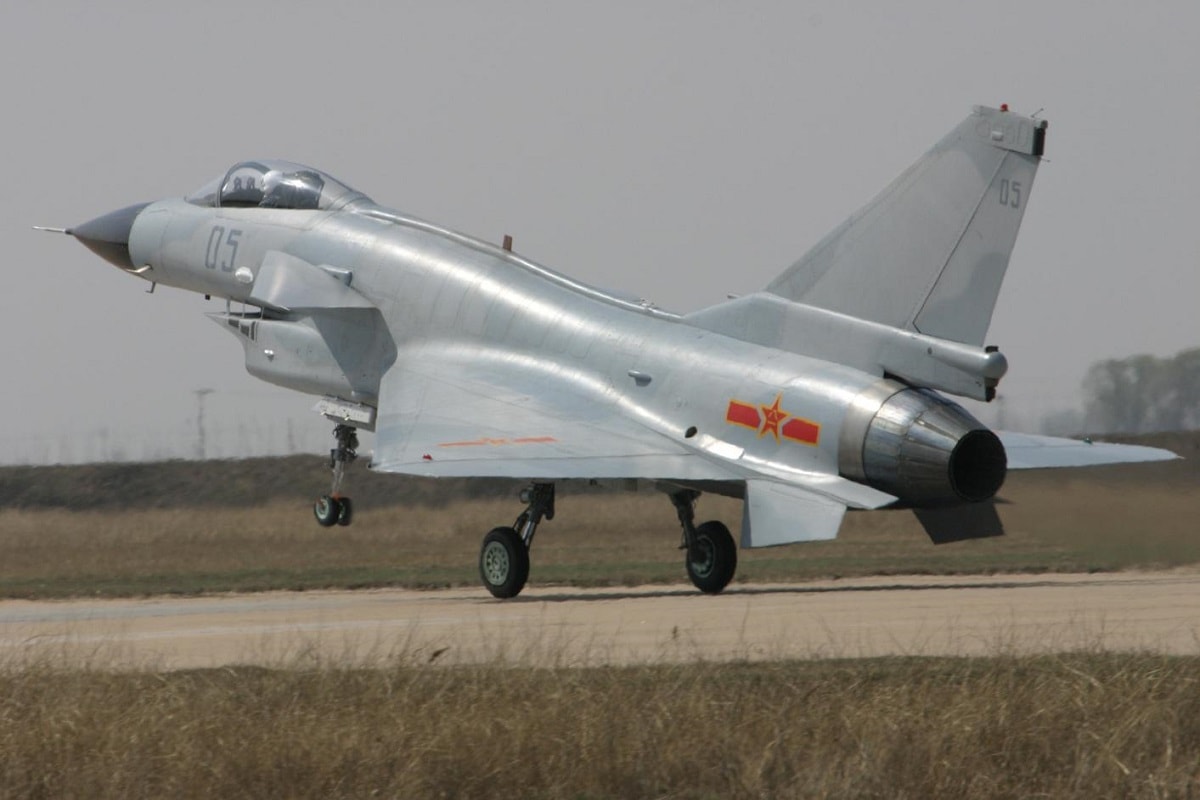
An easily overlooked number is changing external judgments about the rhythm of operations in the Taiwan Strait. Public statistics show that the number of PLA military aircraft entering Taiwan's air defense identification zone in the first seven months of 2026 decreased by approximately 52% year-on-year, but the number of PLA naval vessels detected by Taiwan during the same period only decreased by about 7%. Around October 15, Taiwan reported discovering 15 PLA military aircraft, 10 naval vessels, and 7 civilian ships in relevant directions, among which 13 military aircraft crossed the median line of the Strait. With fewer aerial sorties, the naval presence has not shrunk simultaneously, which seems more like a change in task structure rather than a cooling of operations.
From High-Frequency Flights to Sustained Maritime Presence
The Taipei Times quoted Taiwan's military intelligence department stating that the Liaoning carrier group began conducting so-called "routine training" in the western Pacific on October 14. Beijing emphasized that the training is not aimed at any country, but the group itself has provided longer and broader pressure than a single batch of military aircraft. The Liaoning is a ski-jump aircraft carrier of about 60,000 tons, and the takeoff weight and sortie efficiency of its J-15 fighter jets are not as good as those of catapult-equipped carriers, yet it can rely on escort ships, supply ships, and land-based aviation to form a continuous air-sea training chain.
In simple terms, military aircraft flying a circuit is a signal measured in hours, while a carrier group going to sea represents a presence measured in days or even weeks. The latter does not necessarily mean an immediate blockade exercise, but it can simultaneously test long-range supply, group air defense, aircraft rotation, and cross-regional command.
The 52% Figure Cannot Be Directly Interpreted as a Cooling
Global military websites compiling daily reports from Taiwan's defense department show that the decrease in aerial activities coincides with relatively stable naval activities. Taiwan also stated that the PLA is gradually increasing air and maritime pressure through gray zone operations. The statistical criteria for the two sets of data are not entirely the same, and the annual trend cannot be extrapolated from seven months, so "a decrease of 52%" needs to retain its conditional context. However, from the perspective of operational cost-effectiveness, reducing high-frequency, repetitive military aircraft crossings and instead allowing naval vessels, coast guard ships, and unmanned platforms to maintain regular activities may actually save flight hours and maintenance resources.
This also aligns with the PLA's emphasis on systematic operational thinking in recent years. Military aircraft have not disappeared but may take on more critical node tasks, such as providing air cover for carrier groups, conducting long-range reconnaissance, and electronic support; maritime platforms are responsible for maintaining pressure over a longer time window. Therefore, the daily announced sorties by Taiwan may not fully reflect the intensity of the PLA's reconnaissance, command, and firepower preparations.
The Real Test is Logistics, Not Propaganda
From October 12 to 17, China arranged live-fire exercises or military training in at least five maritime areas, including the East China Sea, Yellow Sea, Bohai Sea, and South China Sea. When viewing these activities alongside the Liaoning's training in the western Pacific, a more valuable observation point is not "whether to immediately encircle Taiwan," but whether different maritime areas can maintain training, alertness, and supply simultaneously. Concurrent operations in multiple maritime areas will test satellite communications, ship maintenance, ammunition replenishment, and coordination between the Eastern Theater Command and the Navy's distant sea formations.
The author believes that the most reasonable judgment at present is that the PLA is adjusting the pressure in the Taiwan Strait from "high-frequency aerial displays" to "sustained air-sea joint presence." The challenge for Taiwan is that while the pressure on air defense alertness may decrease, the burden of maritime surveillance, port protection, and long-range anti-ship systems will increase; for the PLA itself, the longer the aircraft carrier and surface vessels are at sea, the harder it becomes to hide logistical shortcomings. Whether this training of the Liaoning can achieve a stable sortie rate for carrier-based aircraft, and whether the naval formation can continue operations without land-based support, are issues more worthy of tracking than sortie statistics.
Sources
Chinese military aircraft activity in the Taiwan Strait decreased by 52% in early 2026, while naval presence remained stable. The Liaoning aircraft carrier group commenced routine training in the Western Pacific on October 14, 2026, indicating a shift towards sustained naval operations. Concurrent military exercises were reported in multiple sea areas, suggesting an ongoing strategy to maintain pressure on Taiwan.
- PLA aircraft activity in Taiwan's air defense identification zone decreased by 52% in the first seven months of 2026.
- The number of PLA naval vessels detected by Taiwan decreased by only 7% during the same period.
- The Liaoning aircraft carrier group began routine training in the Western Pacific on October 14, 2026.
- PLA is shifting from high-frequency aerial displays to sustained naval presence.
- Multiple military exercises were conducted in various sea areas from October 12 to 17, 2026.