
India's 2026 C-390 Race Is Really About China, Not Airlift
 Marcus Chen
India's 2026 C-390 Race Is Really About China, Not Airlift
India is preparing to spend approximately $10.5 billion on 60 medium transport aircraft. On paper, this is a replacement program for an aging fleet that still includes Soviet-era An-32s. In practice, the choice between Embraer's C-390 Millennium and Lockheed Martin's C-130J-30 will determine how quickly India can move troops, vehicles, ammunition and disaster-relief supplies along its Himalayan frontier with China.
That makes this less an aviation shopping list than a test of India's ability to turn geography into military mobility.
The Contest Is Between Two Very Different Aircraft
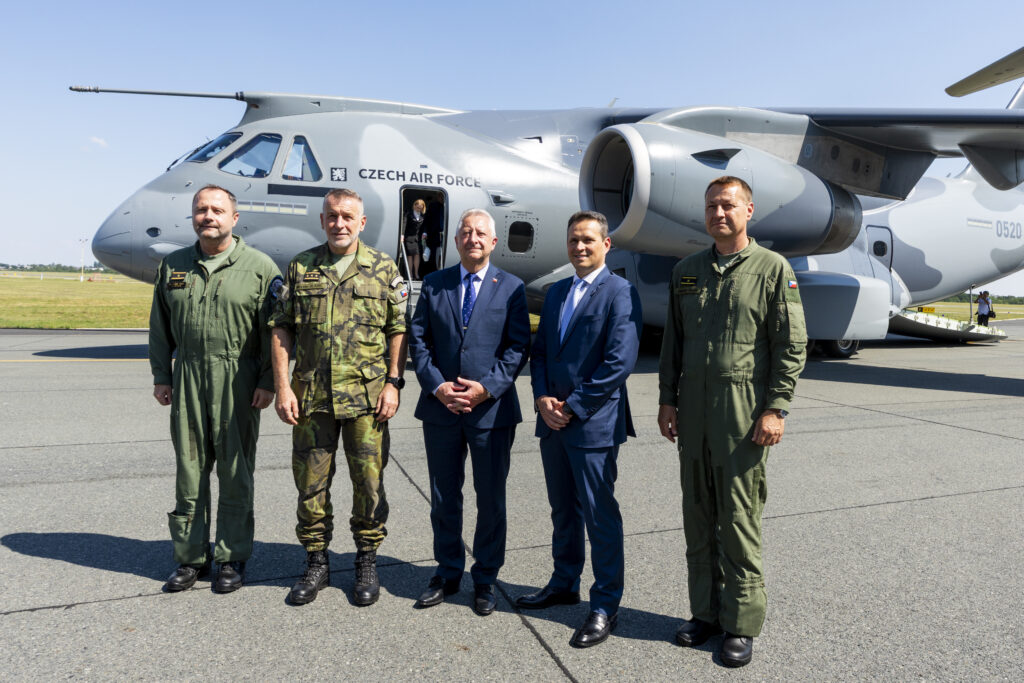
As Defense News reported on October 7, Embraer is offering the C-390 through its Indian partner Mahindra Defence, while Lockheed is proposing the C-130J-30 with Tata Advanced Systems. India issued its request for proposals to five Indian companies in August, and bids are due in early December.
The performance gap is substantial. The C-390 is a modern jet transport with a maximum payload of roughly 26 tonnes and a cruise speed near 470 knots. The C-130J-30 is a proven turboprop, but its payload is approximately 8.6 tonnes in the commonly cited configuration. The C-130 brings a mature global support network and a long record of operations from austere airfields. The C-390 brings more cargo mass and speed, which matters when a runway on the Chinese border is under surveillance or threatened by missile attack.
Neither aircraft solves India's high-altitude operating problem by itself. Payload, runway length, weather, fuel availability and maintenance crews all become more restrictive at altitude. The relevant question is not which brochure has the better number. It is which aircraft India can keep flying from dispersed bases during a crisis.
India Is Buying an Industrial Base
New Delhi's minimum requirement of 40 percent domestic content changes the competition. Embraer and Mahindra have identified Nagpur as a potential production site. Lockheed says 12 aircraft would be built in the United States and 48 in India with Tata, expanding a relationship that already produces C-130J components and empennages.
This is the part of the contract that will outlast the first delivery. A transport fleet consumes tires, engines, avionics, hydraulic parts and trained maintainers for decades. If India merely assembles aircraft while importing the critical systems, it gains an airlift fleet but remains exposed to foreign supply decisions. If the program creates a deeper vendor network, it gains surge capacity for future transports, tankers and specialized aircraft.
That distinction is especially important because India has repeatedly tried to combine urgent military purchases with long-term localization. Those goals conflict when the service needs aircraft immediately but industry needs time to qualify suppliers. A contract that promises 40 percent local content on paper can still produce a thin industrial ecosystem if the high-value subsystems remain imported.
The China Problem Is Measured in Roads and Days
China's advantage on the Himalayan frontier is not only the People's Liberation Army's equipment. It is the infrastructure behind it: roads, rail links, airfields and the ability to shift forces toward the border faster than India can sustain them. India's transport requirement therefore has to be measured in days saved.
A larger-payload aircraft can move a vehicle or heavier ammunition load in fewer sorties. A faster aircraft can reduce exposure during a short weather window. A fleet of 60 transports can also create redundancy: aircraft can be distributed across multiple bases instead of concentrated at a few vulnerable hubs. But only if India funds the support architecture—hardened shelters, fuel storage, runway repair teams, spare engines and secure communications.
The C-130J offers a different advantage. India already operates 12 of the type, giving its air force an existing training and maintenance base. Familiarity has operational value. In a crisis, the best aircraft is often the one with crews who know its limits and mechanics who can return it to service overnight.
That is the real trade-off. The C-390 offers more lift per sortie and a chance to build a new industrial partnership. The C-130J offers lower transition risk and a known logistics chain. India must decide whether this purchase is primarily about near-term availability or future capacity.
Sixty Aircraft Will Not Create Air Mobility Alone
Transport aircraft are frequently counted as if they were independent combat power. They are not. A fleet of 60 airframes requires crews, maintenance personnel, spare parts, defensive aids, airfield security and a command network capable of allocating sorties under attack. The number that matters is not how many aircraft India owns. It is how many can launch repeatedly from high-altitude locations during the first seven days of a border crisis.
There is also a survivability question. Large transports are not designed to fight through dense air defenses. India would need dispersal, deception and fighter or ground-based air-defense protection to keep the fleet useful after the opening hours of a conflict. Otherwise, the program becomes a strategic reserve that is impressive in peacetime and constrained in wartime.
New Delhi Should Treat This as a War-Readiness Contract
The C-390 versus C-130J decision will be judged by industrial promises, but its military value will be determined by logistics. India should tie the purchase to measurable targets: sortie generation from high-altitude airfields, domestic repair capacity, engine availability, runway-repair timelines and stockpiles of critical spares. It should also demand a realistic plan for integrating transports with the Indian Army's border formations rather than leaving the air force to operate them as a separate fleet.
China does not need to defeat India's transports to gain an advantage. It only needs to make their operations slow, predictable and expensive. India can prevent that by building a fleet that is dispersed, maintained and connected to the ground fight.
The C-390 is the more ambitious answer. The C-130J is the safer one. But the aircraft is only half the decision. If India buys 60 transports without buying the infrastructure to generate sorties, it will have purchased mobility on paper—and ceded the timetable to China.
Sources
India is preparing to procure 60 medium transport aircraft, with a focus on enhancing military mobility along its Himalayan frontier with China. The competition is between Embraer's C-390 Millennium and Lockheed Martin's C-130J-30, with India emphasizing the need for domestic production. This procurement aims to address logistical challenges posed by China's superior infrastructure in the region.
- India plans to spend $10.5 billion on 60 medium transport aircraft.
- The competition is between Embraer's C-390 and Lockheed Martin's C-130J-30.
- India's transport requirement is critical for military mobility against China.
- The C-390 offers more payload and speed compared to the C-130J.
- India's procurement includes a requirement for 40% domestic content.