
Indonesia's Two 2026 Scorpene Submarines Cannot Patrol the Archipelago Alone
 Marcus Chen
Indonesia's Two 2026 Scorpene Submarines Cannot Patrol the Archipelago Alone
The first Indonesian-built Scorpene Evolved submarine will not enter service until 2032. That is the number that matters more than the press-tour photographs from Surabaya.
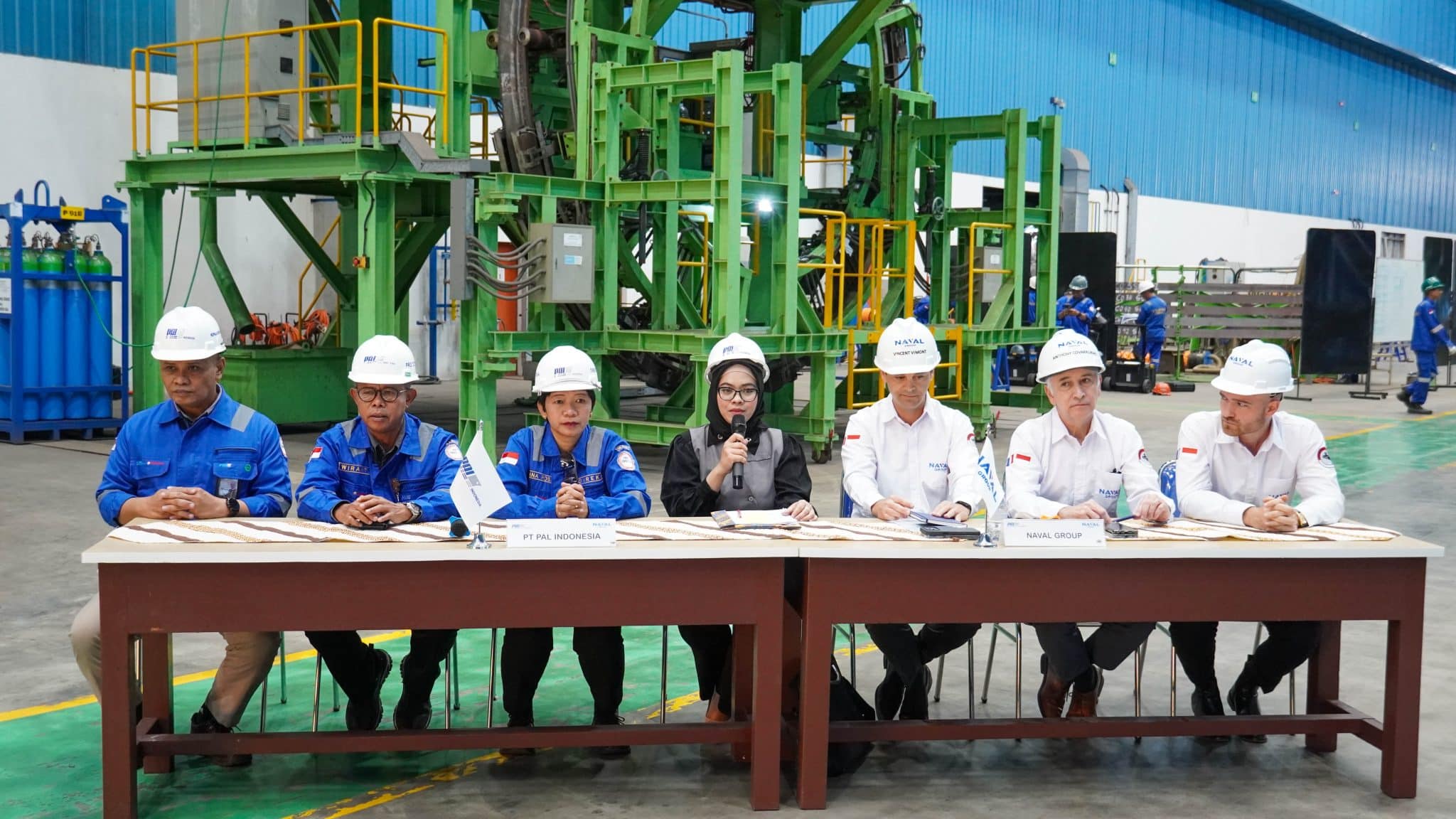
On July 2, PT PAL Indonesia and Naval Group showed reporters the submarine construction and maintenance facilities that will support the Scorpene Republik Indonesia program. Naval News reported that steel cutting for the lead boat is due this month, with testing and sea trials scheduled between 2030 and 2032 before delivery in 2032. The second submarine is supposed to start construction in 2027, test between 2031 and 2033, and arrive in 2033.
For Indonesia, that is a serious industrial step. It is also a reminder that submarine capability arrives slowly, one hull at a time, and usually later than the schedule printed on the wall.
Two Boats, One Huge Operating Problem
Indonesia is not buying submarines for prestige. It sits across the routes that connect the Indian Ocean, South China Sea, Java Sea, Makassar Strait, Lombok Strait and the approaches to northern Australia. A diesel-electric submarine in those waters can be a political instrument, an intelligence collector and, in wartime, a sea-denial weapon that forces an opponent to slow down.
But two boats do not equal two patrols.
Anyone who has worked around fleet scheduling knows the rough math. One submarine is at sea, one is working up or coming off patrol, and one is in maintenance if a navy wants a reliable continuous presence. That is an optimistic cycle. It assumes crews, spares, batteries, weapons, pier space and depot capacity all line up. Indonesia's minimum stated ambition, according to earlier Naval News reporting on discussions with Indonesian officials, is 12 submarines. The new Scorpenes fill one-sixth of that number.
That does not make the buy meaningless. It means the first operational question is not whether the Scorpene Evolved is a capable boat. It is whether Indonesia can build enough of the system around it to keep more than a symbolic fraction of the force on station.
The Boat Is Good Enough for the Mission
The Scorpene Evolved configuration is not a poor choice for Indonesia's geography. Naval News reported that the submarines will use a full lithium-ion battery arrangement, carry the SUBTICS combat system, and integrate acoustic and non-acoustic sensors with an enhanced sonar suite. Naval Group told reporters the design will have mission endurance of up to 80 days and a mixed weapons load of up to 18 heavyweight torpedoes and SM39 Exocet missiles. The company also confirmed the boats will be able to fire the next-generation SM40 Exocet now under development by MBDA.
Those numbers matter. In the Indonesian archipelago, endurance is not just about range. It is about waiting. A submarine that can sit quietly near a chokepoint and force an adversary to allocate escorts, maritime patrol aircraft and helicopters is doing work before it fires a weapon. It complicates the opponent's timetable.
The missile option matters too. A torpedo-only boat threatens ships that enter its kill box. A submarine-launched Exocet adds a different geometry, especially around narrow seas where commercial traffic, islands and weather make targeting messy. The value is not that two Scorpenes would defeat a major fleet. They would not. The value is that they can make routine access less routine.
That is sea denial, not sea control.
Industrial Transfer Is the Real Bet
The strongest part of the program is not the hull. It is PT PAL's attempt to absorb submarine construction as a national skill. The July 2 press tour disclosed that the project is expected to create about 2,250 jobs, including support and post-delivery maintenance roles. PT PAL's submarine division chief said existing production space can support simultaneous construction or maintenance, repair and overhaul work on up to four Scorpene submarines, while also using experience from Indonesia's earlier Type 209 program.
That is the right direction. Buying submarines from abroad gives a navy capacity. Building them at home gives a country leverage, if it can survive the learning curve.
The learning curve will be steep. Lithium-ion submarine batteries are not just a brochure feature. They change maintenance routines, safety procedures, shore power demands and crew training. The SUBTICS combat system and advanced sensors require technicians who can troubleshoot software and acoustic processing, not just weld pressure hull sections. Weapons integration adds another layer. A submarine is less forgiving than a frigate because a defect does not fail politely.
Naval Group has experience from Scorpene local production in India and Brazil, which should help. But technology transfer is not magic. It moves knowledge through people, repeated work, mistakes and correction. A single two-boat order is barely enough repetition to make the yard fluent.
The 2032 Gap Is the Hard Part
Indonesia's problem is timing. The first boat is six years away if the schedule holds. The second is seven years away. Earlier reporting noted Indonesian interest in interim submarines from foreign builders, including European and Chinese designs, but also suggested the interim program had not yet secured budget approval. That leaves a gap between the requirement and the fleet.
The gap matters because the regional environment is not waiting for 2032. China is sending coast guard and naval forces farther into contested waters. The South China Sea is more crowded. Australia is hardening its northern posture. The Philippines is accepting more U.S. access and missile activity. The U.S. Navy and partners just finished Valiant Shield 2026 in the western Pacific, including anti-submarine warfare and maritime strike training. Indonesia does not need to join a bloc to see why undersea awareness is becoming more valuable.
Jakarta's challenge is political as much as naval. Indonesia wants autonomy. That means it cannot simply outsource undersea deterrence to allies, and it cannot build a submarine force by issuing speeches about maritime sovereignty. It has to fund hulls, crews, shore support, weapons stocks and maintenance.
What Success Would Look Like
A serious Indonesian undersea plan would treat the two Scorpenes as the start of a production rhythm, not the end of a procurement story. That means three practical measures.
- First, lock in weapons early enough that the boats arrive as combat systems, not empty training platforms.
- Second, expand domestic maintenance capacity before delivery, because a submarine waiting for foreign support is not a deterrent.
- Third, decide whether the next batch comes before PT PAL loses workforce momentum after the second hull.
The last point is where many naval programs fail. A shipyard does not retain submarine competence by celebrating a launch ceremony every decade. It needs a drumbeat. If Indonesia wants 12 submarines, two Scorpenes delivered in 2032 and 2033 are not a force structure. They are a down payment.
The Scorpene Evolved program gives Indonesia a credible path into modern undersea warfare. It does not yet give Indonesia a credible patrol rate.
That distinction should shape how Jakarta talks about the program. The industrial achievement is real. The operational shortage is real too. Until Indonesia buys enough hulls and builds enough support to keep them at sea, its archipelago will remain larger than its submarine force.
Indonesia is developing two Scorpene submarines, with the first expected to be operational by 2032 and the second by 2033. The Indonesian Navy faces challenges in maintaining a continuous patrol presence due to limited numbers and operational requirements. The submarines will incorporate advanced technologies, but Indonesia's goal of a 12-submarine fleet highlights the need for further development and support to ensure effective maritime security.
- Indonesia is building two Scorpene submarines, with the first expected to enter service in 2032 and the second in 2033.
- The submarines will feature advanced technology including lithium-ion batteries and a combat system capable of integrating various sensors.
- Indonesia's goal is to eventually have a fleet of 12 submarines, but currently only two are being constructed.
- The operational effectiveness of the submarines is limited by the need for maintenance and crew training, impacting patrol capabilities.
- The regional security environment is becoming increasingly complex, necessitating a stronger undersea presence.