
Iran Strikes Bahrain for the Third Time in 2026 and the Hormuz Escalation Tests Gulf Defenses
 Ahmed Al-Rashid
Iran Strikes Bahrain for the Third Time in 2026 as Hormuz Escalation Tests Gulf Defenses
On November 17, 2026, the relative calm that lasted for two months ended when Iran executed a third strike against American targets in Bahrain, according to a report by the Associated Press. The United States responded with strikes on Qeshm Island in the Strait of Hormuz, according to CBS and Bloomberg. In the same hours, other reports spoke of targeting sites in Kuwait and Bahrain. This is not a fleeting exchange of fire; it is a return of war to the heart of the military structure built by Washington in the Gulf, revealing that purchasing air defense batteries does not equate to possessing a sustainable deterrent capability.
From Bahrain to Qeshm, a Short Political Distance
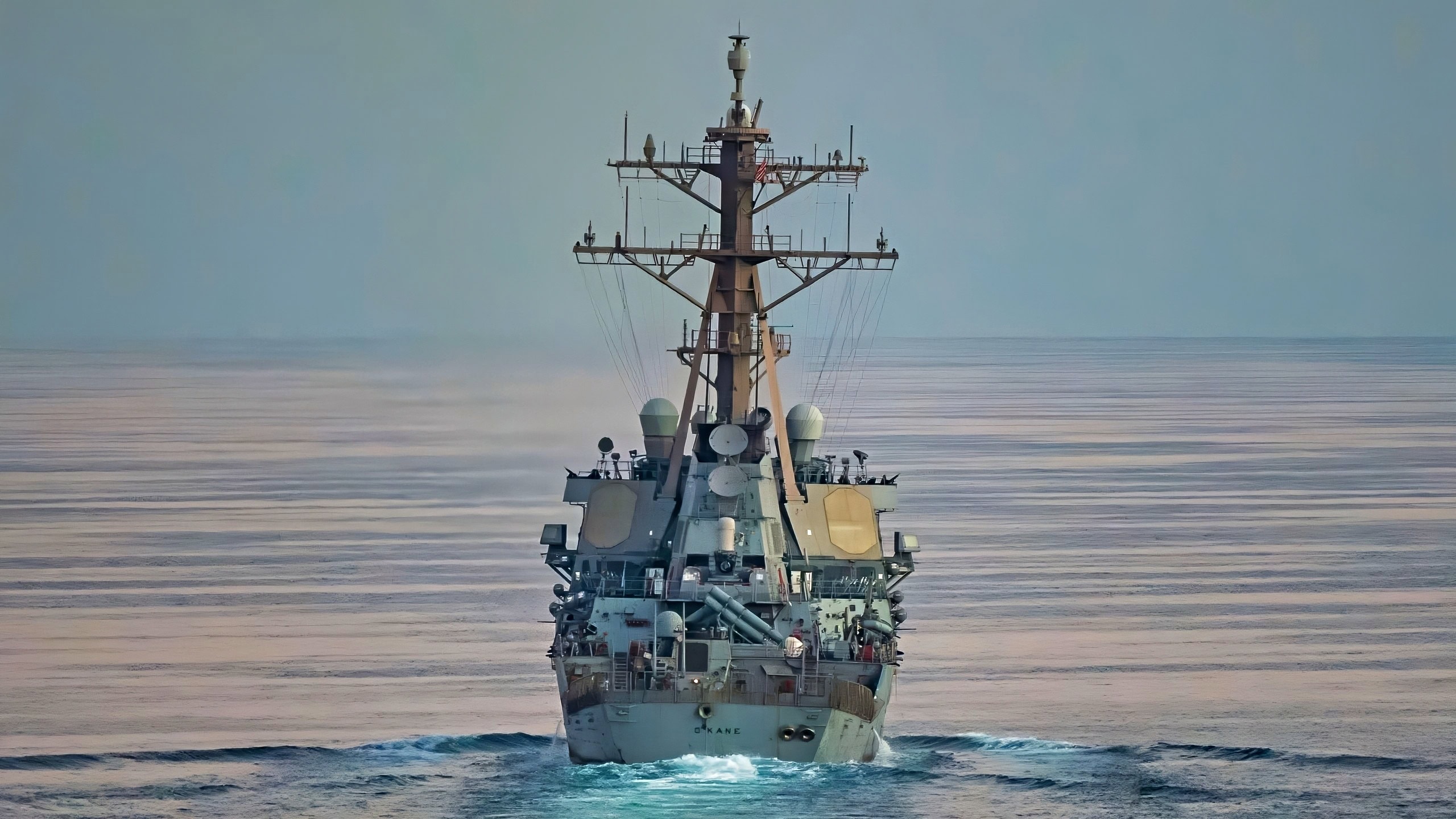
Bahrain is not just a symbolic target. It hosts the U.S. Fifth Fleet, a center for maritime command and control, and a network of facilities that connect air defense, early warning, and navigation protection. Therefore, the third Iranian strike indicates that Tehran does not want to test a single facility; it wants to prove that the American presence in the Gulf is vulnerable to attrition even when its bases are protected by layers of Patriot and THAAD systems and fighter jets.
Qeshm is not a marginal island. Its location overlooks the corridors leading to the Strait of Hormuz, and there are facilities for the Revolutionary Guard and logistical and missile infrastructure around it. The American response there raises the stakes: from an attack on a base in a Gulf state to striking Iranian territory close to a global energy artery. Practically, every missile launched at Bahrain or Kuwait is linked to the possibility of a retaliatory strike on the Iranian coast, and this is the definition of escalation that is difficult to control.
Gulf Defense Between Possessing Systems and Operating Them
The Gulf states possess advanced equipment, but true military capability relies on a triangle of equipment, training, and institutions. In the equipment aspect, there is no apparent problem; Saudi Arabia, the UAE, Kuwait, and Bahrain spend billions of dollars on radars, missiles, and aircraft. The problem lies in the other two aspects. Who has a unified aerial picture? Who decides within seconds whether the target is a ballistic missile, a drone, or a friendly aircraft? And who bears the decision to open fire when the base is American, the skies are Gulf, and the politics involve multiple capitals?
Any military personnel who has served in the region knows that air defense is not a platform delivered in a box. It involves continuous shifts, available munitions, software updates, jamming training, and coordination between national forces and American forces. The third strike on Bahrain, if the details reported by AP are accurate, reminds us that reliance on the American umbrella provides significant protection but does not build operational independence. Washington can intercept a number of threats, but it cannot guarantee that every base, every port, and every energy facility will remain safe in a prolonged war.
Hormuz as a Pressure Weapon, Not Just a Maritime Arena
Iran understands that the Strait of Hormuz is not just a passage for ships, but a knot that combines economy, energy, and deterrence. Even without a complete closure, it is enough to raise the cost of insurance, increase inspections and threats, and force tankers to change course or wait. The strikes around Bahrain and Kuwait expand the equation from the security of the strait to the security of ports, bases, and export stations. Thus, Tehran can pressure the United States and its allies without declaring an official blockade that might unite the international community against it.
However, this weapon comes at a price. Striking Gulf states threatens what remains of channels for de-escalation with Arab capitals and forces any Gulf government to seek greater American protection, even if politically it wants to reduce the American presence. This is a painful paradox: the more Iran attacks American bases in the Gulf, the more it publicly needs the American presence, while at the same time, the desire of regional states to diversify partners and not be beholden to Washington increases.
Why Isn't the American Strike Enough?
A response to Qeshm may punish a facility or destroy a stockpile, but it does not solve the problem of attrition. If Iran is capable of re-launching missiles from mobile sites, using cheap drones, and distributing targets between the coast, islands, and proxies, then a precise strike only restores calm temporarily. Additionally, bombing facilities near Hormuz creates pressure on maritime traffic and provides Tehran with propaganda material to portray the war as an aggression against Iranian territory.
Practically, Washington needs distributed defense, a larger stockpile of interceptors, alternative bases, and clear command agreements with Gulf states. Meanwhile, Gulf capitals need to build national resilience capabilities, not just rely on purchasing more systems. A missile that the state does not have the authority to use, or cannot maintain, is an expensive asset without complete military capability.
Conclusion
The most important event in the November round is not the number of missiles Iran launched or the number of targets it hit, but the transfer of pressure to the Gulf security structure itself. Bahrain, Kuwait, and the Iranian coast have become a single theater, while each capital tries to maintain a separate political margin. Gulf states will continue to purchase defenses, and Washington will continue to deploy forces, but the contradiction will remain between the desire for security independence and the need for American protection. In long wars, it is not the most expensive system that prevails, but the institution that can fight every night without collapsing politically or logistically.
Sources
- Al Jazeera — Report on the escalation of war and Iranian infrastructure
- Associated Press — Report on November 17, 2026, about the third Iranian strike on American targets in Bahrain and the American response
- CBS News and Bloomberg — Reports on November 17 and 18, 2026, about the American strikes on Qeshm Island
- Institute for the Study of War — Iran Update, November 17, 2026
Iran conducted a third strike against U.S. targets in Bahrain on November 17, 2026, prompting U.S. retaliatory strikes on Qeshm Island in the Strait of Hormuz. This escalation marks a significant shift in military tensions, revealing vulnerabilities in Gulf defense systems and the complexities of U.S. military operations in the region.
- Iran launched a third strike against U.S. targets in Bahrain on November 17, 2026.
- The U.S. retaliated with strikes on Qeshm Island in the Strait of Hormuz.
- The strikes indicate a significant escalation in military tensions in the Gulf region.
- Iran's actions challenge the effectiveness of U.S. military presence in the region.
- The situation highlights the complexities of Gulf defense capabilities and inter-state military dynamics.