
Iran Threatens Undersea Internet Cables After Tanker Explosion Near Hormuz, and Saudi Arabia Intercepts Five Drones in 2026
 Ahmed Al-Rashid
Iran Threatens Undersea Internet Cables After Tanker Explosion Near Hormuz, Saudi Arabia Intercepts Five Drones in 2026
On October 21, 2026, Gulf security can no longer be measured solely by the number of missiles that batteries can intercept. Radio Free Europe/Radio Liberty reported that Iran reiterated its threat to target undersea fiber optic cables, while The National reported that a giant oil tanker exploded near the Strait of Hormuz. At the same time, regional reports announced that Saudi defenses intercepted five drones in the Eastern Province and Medina. These incidents alone do not prove that the tanker incident was an Iranian attack, but they reveal the widening scope of pressure from ships and facilities to the invisible infrastructure that supports the region's economy.
Strait of Hormuz Becomes a Network of Targets
The threat directed at communication cables is significant because it expands the concept of closure from a shipping lane to an entire system. Iran, or any party operating under a veil of ambiguity, can pressure oil tankers, threaten ports, and disrupt communications without launching a conventional air campaign. Hitting one cable does not mean the entire Gulf will lose internet access; there are alternative routes and multiple landing points, but the damage may manifest in recovery times, in financial data flows, and in military and commercial communications that require low latency.
Practically, this is the best maneuvering space for Iran. Its possession of fast boats, anti-ship missiles, and naval mines gives it direct tools, while the threat to cables provides a psychological and political deterrent that is difficult to immediately attribute to a specific party. Therefore, the news should be treated as an announced threat rather than evidence of a specific cable being cut. The difference between the two is fundamental, especially after the tanker explosion near Hormuz, where the circumstances and cause of the incident still require independent verification.
Saudi Arabia Tests Its Air Defense Outside the Official Picture
Intercepting five drones in the Eastern Province and Medina, if confirmed, illustrates that Riyadh is facing a dual path. The Eastern Province protects oil, ports, and vital facilities, while Medina represents a demographic and religious depth that cannot be allowed to become a messaging battleground. A cheap drone does not always need to penetrate defenses to achieve its purpose; it is enough to impose repeated alerts, consume expensive interceptors, and push facilities to reduce their operations.
Here, the problem of the triad capability that I have been repeating for years emerges: equipment, training, and institution. Saudi Arabia can purchase Patriot and THAAD systems and early warning aircraft, but its success on this night depends on the speed of target detection, radar integration, data sharing with U.S. forces, and then making a disciplined launch decision. Intercepting five drones is not a small number, but it does not answer the harder question: can the system sustain itself if attacks turn into daily waves, and if the adversary uses decoy targets and cruise missiles simultaneously?
U.S. Reinforcement Provides Time but Does Not Build Independence
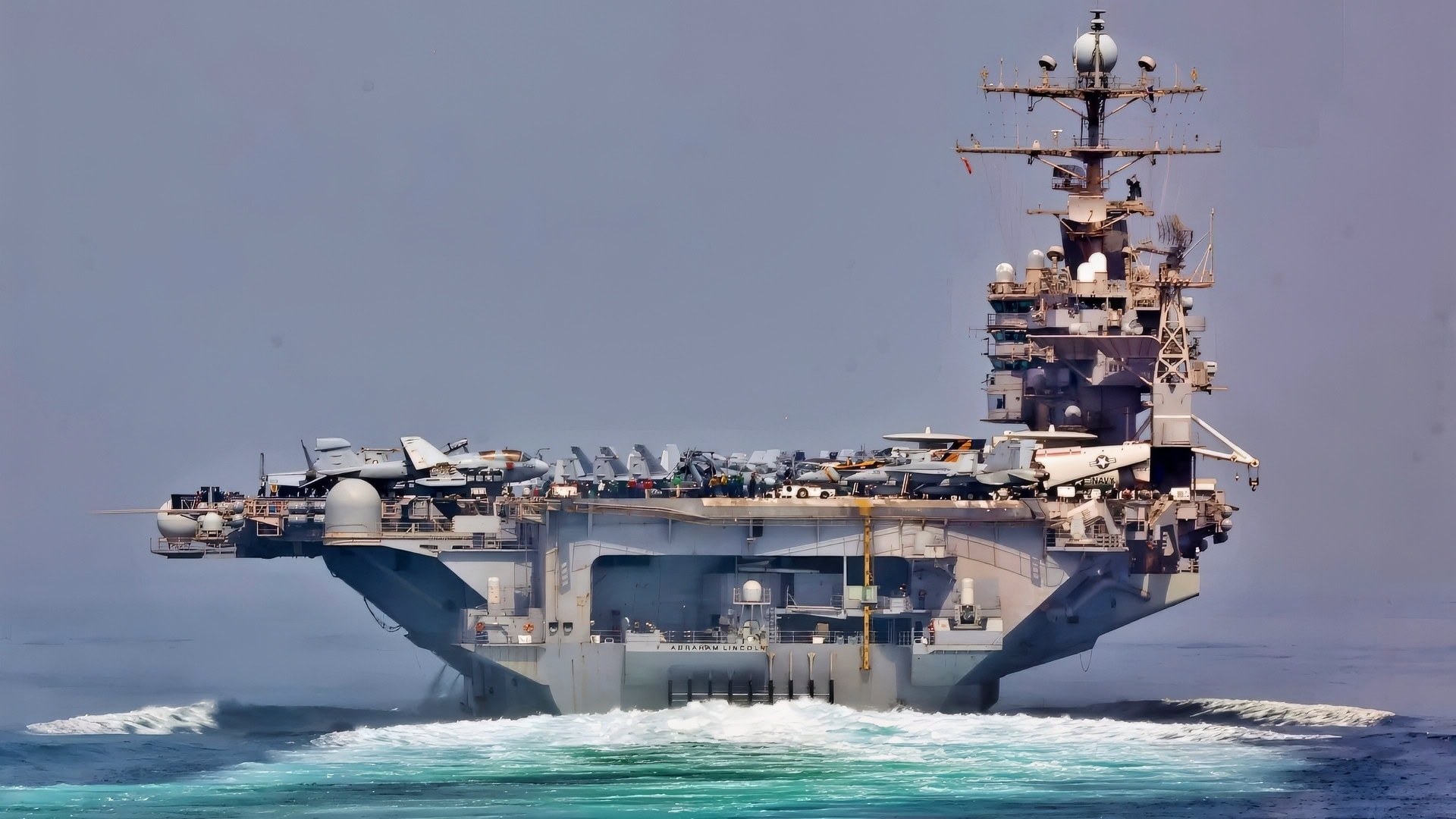
These developments coincide with reports of a third U.S. aircraft carrier and about ten thousand additional troops being sent to the Middle East, along with unusual American warnings to its citizens following deadly Houthi strikes. This deployment raises the cost of escalation for Iran and improves the protection of maritime corridors, but it also confirms that the American umbrella remains part of the Gulf operational structure, not just a distant political guarantee.
The carrier can protect aircraft and ships, and satellites and maritime aircraft can monitor the corridors, but it cannot alone repair a cable on the seabed or secure every tanker or prevent every small drone. Additionally, the presence of a large American force may deter a broad strike, but it creates a wide target for Iranian messaging and makes Gulf capitals fear that defending them could turn into a war managed from their territories. Therefore, U.S. reinforcement should not be read as a solution, but as a purchase of precious time.
Why This Matters More to Riyadh Than Tehran
Saudi Arabia does not face a single threat that can be displayed on a radar screen. It faces pressure on energy exports, pressure on cities and facilities, pressure on communication networks, along with the possibility of war expanding in Yemen. Recent analysis regarding Egypt's potential involvement in the Yemeni conflict has shown that allies are drawing strict lines regarding the type of military support they will accept. This means that Riyadh cannot assume that every Arab partner will automatically turn into a fighting force at the first crisis.
The military lesson is clear. Air defense protects a point, and naval patrols protect a corridor, but true capability requires a flexible system that integrates intelligence, cybersecurity, cable repair ships, interceptor stocks, and joint training that goes beyond ceremonial maneuvers. Purchasing a new platform may raise the contract's value, but it does not alone create an institution capable of waging a gray attrition war.
Conclusion
The Gulf is entering a phase where ambiguity itself becomes a weapon. A tanker explodes, drones are intercepted, and cables are threatened, and each incident can fall below the threshold of total war but imposes real political and economic costs. From my assessment, the Saudi problem is not a lack of weapons as much as it is the simultaneous reliance on American protection and the assumption that deterrence will prevent the adversary from testing the limits. As any military officer who has served in the region knows, the adversary does not need to defeat the shield entirely; it is enough to prove that the shield cannot protect everything at the same time.
Sources
- Radio Free Europe/Radio Liberty, October 21, 2026 report on the threat to undersea cables.
- The National, October 21, 2026 report on the tanker explosion near the Strait of Hormuz.
- CBS News, October 20, 2026 report on American warnings and Houthi strikes.
- Reuters, October 19, 2026 explanation regarding the potential involvement of Egypt in the Yemen war.
- Carnegie Endowment and Middle East Institute, October 2026 analyses on the Mecca Charter and the reshaping of Gulf security.
Iran threatened undersea internet cables following an oil tanker explosion near the Strait of Hormuz on October 21, 2026. Saudi Arabian defenses intercepted five drones in the Eastern region and Medina. The U.S. is deploying additional military resources to the Middle East, raising the stakes for Iran and enhancing maritime security.
- Iran threatens undersea internet cables.
- An oil tanker exploded near the Strait of Hormuz.
- Saudi Arabia intercepted five drones in the Eastern region and Medina.
- The U.S. is sending additional military resources to the region.
- The situation reflects a broader strategic threat to Gulf security.