
Iran's Drone Attack on Kuwait Airport 2026 Reveals the Gulf Air Defense Gap Against Low-Flying Targets
 Ahmed Al-Rashid
Iran's Drone Attack on Kuwait Airport 2026 Reveals a Gap in Gulf Air Defense Against Low-Altitude Targets
On June 3, 2026, the war with Iran was no longer just about missiles crossing the Gulf or military data exchanged between Tehran and Washington. The Kuwaiti Ministry of Defense stated that a number of hostile drones targeted the passenger terminal at Kuwait International Airport, and the attack caused significant damage to the building and injured several people. This is not a symbolic strike on a base far from cities; it is a message to a vital civilian point that had been reopened on June 1 after a war-related closure.
What Happened Between Kuwait, Bahrain, and Qeshm
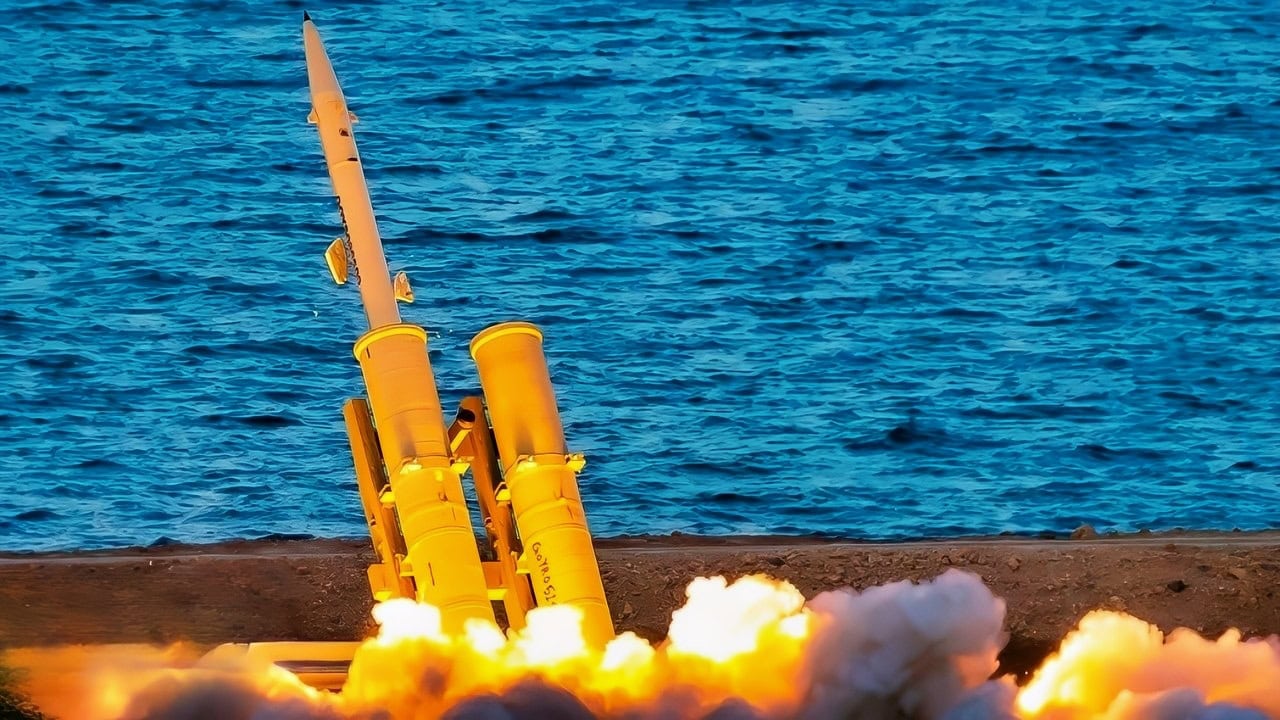
According to the American narrative, Iran launched several ballistic missiles towards countries in the region, but all failed to hit their targets. Two missiles aimed at Kuwait fell or disintegrated en route, and three missiles aimed at Bahrain were intercepted by American and Bahraini defenses. The U.S. Central Command added that its forces shot down one-way attack drones targeting civilian mariners in territorial waters, then carried out defensive strikes on an Iranian ground control station on Qeshm Island at the entrance to the Strait of Hormuz.
The Iranian Revolutionary Guard provided a different narrative, claiming it targeted the U.S. Fifth Fleet headquarters in Bahrain and an American base in the region in response to the disruption of a tanker heading to Iran under U.S. siege. However, Washington denied that those targets were hit, stating that all attacks on U.S. forces failed. Between these two narratives lies the military truth that concerns Gulf countries: even when missiles fail to hit their targets, civilian airspace remains under pressure, and airports, ports, and power stations remain within the threat range.
Why Targeting an Airport Differs from Striking a Military Base
From a military perspective, targeting an international airport is different from targeting an airbase. The base is originally designed to accept a degree of risk; it has shelters, isolation zones, lockdown procedures, and ordnance disposal teams. In contrast, a civilian airport relies on continuity: an operational runway, an operational control tower, a passenger terminal that does not incite panic, and airlines that do not treat every flight as if it were crossing a front line. Therefore, a cheap drone hitting a glass facade or a passenger hall may produce a psychological and economic impact far greater than its military value.
Any military personnel who has served in the region knows that defending a civilian airport is not just a matter of purchasing an additional Patriot battery. The Patriot PAC-3 is relatively excellent in the terminal engagement with ballistic missiles, but it is not the optimal solution against slow, low-flying drones with a small radar signature. THAAD addresses a higher tier of threats and does not solve the problem of a drone flying at low altitude near a crowded facility. Here lies the old Gulf gap: we buy the most expensive system for the most severe threat, only to discover that the cheaper danger has slipped in from the lower tier.
Cheap Drones Defeat the Logic of Expensive Defense
Suicide drones from the Shahed family or similar are not complex weapons in the Western sense of the word. Their speed is often slow, and their maneuverability is limited, but their range can reach hundreds or over a thousand kilometers depending on the version and payload, and they can fly on twisted paths that make early warning more difficult. The problem is not in shooting down a single drone; the problem is in detecting it early, classifying it quickly, preventing saturation, and not launching a million-dollar missile at a target that costs tens of thousands.
The correct defense against this category requires a short- and medium-range network: radars capable of seeing small targets, thermal cameras, electronic jamming, directed guns, short-range missiles, and direct linkage with civil aviation authority. This is not a pretty display at a defense exhibition; it is a tedious daily task that requires crew training, clear rules of engagement, and joint exercises between the military, police, airport, and ground service companies. In my estimation, many Gulf countries are still stronger in purchasing systems than in building a routine for their use.
Kuwait Is Not the Only Weak Link
It is a mistake to read the attack as merely a Kuwaiti story. Bahrain hosts the U.S. Fifth Fleet headquarters, Kuwait has significant American military and logistical infrastructure, and Qatar, the UAE, and Saudi Arabia all rely on airports, ports, refineries, and energy facilities that are psychologically vulnerable even if not militarily destroyed. Iran understands this well. It does not always need to cause dozens of casualties to change the calculations of Gulf capitals; it is enough to make airlines, insurance companies, and shipping firms ask one question: Is this route safe today?
This is the essence of Iranian deterrence after the recent war. Tehran cannot confront the United States in an open air engagement, but it can turn the Gulf geography into a network of sensitive targets. Every airport near a base, every port near an energy facility, and every coastal city near a shipping route. Deterrence here is not built on winning a single battle, but on increasing the cost of normal life.
Washington Protects and Reveals the Limits of Protection
The U.S. Central Command acted quickly, shooting down missiles and drones, and striking a control station in Qeshm. This confirms that the American umbrella remains necessary for the Gulf. But necessity does not mean sufficiency. When Washington is the one detecting, intercepting, responding, and announcing, host nations find themselves in a politically sensitive position: they pay the price for the presence of bases, but they do not always have the freedom to manage escalation or de-escalation.
In Kuwait and Bahrain, local air defense succeeded in some layers and failed in others, but the bigger question is who owns the complete picture of the battle. If the informational center of gravity is American, if the counter-strike is American, and if the decision to respond is tied to the calculations of Washington and Tehran, then defensive sovereignty becomes partial. This is not an insult to Gulf armies; it is a practical description of a security structure formed over decades.
What Needs to Change After June 3
The first lesson is that protecting airports is no longer a separate civilian issue. Airports in Kuwait, Manama, Doha, Abu Dhabi, and Riyadh must be treated as operational contracts within a national defense system, not as transport facilities waiting for military protection during a crisis. The second lesson is that defense against drones requires a relatively cheap, rapidly repeatable layer, connected to civil alert systems. It is not enough for a state to have the best missile battery if it does not have a sensor network around the runway and the passenger terminal.
The third lesson is more political than technical. The longer the Gulf relies on American responses after each strike, the more Iran can turn the umbrella itself into a reason for escalation. Washington will say it is defending its allies, and Tehran will say it is responding to American bases, and the civilian airport will pay the price between the two narratives. Arabs say that the door from which the wind comes, close it and rest, but the Gulf cannot close the door on America or Iran. This is the dilemma: security that cannot do without the outside, and sovereignty that is not complete with its presence.
Sources
- Associated Press, June 3, 2026 report on the drone attack on Kuwait Airport and the exchange of American-Iranian strikes.
- U.S. Central Command via data reported by Anadolu Agency and CBS News on the interception of missiles and drones and the Qeshm strike.
- ABC News and Reuters on warnings from Kuwait and Bahrain, and the disruption of the tanker M/T Lexie amid the crisis in the Strait of Hormuz.
Iranian drones attacked Kuwait International Airport on June 3, 2026, causing significant damage and injuries. The Kuwaiti Ministry of Defense reported that the attack targeted a vital civilian facility, marking a shift in the nature of conflict with Iran. U.S. Central Command confirmed the interception of Iranian missiles aimed at regional targets, emphasizing ongoing tensions in the Gulf.
- Iranian drones targeted Kuwait International Airport on June 3, 2026.
- The attack caused significant damage to the terminal and injuries to civilians.
- U.S. Central Command reported intercepting Iranian missiles aimed at regional targets.
- Iran claimed the attack was a response to U.S. actions in the region.
- The incident highlights vulnerabilities in Gulf air defense against low-flying threats.