
IRIS-T and 30 Million Euros for TNT Show Europe's Slow Response to Ukraine's Air Defense
 Dr. Klaus Weber
IRIS-T and 30 Million Euros for TNT Show Europe's Slow Response to Ukraine's Air Defense
600,000 People Without Power and a New Explosives Facility
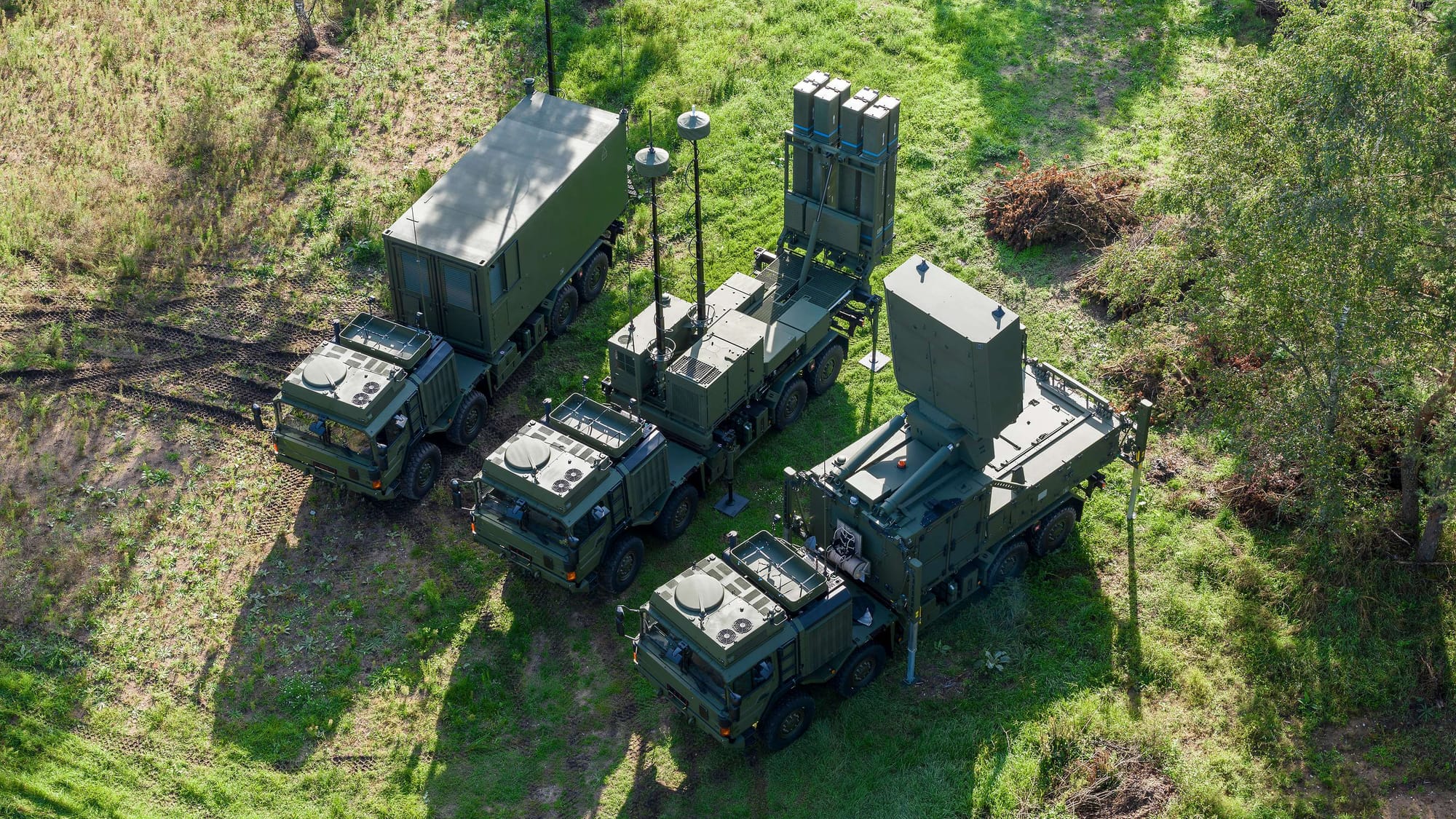
When Mark Rutte called for more air defense for Ukraine in Tallinn on October 14, over 600,000 people were without power due to Russian attacks. At the same time, the European defense industry reported a seemingly small but strategically important step: The European Union is providing 30 million euros for a TNT production facility from the Finnish company Forcit. Both are interconnected. Ukraine needs additional IRIS-T, Patriot, and other interceptor systems today. Europe is simultaneously building the industrial depth necessary for ammunition, spare parts, and new defense systems to be sustainably available.
The political message is therefore not that Europe is now adequately prepared. It is that the European response to an acute air defense need is still measured in factory projects. This is necessary, but temporally insufficient.
The Finnish TNT Facility Fills a Real Gap
According to the Nordic Defence Sector, the EU is funding the construction of a new TNT facility in Finland with 30 million euros. TNT is not a spectacular end product like an air defense system, but a critical raw material for artillery shells, warheads, and numerous ammunition chains. The facility aims to reduce Europe's dependence on a few suppliers and stabilize the supply for NATO countries and Ukraine. Additionally, it was revealed in September that the United States intends to invest 20 million dollars in the same Finnish project (Defence Industry Europe, September 22, 2026).
This is industrial policy with security policy benefits. Finland has experience in ammunition production, protected infrastructure, and a strategic location on NATO's eastern flank. An additional TNT site increases the resilience of the supply chain. However, it does not automatically produce more finished interceptor missiles. This is where the difference between capacity and capability lies: A factory can create the prerequisite for military capabilities, but it does not replace them.
Rutte Calls for Systems, Europe Delivers Preconditions for Now
Rutte explicitly demanded more air defense because Russia deploys hundreds of drones and ballistic missiles against Ukraine daily. His demand concerns immediately deployable systems, ammunition, and warning capabilities. The TNT facility, on the other hand, will only have an effect after construction, certification, commissioning, and integration into existing production chains. Thus, there is a time gap between the political need and the industrial response that cannot be closed by press releases in the winter of 2026.
The European states are aware of this problem. IRIS-T SLM has proven to be a valuable system, but each additional battery requires not only launchers and radar but also missiles, maintenance, and trained personnel. With Patriot, the dependence on American production and approval is even more pronounced. A European explosives facility helps both supply chains in the long term, but it does not resolve the short-term shortage of interceptor missiles nor the political question of which states will actually part with their existing systems.
“More air defense” is a military demand. “More TNT capacity” is an industrial response. Europe often confuses the two.
Transatlantic Involvement is Useful and Revealing
The American involvement in the Finnish facility is strategically sensible. Washington benefits from a stronger European ammunition base while NATO and Ukraine broaden their supply sources. At the same time, US funding shows that Europe's industrial autonomy does not arise solely from its own efforts. Even where the EU provides 30 million euros, the transatlantic division of labor remains visible.
This is not an argument against American support. It is an argument against the convenient assertion that European defense autonomy is already a capability. Autonomy does not mean producing every component nationally. It means being able to translate political decisions into military effects in a crisis without relying on a single foreign production or approval chain. In terms of TNT, Europe is on the way there. In air defense, the path is significantly longer.
The Crucial Metric is Delivery Time
The EU will have to measure the Finnish site by its industrial output, not by the amount of funding. The key factors are the annual TNT quantity, the timing of the first production, integration into European ammunition lines, and whether this actually results in more shells and warheads being delivered. Otherwise, the funding remains just another bookkeeping entry in a long list of European defense promises.
For Ukraine, Europe needs an emergency logic in parallel. This includes prioritizing existing air defense, joint procurement of interceptor missiles, faster maintenance cycles, and transparent burden-sharing within NATO. Rutte has increased the political pressure. The EU funding decision shows that the industry is responding. But between an approved facility and a protected Ukrainian power plant lie years, contracts, and production numbers.
Europe's dilemma is therefore precise: Without new factories, dependence remains; with new factories, the capability comes too late for the next attack. More money is necessary. However, it only becomes defense capability when 30 million euros reliably translate into delivered ammunition and protected infrastructure.
Sources
On October 14, 2026, Mark Rutte called for increased air defense systems for Ukraine in Tallinn, as over 600,000 people were without power due to Russian attacks. The EU announced a 30 million euro investment in a TNT production facility in Finland to support military needs. This facility aims to enhance Europe's ammunition supply chain and reduce dependency on limited suppliers, while the US also plans to invest in the project.
- 600,000 people in Ukraine without power due to Russian attacks.
- EU allocates 30 million euros for a TNT production facility in Finland.
- Mark Rutte calls for more air defense systems for Ukraine.
- The US plans to invest 20 million dollars in the Finnish TNT project.
- The establishment of a TNT facility aims to reduce dependency on few suppliers.