
Iskander-M and 172 Drones over Kyiv — Russia's Bet on Depleting Air Defense in November 2026
 Dmitri Volkov
Iskander-M and 172 Drones over Kyiv — Russia's Bet on Exhausting Air Defense in November 2026
The figure that best describes the night strike on November 7 is not 172 drones or 36 ballistic missiles, but 24 impact areas with 153 claimed intercepted targets. This indicates that the Russian side was once again testing not a separate weapon system, but the limits of Ukrainian air defense as a unified network. According to the Air Forces of the Armed Forces of Ukraine, from 18:00 on November 6, 36 ballistic missiles and 172 strike drones were launched across Ukraine; by 09:00, four missiles and 149 drones had been shot down or suppressed (Fakty, November 7, 2026). The Russian Ministry of Defense, as reported by RIA Novosti, claimed to have hit targets in 139 areas and destroyed 903 Ukrainian UAVs in a day — a figure that cannot be independently verified and should be viewed as part of the informational support for the operation.
Combined Salvo as a System of Overload
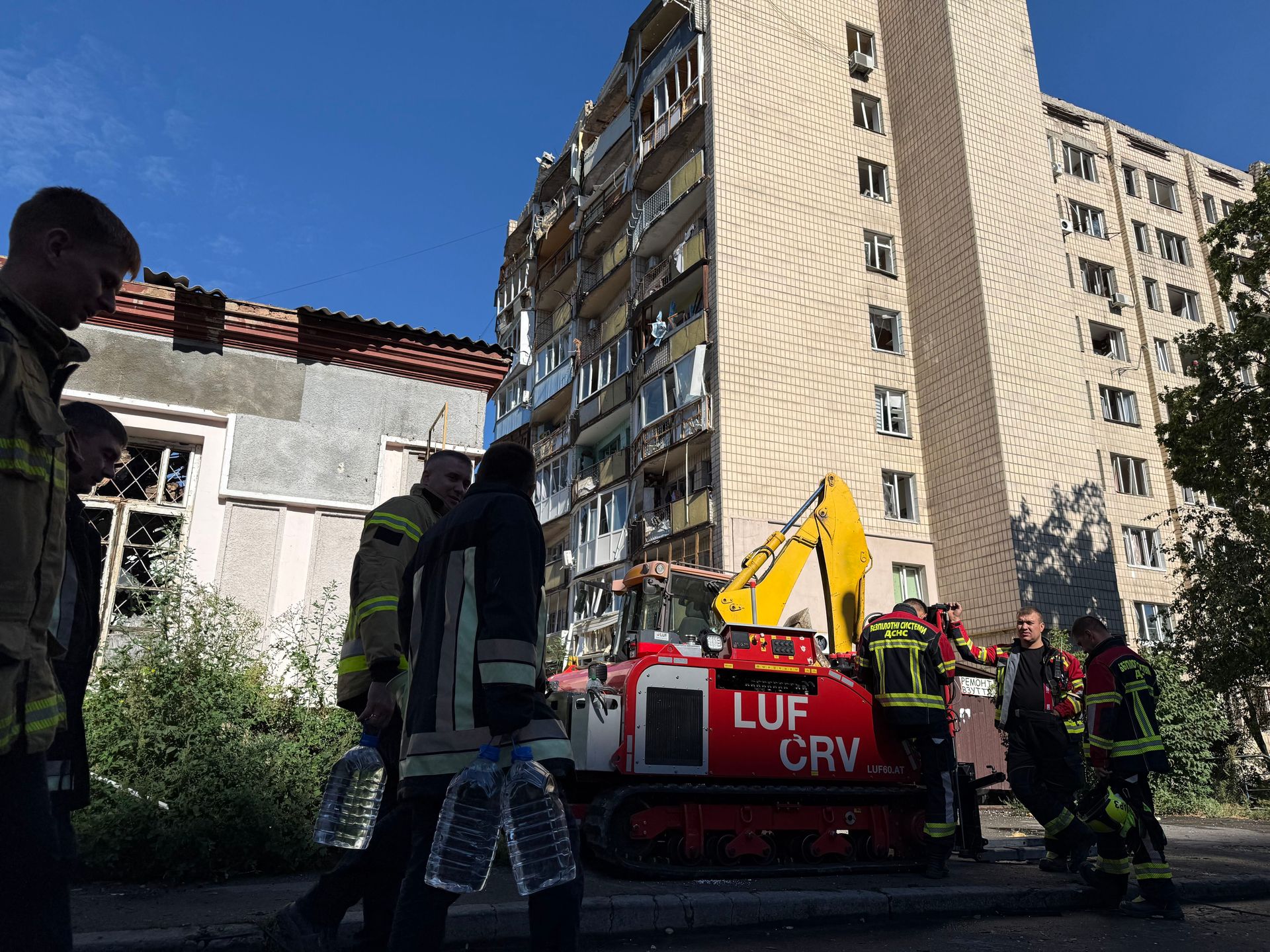
The composition of the strike shows a familiar but increasingly refined Russian scheme. Ballistic targets are intended to force Ukrainian air defense units to expend the most expensive and scarce interceptors, while the larger mass of Shahed, reactive variants of "Geran," "Gerber," and imitators of "Parody" stretch the reaction time, clog radars, and create uncertainty regarding priorities. The Ukrainian side claims that 137 out of 172 drones were reactive. If this description is accurate, it is not just about quantitative escalation of the raid, but an attempt to shorten the window in which mobile fire groups and electronic warfare assets can hit targets.
The "Iskander-M," KN-23, "Zircon," and S-400 missiles mentioned by Ukrainian sources belong to different classes. The "Iskander-M" is an operational-tactical complex with a range close to the treaty limit of 500 kilometers and a quasi-ballistic trajectory that complicates interception. The KN-23 is typically associated with North Korean technology, while the "Zircon" is designed as a hypersonic anti-ship missile. However, attributing a specific munition in the night strike requires independent verification through debris. Military journalism often turns preliminary identification into a definitive fact — this is how beautiful but unreliable reports are born.
Why Kyiv and Energy Nodes Became Targets
The strike was aimed not only at residential areas. Ukrainian reports indicate damage to substations connecting the Rivne and Khmelnytsky nuclear power plants with Kyiv and central regions, as well as damage to the Northern Bridge. The Russian "Rossiskaya Gazeta" additionally reported significant damage to the Tripoli TPP with a capacity of 1800 MW and the "Kyiv" substation, but these details should be separated from the confirmed consequences reported by Ukrainian services. In any case, the choice of targets is logical: the electricity transmission network and a major bridge create a simultaneous military, economic, and psychological effect.
For Moscow, this is an attempt to turn the superiority in the volume of launches into an advantage at the campaign level. Even if most drones are intercepted, more than ten that break through or fall in designated areas can disrupt power supply, transport, and emergency services operations. In this sense, the interception percentage is misleading. Ninety percent of destroyed targets do not equate to ninety percent of prevented damage if the remaining ten percent are key facilities.
Vulnerability of the Russian Model
But this strategy has its limits. Ballistic missiles are significantly more expensive than most strike drones, and their use against targets deep in Ukraine requires constant expenditure of stocks, production capacities, and intelligence information. The mass drone component is cheaper; however, reactive variants are more complex to produce and operate. The Russian industry can maintain a high pace, but this does not mean infinite elasticity. Already, in one salvo, a mix of domestic developments, the Iranian heritage line of Shahed, North Korean missiles, and upgraded Soviet solutions are combined. Such cooperation increases the mass of the strike but simultaneously demonstrates technological dependence.
There is also an operational problem. Repeated attacks on one metropolitan agglomeration allow Ukraine to concentrate intelligence, distribute mobile groups, and prepare emergency scenarios in advance. Therefore, Moscow is forced to change launch directions and add false targets, while Kyiv is developing cheap interceptors, electronic warfare, and decentralized generation. This is no longer a "missile versus missile" competition. It is a contest of production cycles, logistics, and the ability to restore the network faster than the opponent can destroy it.
Strategic Conclusion
The night strike on November 7 does not prove either the collapse of Ukrainian air defense or a decisive success for the Russian missile campaign. It shows something else: the Russian command considers exhausting defense and energy infrastructure a more realistic path to pressure than waiting for a quick breakthrough on the front. The Ukrainian 24 impact areas confirm that a high interception rate does not solve the problem of distributed defense, especially when ballistic and drone targets arrive within the same timeframe.
My forecast is cautious. In the coming months, we should expect not necessarily more powerful but more frequent and technologically mixed raids. Their outcome will be determined not by advertised figures of destroyed targets but by whether Ukraine can maintain the trunk nodes of electricity supply and transport arteries with a limited stock of expensive interceptors. Russia's bet on exhaustion may work, but only until the cost of each new salvo begins to rise faster than its military effect.
Sources
- Fakty.com.ua, November 7, 2026 — data from the Air Forces of the Armed Forces of Ukraine on the composition of the strike and interceptions.
- My.ua, November 7, 2026 — consequences of the attack in Kyiv region and the number of impact areas.
- RIA Novosti, November 7, 2026 — the Russian official version of the results for the day.
- Russian Gazette, November 7, 2026 — Russian description of damage to infrastructure.
On November 7, 2026, Russian forces launched a night strike on Kyiv, deploying 36 ballistic missiles and 172 drones. Ukrainian Air Force intercepted 149 drones and 4 missiles. The attack targeted energy infrastructure, aiming to disrupt power supply and test the limits of Ukrainian air defense. Russian claims of extensive damage remain unverified.
- 172 drones and 36 ballistic missiles were launched at Ukraine.
- 149 drones and 4 missiles were intercepted by Ukrainian forces.
- Russian claims of 903 destroyed Ukrainian drones are unverifiable.
- The strike targeted energy infrastructure and military assets in Kyiv.
- The operation aims to exhaust Ukrainian air defense capabilities.