
Israel strikes more than 100 Hezbollah sites and pushes a battalion towards the Litani.
 Ahmed Al-Rashid
Israel Strikes More Than 100 Hezbollah Sites and Deploys a Battalion Towards the Litani
On May 26, 2026, the ceasefire on the Lebanese front no longer resembled a ceasefire. The Israeli army announced strikes on more than 100 sites linked to Hezbollah in the south and Bekaa Valley, while field reports spoke of clashes near the Litani River and the deployment of an additional battalion to the front. This is not just another round of bombing in a long war. Militarily, approaching the Litani means that Israel is no longer satisfied with a policy of deterrence by fire, but is trying to turn the river into a practical security line, even if it does not label it as annexation or a permanent buffer zone.
The event came days before anticipated talks in Washington between Lebanese and Israeli delegations, at a moment when American diplomacy is trying to weave together the threads of a broader ceasefire with Iran. Here lies the importance of the timing. Tehran wants Lebanon to be part of any settlement, and Israel wants to assert that the Lebanese front is not an Iranian bargaining chip but an independent Israeli operational theater. Between these two logics, southern Lebanon once again becomes the place where the region tests the limits of grand words like ceasefire, deterrence, and sovereignty.
What Has Changed on the Ground
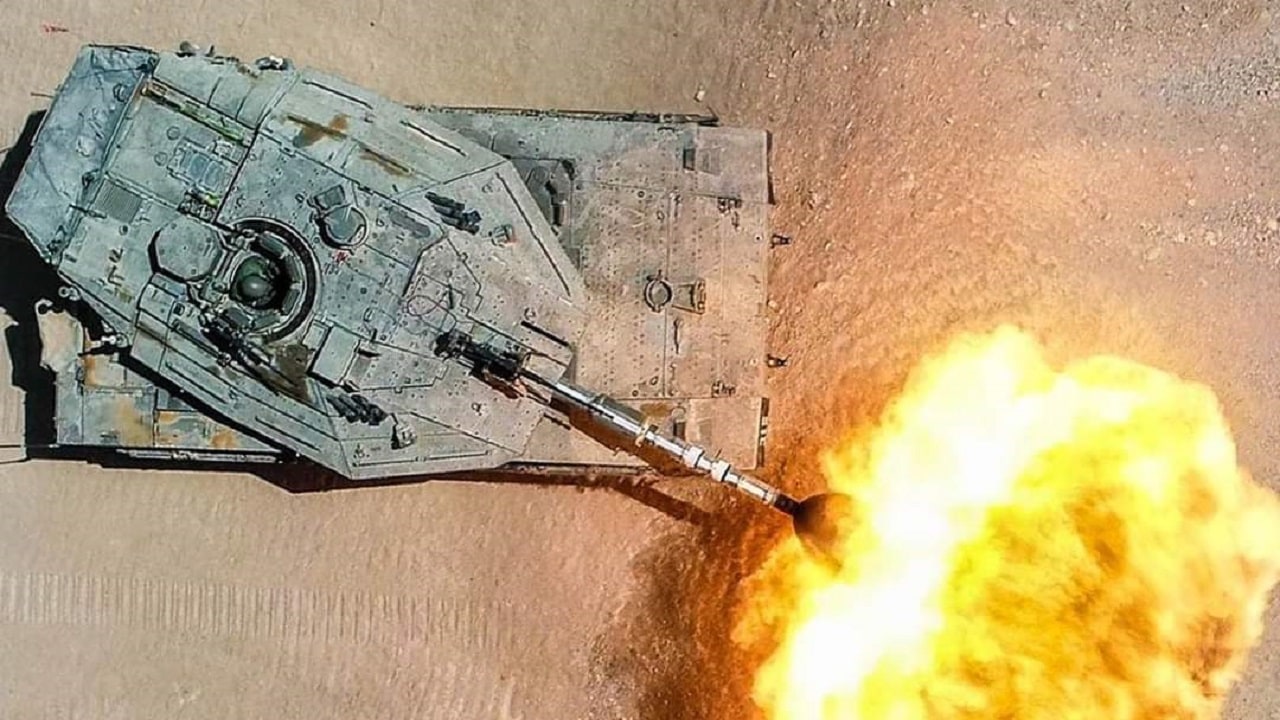
According to reports published on Tuesday, the Israeli army stated that its strikes included weapon depots, command centers, and observation points in southern Lebanon and the Bekaa Valley. This is a familiar list of targets in military statements, but it conceals a more important issue: Israel is simultaneously striking the tactical infrastructure close to the border and the rear infrastructure that allows Hezbollah to rebuild its fighting capabilities. If the goal is merely to silence a launch platform, there is no need to strike this many sites. However, if the goal is to prevent reorganization, then the extensive strikes become part of a long war of attrition.
The Litani is not just a river on the map. Since the 2006 war and UN Security Council Resolution 1701, the line south of the Litani has represented the theoretical limit that is supposed to be free of heavy Hezbollah forces. In practice, this has not been achieved stably. Every soldier who has served in the area knows that controlling a village or a hill does not mean controlling the social and military network that lives beneath it. Therefore, pushing Israeli forces into deeper areas does not automatically solve the problem; it merely shifts it to a more costly level.
Wired Drones Change the Rhythm of the Front
The information that deserves attention is not just the number of targets, but Prime Minister Benjamin Netanyahu's reference to Hezbollah's use of fiber-optic drones. This type of drone, which has appeared extensively in Ukraine, reduces the effectiveness of traditional electronic jamming because it does not rely on an easily severed wireless link. In the environment of southern Lebanon, where the terrain is tight, villages are close together, and lines of sight are limited, a small wire-guided drone can become both an eye and a projectile at the same time.
Israel has a clear air and intelligence superiority, but it faces a problem here that is less glamorous than F-35 images and more troubling for infantry and armor: how to protect a static or advancing force from a cheap weapon approaching at low altitude and not announcing itself electronically? The answer is not to purchase a single new platform, but to establish a complete system of short-range surveillance, rapid fire, mobility discipline, and daily training. Here, the triangle of capability that I often repeat comes into play: equipment alone is not enough, training without an institution does not hold, and an institution without political will becomes paper.
Hezbollah Between Attrition and Repositioning
It is a mistake to portray Hezbollah as if it has returned to its previous strength entirely, just as it is a mistake to assume that Israeli strikes have eliminated its capabilities. The organization that has lived for decades in southern Lebanon knows how to lose a depot and redistribute ammunition, and how to lose a field commander and replace him with a smaller, less visible leadership. But this does not mean it is in a comfortable position. Repeated strikes in the Bekaa and the south hit the depth of communication between storage areas and engagement zones, forcing the party to use longer and more dangerous routes.
In my estimation, Hezbollah is trying to achieve two contradictory goals. The first is to remain active enough so that it does not appear to have emerged from the Iranian war empty-handed. The second is to avoid launching a comprehensive confrontation that would allow Israel to expand its field occupation or give Washington a pretext to separate the Lebanese file from any deal with Tehran. Therefore, we see a pattern of drones and limited attacks instead of a comprehensive rocket barrage. This is not moral restraint, but a calculation of survival.
The Lebanese State in a Position of Armed Spectator
The Lebanese army is the institution that is supposed to hold the ground in any settlement south of the Litani, but it faces a nearly impossible equation. It cannot enter into a war with Israel, nor can it disarm Hezbollah by force, nor can it convince the residents of the south that the state is capable of protecting them if Israel returns to establish a real security zone. This is the essence of Lebanese weakness: it is not just a lack of rifles, but a lack of unified political decision on who has the right to wage war.
Any agreement in Washington will look neat on paper if it talks about an Israeli withdrawal, the deployment of the Lebanese army, and a halt to Hezbollah's attacks. But paper does not hold the valleys. The practical question is who monitors, who punishes, and who bears the first clash after signing? If the answer is an international committee without tools, we will return to the old formula: a declared ceasefire, low-intensity war, and civilians paying the price.
The Reflection of the Lebanese Front on the Iran War
Linking Lebanon to negotiations with Iran is not a diplomatic detail. Tehran sees Hezbollah as part of its front-line defensive depth, and Israel sees striking Hezbollah as an opportunity to reduce Iran's ability to respond indirectly. Therefore, every raid in the Bekaa and every clash near the Litani carries a message to the negotiating table. The Israeli message is clear: even if a ceasefire is established with Iran, Israel will not accept Hezbollah's return to the south of the Litani as it was before the war.
The Iranian message is different: the Lebanese front cannot be isolated from the broader regional arrangement. This makes Lebanon once again a hostage to maps not drawn solely by the Lebanese. As the old military saying goes, he who does not have the supply line does not have the battle. Lebanon today does not have its political decision line, and thus finds itself between an advancing Israeli army under the pretext of security, an armed party fighting under the pretext of deterrence, and a state trying to survive between them.
Summary by Ahmad Al-Rashed
Striking more than 100 sites is not sufficient evidence of an Israeli victory, just as the continued attacks by Hezbollah are not sufficient evidence of comfortable resilience. The truth is colder than that. Israel is building a battlefield reality near the Litani, Hezbollah is trying to prevent this reality from becoming a permanent base, and the Lebanese army is being asked by the world to be a referee in a match for which it does not have the whistle.
The paradox is that everyone talks about a ceasefire while each side is improving the terms for the next war. Israel wants a security depth without declaring occupation. Hezbollah wants resistance without a comprehensive war. Iran wants a Lebanese card without paying the full price. And Lebanon wants sovereignty without sufficient tools. This is not just a border crisis, but a complete security system crisis in the Eastern Mediterranean. Practically, if the Litani reaches the negotiating table as a line on paper and does not arrive as an executable power arrangement, we will remain before the same equation: a small river carrying more than a whole state can bear.
Sources
- Associated Press, May 26, 2026, report on clashes between Israel and Hezbollah near the Litani River and strikes on more than 100 sites.
- Associated Press, May 25, 2026, report on Israeli strikes in Lebanon and Netanyahu's statements regarding fiber-optic drones.
- JNS and Israeli media, May 26, 2026, statements from the Israeli army about targeting more than 100 Hezbollah sites in the south and Bekaa.
Israel conducted airstrikes on over 100 Hezbollah sites in southern Lebanon and the Beqaa Valley on May 26, 2026, while deploying an additional battalion to the Litani River front. The strikes targeted weapon storage and command centers, indicating a shift in Israel's military strategy. Clashes were reported near the Litani River, and Hezbollah is adapting its tactics in response to the ongoing Israeli operations.
- Israel conducted airstrikes on over 100 Hezbollah sites in southern Lebanon and the Beqaa Valley.
- Clashes occurred near the Litani River as Israel deployed an additional battalion to the front.
- The strikes targeted weapon storage, command centers, and observation points.
- Hezbollah is adapting to the situation by using drones and limited attacks instead of large-scale missile strikes.
- The Lebanese Army is in a difficult position, unable to confront Israel or disarm Hezbollah.