
ISSP Returns to Nigeria in 2026 — 17 Soldiers Killed and the Sahelian Border Shifts
 Marie Dubois
ISSP Returns to Nigeria in 2026 — 17 Soldiers Killed and the Sahelian Border Shifts
In Giro Masa, in the Shanga area of Kebbi, the attack on March 24 initially resembled just another ambush in northwestern Nigeria. Ten soldiers killed, an isolated post, assailants quickly categorized as Lakurawa. Then the Islamic State in the Sahel Province, or ISSP, claimed the operation. In May, the same group also claimed an attack near Rumji Dan Tudu, in Illela, Sokoto State, where seven more soldiers were killed.
These two claims, noted in ACLED's June 2026 Africa overview, are not just a minor detail of propaganda. They mark the first official acknowledgment of ISSP operations in Nigeria since 2019. On the ground, this means that an old debate about the Lakurawa is gradually closing. This network is no longer just a local nebula of armed banditry and radical preaching. It increasingly appears as the Nigerian facade of a Sahelian apparatus that operates on both sides of the border with Niger.
The Return via the Trails of Kebbi and Sokoto
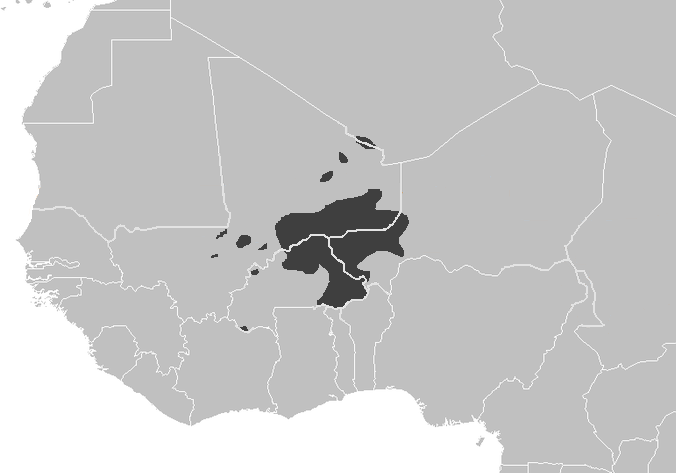
Geography matters here more than press releases. Shanga, on the axis of the Niger River and secondary roads to the northwest, is not Maiduguri. Illela, facing Niger, is not Lake Chad. For an officer accustomed to Nigerian counter-terrorism maps, this is precisely what is concerning. The ISSP is not reappearing in the classic theater of Boko Haram or ISWAP. It is returning from the west, where the Nigerian state already has to manage rural banditry, cross-border trafficking, agropastoral conflicts, and chronic weakness of forward posts.
Between Sokoto, Tahoua, and Dosso, the border is not a line. It is a depth. Motorcycles can cross it via dozens of trails, weekly markets serve as contact points, and armed groups know how to exploit family or commercial ties better than states can coordinate their radios. In such spaces, a group does not need to hold a city to exert influence. It just needs to impose risk, tax a road, attack a detachment, and then disappear before reinforcements arrive.
JNIM and ISSP Work the Same Lock
The key point in ACLED's report is the simultaneity. While the ISSP formalizes its presence in western Nigeria, the Jama'at Nusrat al-Islam wal-Muslimin, or JNIM, is pushing elsewhere in the same border arc. ACLED mentions the attack on a National Guard camp in Kirtachi, Niger, with at least 12 soldiers killed and seven taken prisoner. In Benin, JNIM struck military positions in Koualou, a contested border town with Burkina Faso, seizing weapons, ammunition, and equipment.
This is not yet proven coordination between ISSP and JNIM. Caution is warranted. These two organizations remain rivals, and their local interests often diverge. But operationally, they exploit the same weakness: the Benin-Niger-Nigeria triangle is too vast for the available forces, too open for static defense, and too politically fragmented for a fluid response.
In a staff room, this would be called a coverage constraint. On the ground, it translates differently: a commander must choose which axis to abandon tonight. If he reinforces Kirtachi, he exposes Illela. If he protects Koualou, he strains his units north of Benin. If he wants to secure markets and civilian convoys, he disperses the platoons just as the jihadists concentrate their motorcycles.
Abuja Still Looks Too Much Towards Lake Chad
Nigeria inaugurated a wargaming center at the Army War College in Abuja in June. The initiative is useful. It shows that the Nigerian army understands the need to think faster in the face of changing threats. But the return of the ISSP via Kebbi and Sokoto raises a harsher question: do Nigeria's mental models of war remain too focused on Borno, Sambisa, and Lake Chad?
For fifteen years, the best units, intelligence procedures, and political attention have been structured around the northeast. This was logical. Boko Haram and ISWAP wreaked havoc there. But northwestern Nigeria is not the same operational theater. Groups navigate an environment where banditry is sometimes more visible than jihadism, where community grievances provide cover, and where the distance between a criminal attack and an ideological operation can be deliberately blurred.
The ISSP claim thus changes the reading. It does not automatically transform all Lakurawa into soldiers of the Islamic State. However, it forces Abuja to treat certain segments of this movement as a strategic extension of the Sahel, not just as an internal security problem. This is an important difference for intelligence, rules of engagement, and cooperation with Niamey.
The Political Trap of Regional Cooperation
This is where politics complicates the map. Niger is led by a junta that has broken with some of its former Western partners. Burkina Faso has just severed diplomatic relations with France, accusing Paris of supporting subversive networks and terrorists, accusations rejected by France as hostile and unfounded according to RFI and France 24. Benin, on the other hand, remains closer to Western partners and seeks to protect its north without importing the Sahelian war into its coastal cities.
The jihadists do not need to resolve these contradictions. They inhabit them. When capitals distrust each other, mixed patrols become rare, intelligence exchanges slow down, and cross-border pursuits turn into diplomatic incidents. The ISSP and JNIM understand this from experience. They know that a politically sensitive border is often more useful than a forest.
The risk is not just that the ISSP gains ground in Nigeria. The risk is that it imposes a war of attrition on coastal and Sahelian states that their military apparatus cannot sustain for long.
What the Coming Months Will Reveal
Three indicators deserve to be monitored. The first is the frequency of ISSP claims in Nigeria. If Giro Masa and Rumji Dan Tudu remain two isolated episodes, the effect will be mainly psychological. If other statements appear in Kebbi, Sokoto, or Zamfara, it will be time to talk about establishment.
The second indicator is the captured material. The attacks in Kirtachi and Koualou show that jihadist groups are not just seeking media effects. They are resupplying their columns with weapons and ammunition. This is often a sign of a campaign preparing, not just a local opportunity.
The third is the reaction of border villages. In these areas, military information often arrives after social information. When local leaders begin negotiating taxes, passages, or neutralities with an armed group, the state has already lost part of the depth.
The next alert may not come from a large city. It may come from a post attacked on a trail between Sokoto and the Nigerien border, or from a deserted market because traders will have understood before Abuja that the Sahelian front has changed direction.
ISSP claimed responsibility for attacks in Nigeria, resulting in the deaths of 17 soldiers in two incidents: 10 soldiers in Giro Masa, Kebbi, on March 24, 2026, and 7 soldiers near Rumji Dan Tudu, Sokoto, in May 2026. This marks the first official acknowledgment of ISSP's operations in Nigeria since 2019, indicating a significant shift in the operational landscape.
- ISSP claimed responsibility for the deaths of 17 soldiers in Nigeria.
- 10 soldiers were killed in an attack on March 24, 2026, in Giro Masa, Kebbi.
- 7 soldiers were killed in an attack near Rumji Dan Tudu, Sokoto, in May 2026.
- The report marks the first official recognition of ISSP operations in Nigeria since 2019.
- The geographical context indicates a shift in operational focus for ISSP in Nigeria.