
ISWAP strikes Dumba in Nigeria — three foreign fighters killed in the November 2026 offensive
 Marie Dubois
ISWAP strikes Dumba in Nigeria — three foreign fighters killed in the November 2026 offensive
In Dumba, indirect fire takes the initiative
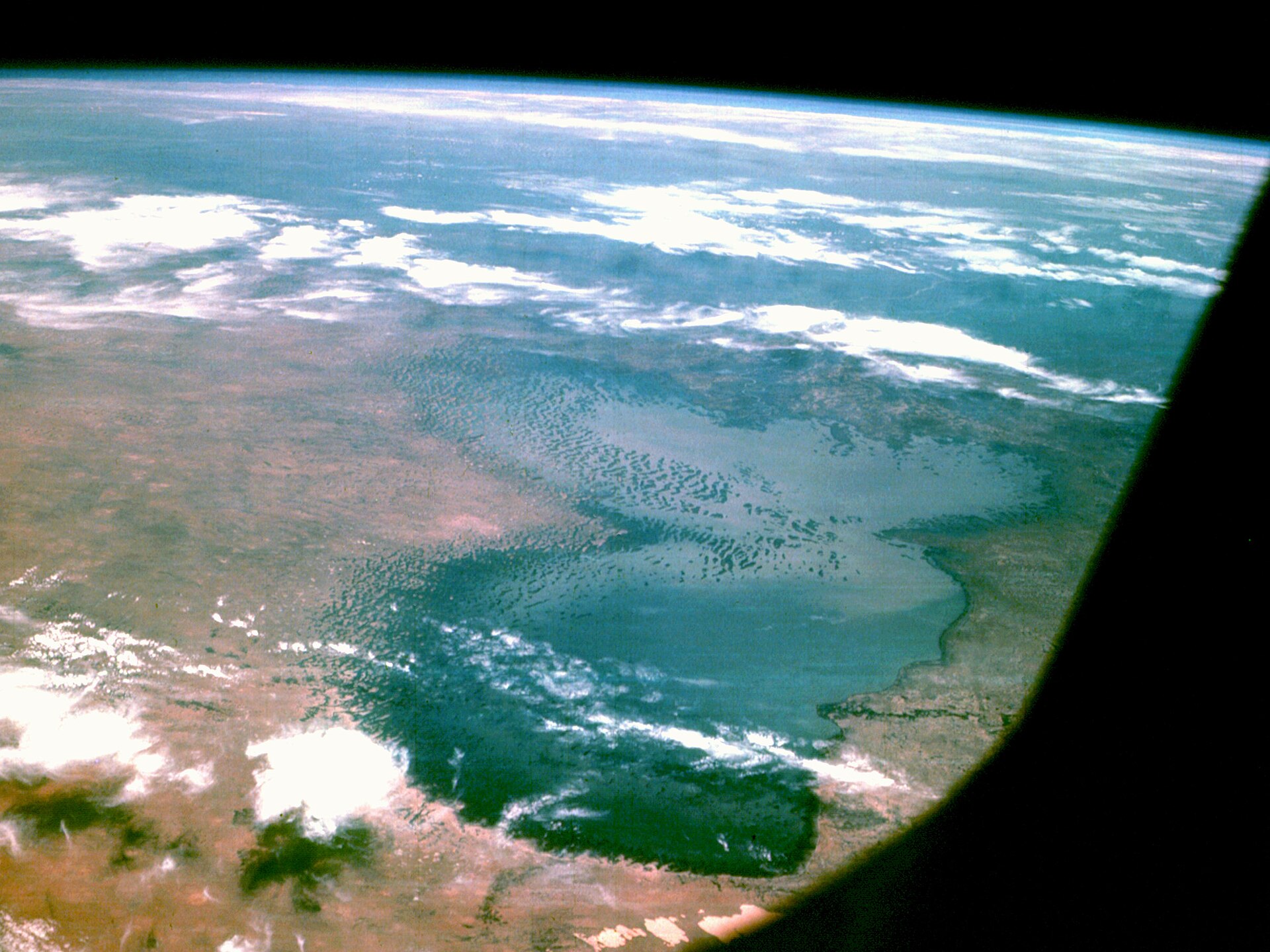
Dumba, Borno State, November 1. Elements of the Nigerian army spotted a group of fighters from the Islamic State West Africa Province (ISWAP) after their movement to the north, then moved their firing team before engaging the position with 60 mm mortars. According to security sources cited by specialist Zagazola Makama and reported by Daily Post, several militants were killed, three of whom were foreigners. However, the toll remains an assessment from military sources, not an independent count.
This detail matters. In the Lake Chad basin, the issue is not just about striking a camp. It is about whether Nigerian forces can maintain contact with mobile units in a terrain of channels, islets, and seasonal villages where a position identified in the morning can be abandoned by evening.
A series of actions around Lake Chad
The operation was conducted by Sector 3 of Operation Hadin Kai, with units engaged in the Lake Chad basin setup and the 403rd amphibious brigade. The available account describes a classic yet revealing sequence: reconnaissance, moving the target out of effective range, maneuvering the mortar team, then firing after new intelligence acquisition. This is not a spectacular strike. It is contact work, with a narrow margin of error.
The action in Dumba follows two operations announced by the Nigerian Navy on October 28 and 30. The Navy claims that its marines killed 28 fighters during the first assessment, then about six more in a separate strike against an enclave in Dumba. It presented these results as a total of 34 militants neutralized, while specifying that the figures remained subject to verification. The discrepancy between the statements, initial assessments, and intelligence information necessitates speaking of claimed losses, not established tolls.
On the ground, the decisive question is not the number announced in Abuja, but the ability to prevent ISWAP from reoccupying the same network of paths and water points.
Why the presence of foreign fighters is important
The reported death of three foreigners does not, by itself, prove the existence of an integrated international command. However, it signals a regional depth that counter-terrorism operations cannot treat as a mere Nigerian internal security issue. Lake Chad connects northeastern Nigeria to Niger, Chad, and Cameroon through waterways and bush paths that bear no resemblance to an administrative border.
ISWAP needs these spaces to move cadres, tax fishermen and herders, recover weapons, and maintain temporary sanctuaries. Aquatic mobility provides the group with protection that fixed Nigerian bases cannot negate. The creation and employment of the marine component thus represent a real operational advance: they allow the lake to be transformed into a maneuver space rather than a blind zone.
But this capability remains local. It can destroy an enclave, disrupt a gathering, or kill cadres. It does not guarantee that the army will sustainably control the banks when patrols withdraw. In this theater, controlling a base does not equate to controlling the corridors that supply it.
The issue of numbers and tempo
Nigerian military statements often serve a dual function: to inform and to demonstrate that the initiative lies with regular forces. The announcement of 34 dead in three days, followed by a new strike in Dumba, constructs a narrative of continuous pressure. This narrative is not necessarily false, but it does not measure ISWAP's resilience. A group can suffer significant losses and maintain its supply networks, informants, and ability to choose the timing of an attack.
The human intelligence mentioned after the November strike is, in this regard, more important than the photograph of a destroyed position. Soldiers located the group's movement and adjusted their range. The difficulty will be maintaining these sources when the organization responds with intimidation, taxation, or elimination of communities suspected of cooperating with Abuja. Without regular ground presence, intelligence quickly dries up.
A tactical success that does not resolve the war
The strike on November 1 shows that the Nigerian army can combine surveillance, amphibious maneuver, and indirect fire in an area where ISWAP thought it could gain time through movement. It is a credible tactical success, and the presence of foreigners among the dead warrants precise follow-up: nationalities, roles, arrival routes, and links with the lake networks.
Caution remains necessary. Public information does not allow for independent confirmation of the total number of casualties, nor does it distinguish foreign cadres from passing auxiliaries. The next indicator will be the group's behavior, not the daily communiqué. If it temporarily abandons Dumba but strikes a base, a convoy, or a community on another shore, it will have simply shifted the problem.
For Nigerian forces, the operational priority is therefore clear: to transform one-off strikes into mobile and repeated presence, with units capable of holding the water corridors, protecting human sources, and closing retreat routes. In Lake Chad, ISWAP does not need to conquer a city. It only needs to remain elusive long enough to make every military withdrawal a silent victory.
Sources
The Nigerian Army engaged ISWAP fighters in Dumba on November 1, 2026, using indirect fire and 60 mm mortars. Three foreign fighters were confirmed killed, contributing to a total of 34 militants neutralized in recent operations. This operation highlights the ongoing military efforts against ISWAP in the Lake Chad region, where mobility and control of supply routes remain critical challenges.
- Nigerian Army engaged ISWAP fighters in Dumba on November 1, 2026.
- Three foreign fighters were confirmed killed in the operation.
- A total of 34 militants were reported neutralized by Nigerian forces in recent operations.
- The operation involved indirect fire and mortar strikes by the Nigerian Army.
- The presence of foreign fighters indicates a regional dimension to ISWAP's operations.