
ISWAP strikes Kukawa in Nigeria — 10 soldiers killed and the Lake Chad front cracks in 2026
 Marie Dubois
ISWAP strikes Kukawa in Nigeria — 10 soldiers killed and the Lake Chad front cracks in 2026
In Kukawa, Borno State, fighters from the Islamic State West Africa Province (ISWAP) attacked a position of the 101st Battalion of the Nigerian Special Forces on October 7. They came from four directions. An officer quoted by the Associated Press reports ten soldiers killed; the Nigerian military statement does not confirm this toll. This discrepancy is not an administrative detail. It serves as a reminder that, in the Lake Chad basin, operational information still arrives after the fight.
An isolated base under pressure
The Nigerian deployment ultimately held. The army claims that its aviation supported the counterattack, that the assailants withdrew, and that more than 25 militants were killed. Ammunition is said to have been recovered. The figure for ISWAP's losses remains a military claim, while the loss of about ten soldiers is attributed to a separate security source by the AP; thus, the two elements must be presented separately.
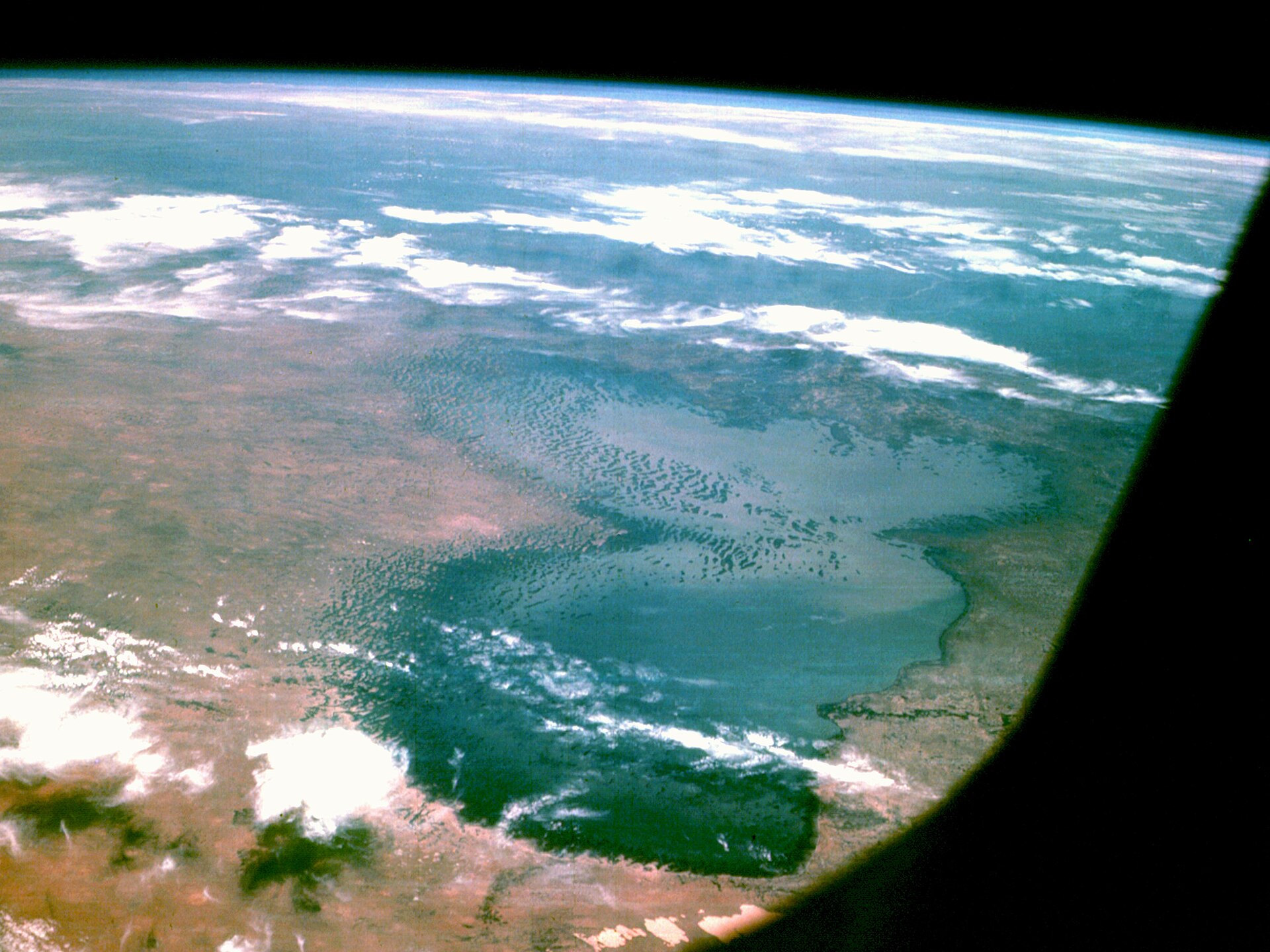
The geography explains the violence of the episode. Kukawa is located on the western shore of Lake Chad, northeast of Maiduguri, in an area of tracks, seasonal islands, and poorly supplied villages. An advanced base there protects a road and a population, but it also constitutes a fixed target. For the attacker, four axes of approach allow for saturating the lookouts and testing the reactions of the aviation. For the defender, every reinforcement must cover a distance where at night, dust and communications become risk multipliers.
Tactical success does not restore control
The statement from the HADIN KAI operation describes an army capable of holding its positions with air support. That is the positive point. But repelling a column does not mean controlling the terrain that fed it. Fighters can abandon the assault, maintain their intelligence networks, and return against another garrison when the planes leave.
Recent events in the basin show the same mechanism. In Marte, civilians who left the camps to gather firewood or cultivate were caught in an economy of checkpoints, taxes, and passes imposed by armed groups. TruthNigeria, citing local officials, analysts, and police sources, reports at least fifteen confirmed deaths after an attack on displaced persons; Reuters also reported at least eighteen villagers killed or missing. Again, several figures are circulating, and not all the most serious details have been verified.
This underground economy is ISWAP's true advantage. It transforms waterways, agricultural land, and markets into military resources. A resident who pays to access a field finances the group; one who informs the army risks execution; one who remains in a camp lacks food. The group does not need to administer every kilometer. It only needs to decide who can move.
The test for Abuja and the multinational force
The assault on Kukawa comes as Nigeria relies on a classic combination: special units, airstrikes, and information provided by the Civilian Joint Task Force. This combination can save a base. It does not solve the problem of remote garrisons that must simultaneously protect civilians, crops, and lake routes.
The precedent of Pulka, in the Gwoza area, is instructive. In September, according to the spokesperson for the HADIN KAI operation quoted by Vanguard, the troops had repelled an ISWAP attack with one Nigerian injury and air support. The repetition of the pattern — massive attack, defense of the position, strikes on the retreat — shows a tactically reactive army, but also an adversary that chooses the time and place of engagement.
For the Multinational Joint Task Force, the problem extends beyond the Nigerian border. Fighters move between Borno, the Chadian basin, northern Cameroon, and areas near Niger. A base saved in Kukawa does not close the channels or markets that fuel the insurgency. Without a lasting presence around the communities, aviation merely postpones the deadline.
The next target will likely be a logistical weakness
It would be premature to speak of a strategic breakthrough by ISWAP. The position held, and the organization suffered losses according to the army. But the attack proves that it retains the capacity to concentrate men against a special base, to approach it from multiple flanks, and to rely on a civilian environment under constraint.
The question in the coming days will be less about how many militants were killed than about measuring what was taken, learned, or spotted. Ammunition, radio frequencies, shift schedules, and patrol habits are sometimes worth more than a communicated toll. On the ground, the war will be decided around these details. If Abuja does not transform the defense of Kukawa into control of roads, farms, and water points, ISWAP will have lost an assault but retained the initiative.
Sources
ISWAP attacked the Nigerian Special Forces 101st Battalion in Kukawa on October 7, 2026, resulting in 10 Nigerian soldiers killed and claims of 25 militants killed. The Nigerian military reported that their forces held the position with air support, but the attack highlights ongoing challenges in controlling the area. The geography of Kukawa complicates military operations, allowing ISWAP to exploit local conditions effectively.
- ISWAP attacked the Nigerian Special Forces 101st Battalion in Kukawa.
- 10 Nigerian soldiers were reported killed, while Nigerian military claims 25 militants were killed.
- The attack occurred on October 7, 2026.
- The geography of Kukawa complicates military operations due to difficult terrain.
- ISWAP maintains the ability to concentrate forces and exploit local conditions.