
J-20 and Drone Swarms Embrace AI Racing: America's Project Meridian Pushes Warfare to the Algorithmic Level
 Li Minghui
J-20 and Drone Swarms Welcome AI Race: US Project Meridian Pushes Warfare to the Algorithm Level
On October 18, the South China Morning Post revealed that the US Pentagon is advancing Project Meridian, co-chaired by Elon Musk and others, aimed at identifying key technologies needed for future warfare. The report suggests that China should establish a similar mechanism. The truly noteworthy aspect of this news is not just the emergence of another impressive project name, but rather that the Sino-US military-industrial competition is shifting from the performance of individual pieces of equipment to algorithms, data, and rapid iteration capabilities.
Changes in Combat Systems Seen Through a J-20
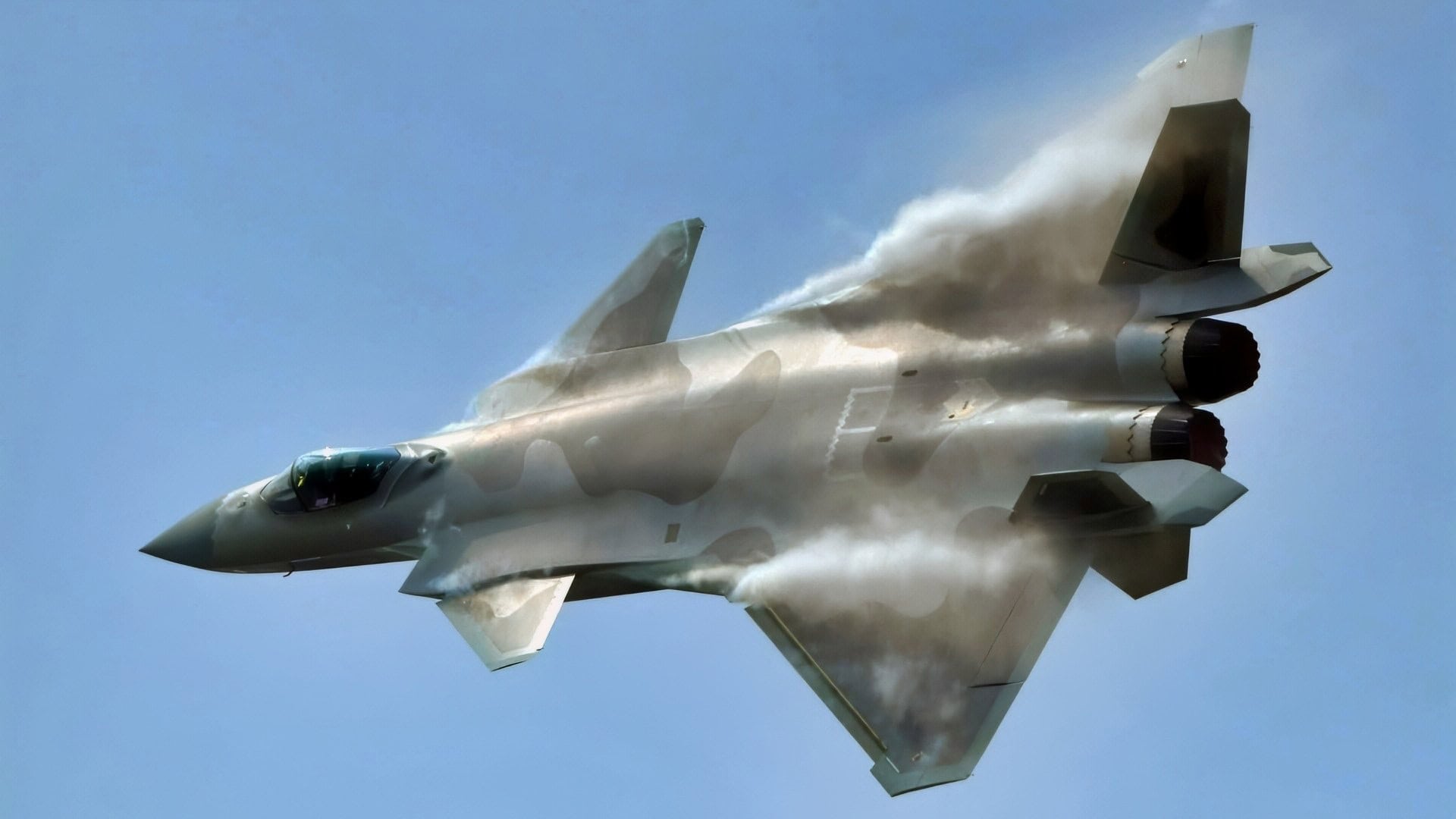
The value of the J-20 has never been just that of a stealth fighter. It requires sensors, data links, electronic warfare equipment, and ground command nodes to work together to translate stealth, long-range detection, and beyond-visual-range strikes into battlefield advantages. In the future, if low-cost drones, manned aircraft wingmen, and distributed satellite reconnaissance are integrated, the core issue will become who can complete the "detect-judge-assign target-strike" closed loop faster.
This is also the change that Project Meridian may bring. If it is merely a technology exhibition, its significance is limited; but if it can integrate Silicon Valley companies, traditional military factories, and operational units into the same rapid validation process, the advantage will not lie in any single algorithm, but in the ability to turn frontline feedback into the next version of software every week. In simple terms, future air combat may not be about who can build a more expensive aircraft first, but about who can make the entire system learn faster.
Strengths and Weaknesses of the PLA
China has a scale advantage in drone manufacturing, communication equipment, and large military industrial assembly. The Pearl River Delta, Yangtze River Delta, and western aviation industrial bases also have the capability to rapidly disseminate mature technologies to the troops. The J-20, Wing Loong-11, and various reconnaissance drones can theoretically become nodes in a distributed combat network. Chinese military industry is better at scaling up and speeding up a defined demand, which is particularly evident in the mass production of drones and electronic devices.
However, AI warfare is not simply about increasing the number of chips. The quality of training data, cross-service interfaces, continuous software upgrades, and whether frontline commanders trust machines will all determine whether the system can operate effectively in real combat. The shortcoming of the Chinese military-industrial system may not lie in algorithm papers, but in the mechanism for continuously testing algorithms after they are embedded in equipment. There is little public information available, and it can only be speculated whether the PLA has established a cross-departmental rapid procurement and evaluation process similar to Project Meridian.
The Real Competition is Supply Chain Speed
Recently, the US has placed drones, robots, and AI at the center of a new round of military budget discussions, indicating that Washington is concerned that the development cycles of traditional expensive platforms cannot keep pace with battlefield changes. China is facing not just a new project from the US, but the entire supply chain pressure from high-end GPUs, advanced packaging to military software ecosystems. Even if domestic alternatives can solve hardware supply issues, data labeling, model security, and reliability in electronic warfare environments still require long-term accumulation.
The author believes that Project Meridian is most likely to impact the PLA's equipment validation rhythm. In the past, the competition for a fighter jet or missile often revolved around finalization and deployment; however, the competition for AI systems requires continuous updates, as yesterday's effective recognition model may need retraining after a strong electromagnetic interference. Thus, the Sino-US military-industrial race will increasingly resemble a software industry competition, but it must also bear the security responsibilities of weapon systems.
Sources and Judgment Boundaries
- South China Morning Post report on October 18, 2026, regarding Project Meridian and its implications for China's military high-tech development
- South China Morning Post report on October 15, 2026, discussing the US $1.5 trillion defense budget and investments in drones, robots, and AI
- Analysis from Singapore's Straits Times on the normalization of China's recent multi-domain military activities and cross-domain coordination signals
What truly deserves attention is not whether China will replicate a similarly named project, but whether the PLA can integrate the J-20, drone swarms, satellites, and command networks into a system that allows for rapid trial and error. If the speed of software updates continues to lag behind the speed of equipment deployment, even the most advanced platforms may only result in "hardware leading, system hesitating."
The U.S. is advancing Project Meridian to identify key technologies for future warfare, emphasizing algorithmic capabilities and rapid iteration in military competition with China. The report highlights China's strengths in drone manufacturing and military technology but notes challenges in integrating AI systems effectively. The competition is increasingly focused on supply chain speed and the ability to adapt military systems quickly.
- The U.S. is advancing Project Meridian to identify key technologies for future warfare.
- China is encouraged to establish a similar mechanism for military technology development.
- The competition is shifting from equipment performance to algorithms and rapid iteration capabilities.
- China has advantages in drone manufacturing and military industrial capacity.
- AI warfare requires continuous updates and testing of algorithms.