
Japan’s 2026 Global Hawk Crash Exposes a Dangerous ISR Gap
 Marcus Chen
Japan’s 2026 Global Hawk Crash Exposes a Dangerous ISR Gap
The loss is small on paper and large in the operations room
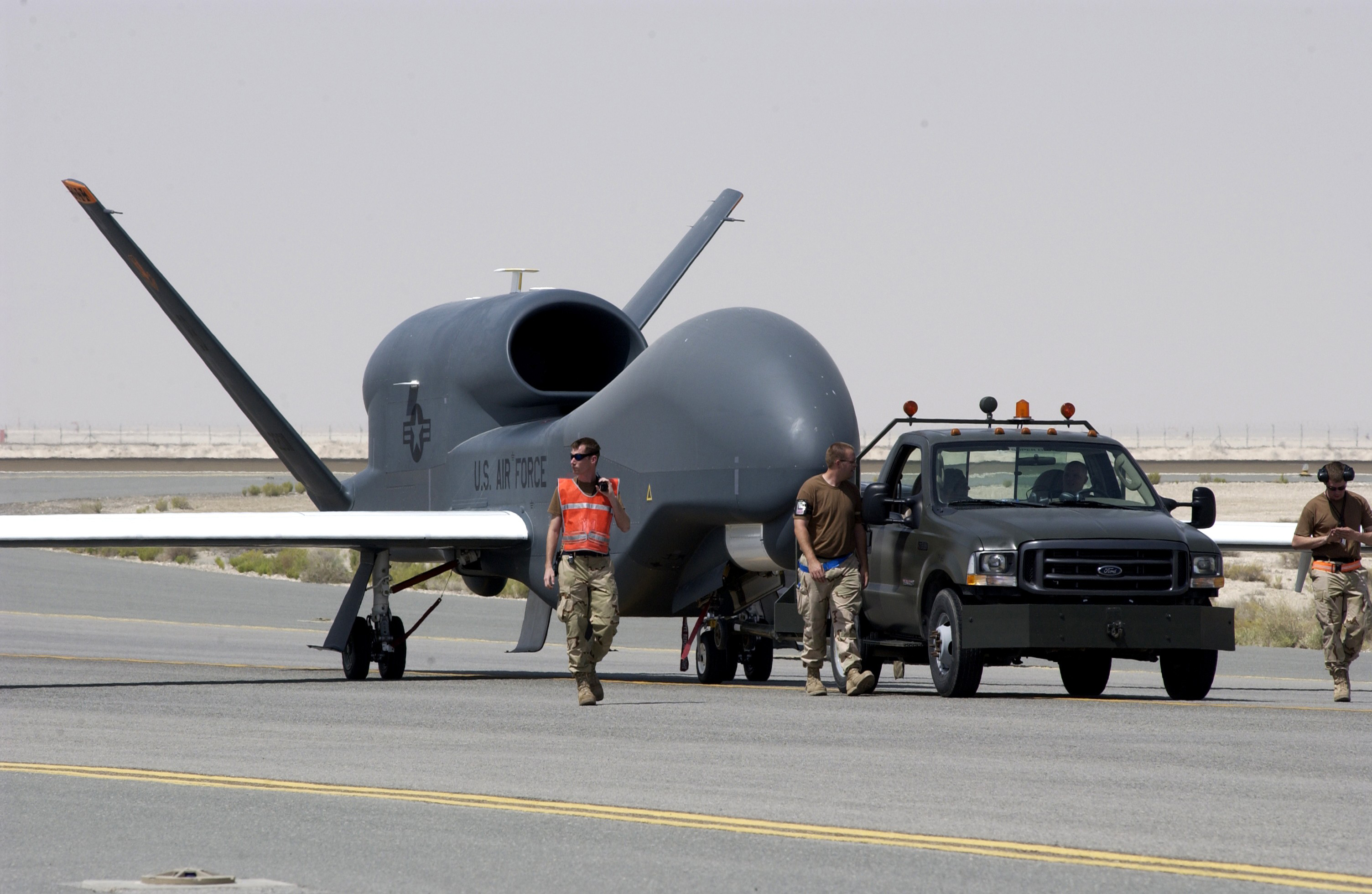
Japan has lost one of its three RQ-4B Block 30i Global Hawk unmanned surveillance aircraft. The drone went down in the Sea of Japan on September 15 after the Japan Air Self-Defense Force lost contact at 12:55 p.m.; its radar signature disappeared three minutes later over international waters. The JASDF confirmed the loss on September 16, while the cause remains unknown. That is the factual picture reported by Defense News, and it is already enough to expose a weakness in Japan’s intelligence, surveillance, and reconnaissance architecture.
A three-aircraft fleet is not a three-aircraft capability. It is a maintenance schedule, a training pipeline, weather constraints, mission preparation, and one bad day away from a major coverage hole. Losing one airframe immediately removes roughly 33 percent of the inventory. If a second aircraft is unavailable for maintenance or software work, Japan has only one long-endurance platform available for the entire country’s highest-priority collection tasks.
What Japan actually lost
The Global Hawk is not a strike aircraft. Its value is persistence. Each RQ-4B can remain aloft for up to 32 hours and operate at about 60,000 feet, giving Japan a sensor that can watch a large area without placing a crew inside contested airspace. Its integrated payload includes electro-optical and infrared sensors, synthetic aperture radar, and a ground moving target indicator. In practical terms, that means the aircraft can build a pattern of life around missile units, airfields, ports, and naval movements rather than merely provide a snapshot.
Defense News reported that Japanese Global Hawks are used to monitor North Korean missile preparations and Chinese military activity. The September 15 flight was not described as training by JASDF Chief of Staff Gen. Takehiro Morita. That detail matters. The aircraft was performing an operational mission when Japan’s already-thin high-altitude collection fleet suffered a catastrophic failure. The debris was located quickly by Japan Coast Guard and other assets, but finding wreckage is not the same as recovering lost coverage.
Reports from USNI News, NHK World-Japan, the Associated Press, and Nikkei Asia independently described the communications failure and presumed or confirmed crash. Their early reporting also underscored what is not known: Japan has not disclosed the mission, the aircraft’s precise track, or the cause. Any claim that this was a Chinese action would be speculation. The immediate military problem does not require a hostile explanation. A peacetime accident can create a wartime-sized intelligence gap.
The replacement plan does not replace the capability
Tokyo is moving toward a larger unmanned fleet. The Japan Maritime Self-Defense Force plans to introduce its first MQ-9B SeaGuardian in 2027, with 23 aircraft eventually planned for maritime domain awareness. Japan’s draft 2027 defense budget requested about $1.88 billion for the first 17 aircraft. That is a serious investment, but the SeaGuardian is not a one-for-one replacement for the Global Hawk.
- The RQ-4B offers endurance of up to 32 hours and operates at roughly 60,000 feet.
- The SeaGuardian is intended for maritime surveillance and has shorter endurance and range.
- The two fleets can complement one another, but they cannot be counted as interchangeable aircraft.
The distinction is operational, not cosmetic. A high-altitude Global Hawk can stay above much of the weather and examine a broad theater. A lower-endurance maritime drone can cover shipping lanes and surface contacts effectively, but it will need more basing, more launch and recovery cycles, and more careful allocation. Japan may eventually gain more hulls and airframes while still losing the ability to sustain continuous wide-area collection.
The American backstop is not a Japanese solution
The United States currently operates three RQ-4B Global Hawks from Yokota Air Base after moving them from Guam in May. Their presence offers a useful reinforcement, but allied availability should not be confused with assured Japanese access. U.S. aircraft have their own tasking priorities, and an American sensor cannot automatically solve Japanese command-and-control, data-processing, or national collection requirements.
There is also a timing problem. Washington had planned to retire its Global Hawks rapidly, although it will now keep operating them until 2033. That extension buys time, not certainty. By the end of that period, Defense News reported, only three Global Hawks are expected to remain in South Korea and two in Japan. The regional force is therefore aging even as the demands on it rise: North Korean missile activity, Chinese naval patrols, Russian movement in the northern approaches, and the need to give Tokyo and its partners warning before a crisis hardens.
Japan’s ISR math is getting worse before it gets better
Japan’s unmanned modernization has a sensible logic. Drones reduce risk to crews, extend surveillance persistence, and can distribute sensors across multiple bases. But the Global Hawk crash exposes the cost of buying exquisite capability in very small numbers. Three aircraft cannot generate resilient coverage. They generate a high-value schedule that is easy to disrupt through accident, maintenance, weather, or an adversary’s cyber and electronic attack.
The answer is not simply to purchase another expensive aircraft. Japan needs a layered architecture: more numerous maritime drones, crewed P-1 and P-3C patrol aircraft during the transition, satellites, commercial imagery, fixed and mobile coastal sensors, and a data network that can fuse all of it. It also needs transparent readiness reporting. The relevant question is not how many aircraft Tokyo owns, but how many hours of uncontested, processed, decision-quality surveillance it can produce every day.
A three-aircraft fleet can look modern in a procurement document. In a crisis, it looks like a single point of failure.
Japan will recover some capacity through the SeaGuardian program and temporary U.S. support. It will not recover resilience unless it expands the number of usable sensors and the people and networks that turn their feeds into warning. The Global Hawk crash is therefore more than an aviation mishap. It is a warning that Japan’s view of the Indo-Pacific still depends on too few irreplaceable platforms. The aircraft may be replaceable; the lost time on the collection schedule is not.
Sources
- Defense News, September 17, 2026: Japanese Global Hawk drone splashes down in crash.
- USNI News, September 16, 2026: Japan Air Self-Defense Force Recon Drone Crashes into Sea of Japan.
- NHK World-Japan, September 14, 2026: Japan Global Hawk aircraft may have crashed into sea.
- Associated Press, September 15, 2026: Japan says its surveillance drone probably crashed off its northwestern coast.
- Nikkei Asia, September 15–16, 2026: Japan’s Global Hawk presumed crashed after communications fail.
Japan lost one RQ-4B Block 30i Global Hawk drone in the Sea of Japan on September 15, 2026, during an operational mission. This incident exposes a significant gap in Japan's intelligence, surveillance, and reconnaissance capabilities, as the loss removes approximately 33% of its fleet. The Japan Air Self-Defense Force confirmed the crash, which raises concerns about the country's ability to monitor regional threats effectively.
- Japan lost one of its three RQ-4B Global Hawk drones on September 15, 2026.
- The drone crashed in the Sea of Japan after losing contact.
- The loss represents a significant gap in Japan's ISR capabilities.
- Japan plans to introduce MQ-9B SeaGuardian drones in 2027 as part of its modernization efforts.
- The U.S. operates additional Global Hawks in the region, but their availability is not guaranteed.