
Japan's Nuclear Submarine Discussion Begins, 2026 Security Document Revisions Question the Maritime Self-Defense Force's Sustainability
 Tanaka Takashi
Japan's consideration of nuclear submarines begins, the 2026 security document revisions question the sustainability of the Maritime Self-Defense Force
On November 11, during a security policy meeting of the Liberal Democratic Party, opinions were expressed that Japan should consider nuclear submarines and nuclear sharing. Coupled with the start of discussions between the Liberal Democratic Party and the Japan Innovation Party the previous day, the likelihood has increased that the submarine policy of the Maritime Self-Defense Force will be addressed head-on in the upcoming revisions of the three security documents scheduled for the end of the year 2026.
Not a "decision to introduce," but a start of research
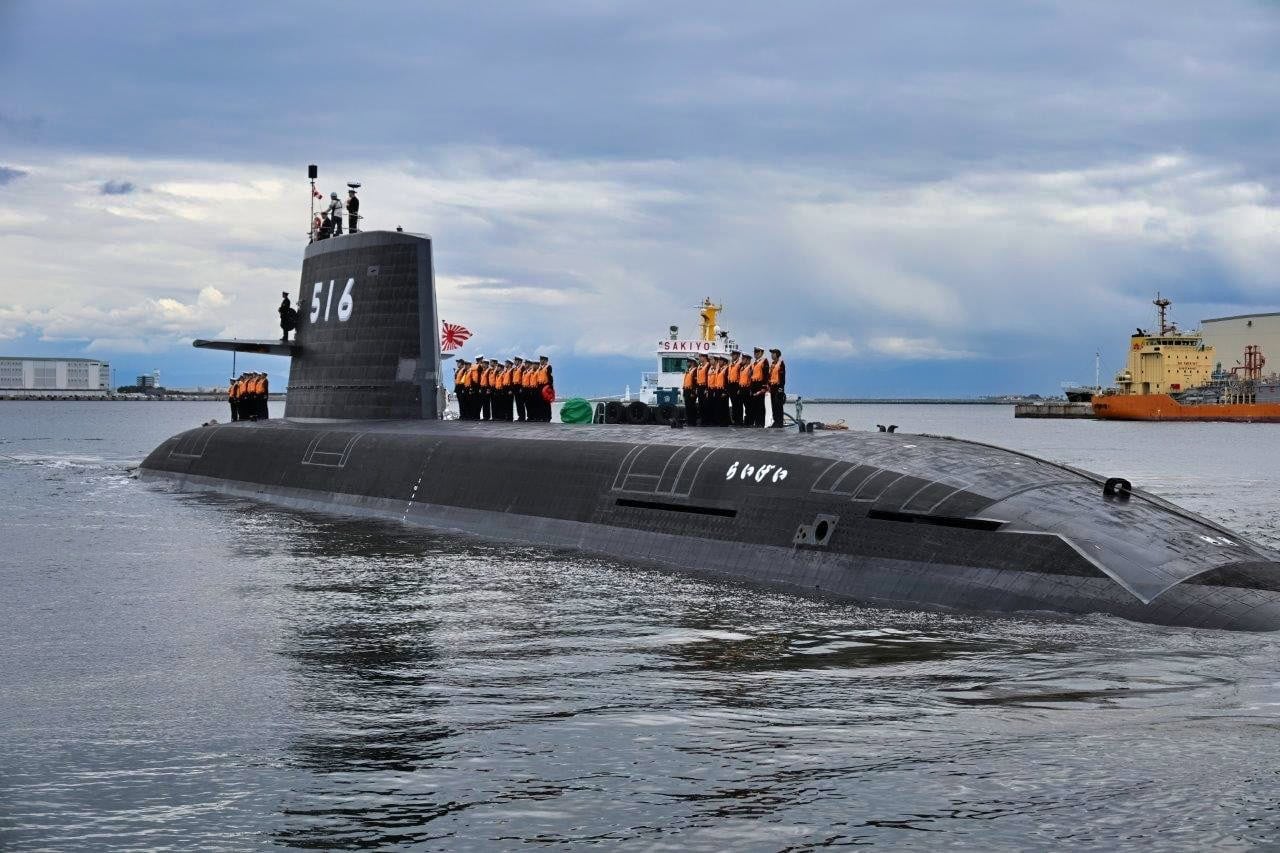
According to reports, the expressions to be included in the revised documents will be phrases like "begin research and investigation" or "consider and reach a conclusion," and will not decide on deployment. A panel of experts is expected to report in early December, with the Cabinet scheduled to approve it by the end of the month. While the Minister of Defense has indicated a stance of not ruling out options, the Japan Innovation Party is calling for early introduction, and the Liberal Democratic Party is limiting its discussions to next-generation propulsion systems equipped with long-range missiles. There remains a gap between interest in capabilities and political will.
The difference between the MSDF's conventional fleet and nuclear power
The advantage of nuclear propulsion is not the ability to carry nuclear weapons. It lies in the capability to operate submerged for extended periods while moving to distant maritime areas without reducing speed. As the activities of the Chinese Navy expand from the East China Sea to the Pacific Ocean, and Russian submarines operate in the north, the time available for monitoring SLOCs (Sea Lines of Communication) increases.
However, continuous operation requires at least three submarines, with estimates suggesting that each would cost around 1 trillion yen and take over ten years from construction to operational start. The MSDF is currently updating its conventional submarines, such as the Taigei-class, which utilize lithium-ion batteries, and if nuclear submarines are added, it will be necessary to simultaneously establish personnel, maintenance staff, shipyards, and nuclear safety systems. It is not simply a matter of enlarging the hull.
Practical issues arising in the Japan-U.S. alliance
Six countries— the United States, the United Kingdom, France, Russia, China, and India— operate nuclear submarines, and Australia is also advancing its introduction. It is reported that the U.S. has approved construction for South Korea as well. If Japan embarks on research, opportunities to enhance interoperability in underwater operations within the alliance will likely increase. However, relying on U.S. naval reactor technology and nuclear material management does not necessarily mean that strengthening the Japan-U.S. alliance equates to Japan's autonomy.
Moreover, nuclear propulsion and nuclear sharing are separate issues. The former pertains to the mode of propulsion, while the latter involves political issues surrounding the deployment and operation of nuclear weapons, with tensions regarding the three non-nuclear principles being much greater for the latter. If both are treated in the same discussion, the necessary submarine capabilities could be absorbed into ideological conflicts.
Analysis by Takashi Tanaka
In my view, the focus this time is not on whether a reactor can be installed, but rather on whether the MSDF has the human resources to safely operate more than three submarines over the long term. The quietness of a submarine is influenced not only by design but also by crew training and maintenance cycles. The term "nuclear" does not automatically increase deterrence. Rather, the risk that the push for introduction could precede the update of the conventional fleet, exacerbate personnel shortages, and pressure investment in base infrastructure is a critical point that should not be overlooked in this security document revision.
Reference Information
- Japan Times, “Japan wants nuclear submarines, but can it overcome the obstacles?” (November 12, 2026)
- Clash Report, “Japan to Study Acquiring Nuclear-Powered Subs in Security Review” (November 11, 2026, citing reports from Asahi Shimbun and Kyodo News)
- NHK WORLD-JAPAN, “Quad nations start maritime exercise” (November 5, 2026)
Japan's ruling party is considering the initiation of research on nuclear submarines as part of the upcoming 2026 security document revision. This discussion highlights the Japan Maritime Self-Defense Force's submarine policy and the need for at least three submarines for continuous operation. The cost of each submarine is estimated at around 1 trillion yen, and Japan is currently updating its conventional submarines.
- Japan's ruling party is considering research on nuclear submarines.
- The 2026 security document revision may include submarine policy discussions.
- At least 3 submarines are needed for continuous operation.
- The cost of one submarine is estimated at around 1 trillion yen.
- Japan is currently updating its conventional submarines.