
JNIM and ISSP clash in Burkina Faso and Mali — the jihadist war spreads to Niger in 2026
 Marie Dubois
JNIM and ISSP clash in Burkina Faso and Mali — the jihadist war spreads to Niger in 2026
East of Dori, in northeastern Burkina Faso, the paths connecting villages to markets are no longer only monitored by state forces. They have become the frontline of a war between two jihadist insurgencies. In August and then in October 2026, thousands of fighters from Jama'at Nusrat al-Islam wal-Muslimin (JNIM), affiliated with Al-Qaeda, and the Sahel Province of the Islamic State (ISSP) clashed in Liptako-Gourma, at the borders of Burkina Faso, Mali, and Niger. The tolls remain partial, but several hundred fighters are reported to have been killed.
This is not an abstract theological dispute. It is a struggle for routes, recruits, resources, and areas where the state can no longer impose its presence.
A rivalry turned theater of operations
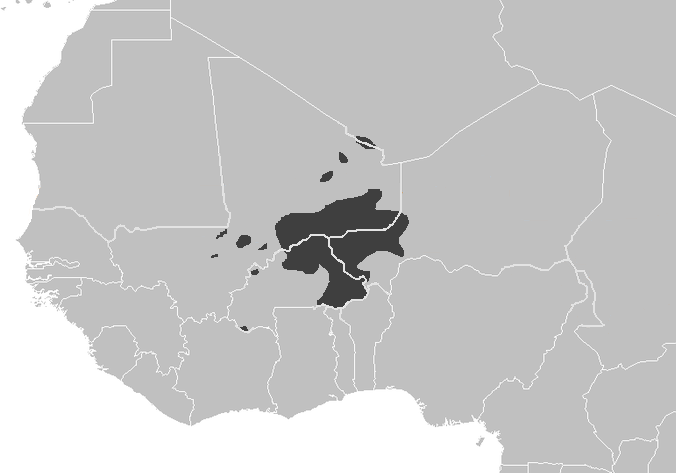
According to a summary published on November 12 by Eurasia Review, a panel of United Nations experts described this confrontation as the most intense currently observed between the two organizations globally. ACLED records approximately 320 clashes between JNIM and ISSP since 2019, resulting in over 2,200 fighters killed. These figures should be read with caution: the groups publish their own statements, the armies communicate little, and combat zones are difficult to access. The trend, however, is clear.
The conflict began in the areas of Menaka and Gao in Mali, as well as in the Dori region of Burkina Faso. It then moved westward into Niger. In April, clashes were reported in the Tillabéri and Dosso regions. This is a significant operational shift: the border is not a barrier for the groups, but a logistical corridor.
JNIM controls the ground, ISSP seeks depth
JNIM still holds the strategic advantage. It occupies a larger area in Mali and Burkina Faso, maintains arrangements with certain local actors, and seeks to present itself as an authority capable of taxing, punishing, and sometimes negotiating. Its goal is not only to strike a military base: it wants to render institutions useless in the countryside.
ISSP, on the other hand, has achieved several important tactical victories despite a narrower territorial presence. Its method is more directly transnational and more coercive towards civilians who refuse its rules. In northeastern Burkina Faso, the destruction of an opposing position can open access to motorcycles, weapons, and recruits. On the ground, these are concrete gains, measurable as soon as the following week.
The French withdrawal from Mali, Burkina Faso, and Niger has created a more permissive environment for this competition. National forces have resumed responsibility for the routes, but they do not always have the intelligence, mobility, and permanence necessary to hold the reclaimed areas. Russian reinforcements have not eliminated this weakness. A convoy can traverse a road at dawn and leave the same route unprotected by evening.
Niger becomes the pivot of the next phase
The advance towards Tillabéri and Dosso is more concerning than just the intensity of fighting in Burkina Faso. These regions form the hinge between Liptako-Gourma and northwestern Nigeria. Whoever controls the crossings does not need to administer the entire area: it is enough to secure its movements, supply points, and extortion networks.
ISSP is attempting to extend its foothold from Menaka into Niger, then towards the Nigerian border. Transfers of fighters, equipment, and know-how link this dynamic to the Islamic State's West Africa Province, active around Lake Chad. JNIM follows a similar logic towards the coastal states and seeks to maintain its advantage in border areas. The two organizations do not form a united front against the governments: they fight each other, but this war between them does not prevent attacks against state posts and convoys.
Northwestern Nigeria will be the next test. As the presidential election approaches in January 2027, jihadist groups may exploit banditry networks, forests, and deficits in administrative presence. The risk is not necessarily a takeover of a major city. It is more likely to see a chain of small taxation, recruitment, and refuge zones extending towards Kebbi, Sokoto, and the corridors leading back to Niger.
A war that primarily benefits from the security vacuum
The JNIM-ISSP rivalry produces a paradox. Both groups wear each other down in costly battles, but their competition also accelerates the militarization of borders and pressure on communities. Civilians must pay twice: to avoid reprisals from one group, and then to obtain permission to move under the control of the other. Markets shift, routes close, and local intelligence becomes harder to gather.
For the juntas in Mali, Burkina Faso, and Niger, the danger is confusing bombardment with control. A strike or a sweep operation can disperse a group without sustainably reclaiming the path, well, or market that provided its resources. Field experience teaches a simple rule: an area is not secured because a column has passed through it, but because it can return tomorrow and find informants still alive.
The exact figures of the clashes in August and October remain to be confirmed. However, their operational significance is hardly in doubt: the jihadist war is no longer contained within the historical triangle of the Sahel.
In the coming months, it will be necessary to monitor less the declarations of victory than three indicators: the frequency of attacks in Tillabéri, the emergence of cells linked to ISSP or JNIM in northwestern Nigeria, and the ability of Sahelian forces to hold the roads after an operation. If these three signals deteriorate together, the theater of operations will have shifted southward. At that point, the problem will no longer be just the rivalry between two groups: it will be the formation of a jihadist corridor linking Mali, Niger, and Nigeria.
Sources
Clashes erupted between Jama'at Nusrat al-Islam wal-Muslimin (JNIM) and Islamic State Sahel Province (ISSP) in Dori and Liptako-Gourma during August and October 2026, resulting in hundreds of casualties. The conflict has escalated beyond Mali and Burkina Faso into Niger, with JNIM maintaining territorial control while ISSP achieves tactical victories. This rivalry is intensifying, impacting local communities and security dynamics in the region.
- Clashes occurred in August and October 2026 between JNIM and ISSP.
- Hundreds of fighters have reportedly been killed in these confrontations.
- The conflict has expanded from Mali and Burkina Faso into Niger.
- JNIM controls more territory, while ISSP has achieved tactical victories.
- The rivalry between JNIM and ISSP is intensifying, affecting local communities.