
JNIM and ISSP clash in Mali and Burkina Faso — Niger becomes the next front
 Marie Dubois
JNIM and ISSP clash in Mali and Burkina Faso — Niger becomes the next front
In eastern Burkina Faso, the tracks connecting Gourma to the borders of Mali and Niger are no longer just transit corridors. They have become a frontline. In August and then in October 2026, thousands of fighters from Jama’at Nusrat al-Islam wal-Muslimin (JNIM), the Sahelian branch of Al-Qaeda, and the Sahel Province of the Islamic State (ISSP) clashed there. Hundreds of deaths have been reported on both sides. The information remains partially incomplete, but the operational assessment is solid: the jihadist rivalry is no longer a series of local incidents. It now structures the geography of war.
Two clandestine armies for the same space
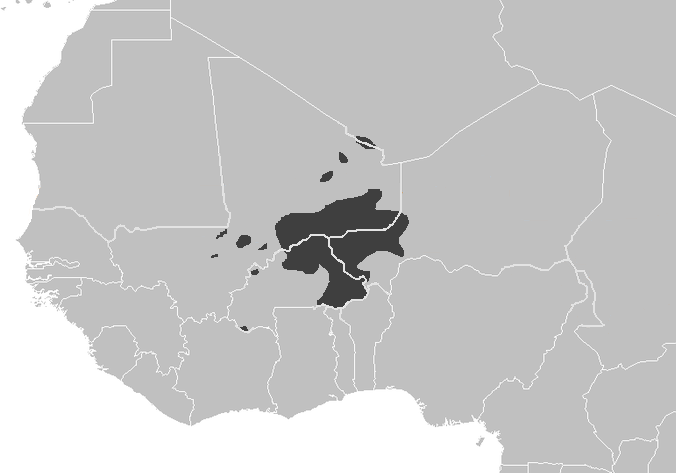
The report published by Africa Defense Forum on November 11, relying on an expert report submitted to the United Nations Security Council and on the work of ACLED, describes the August and October fighting as the deadliest clashes ever documented between the two organizations. Since the beginning of their open war in 2019, around 320 battles are said to have killed more than 2,200 fighters.
The number is less important than its significance. JNIM and ISSP are competing for the same villages, the same recruits, and the same taxation circuits. In Liptako-Gourma, controlling a track means controlling herds, markets, artisanal mines, and the information that circulates between hamlets. It is a war economy, not just a doctrinal dispute.
JNIM retains the strategic advantage. The group has larger footholds in Mali and Burkina Faso and seeks to negotiate with some local leaders to administer populations rather than indiscriminately terrorize them. ISSP, on the other hand, compensates for its narrower territorial presence with more rigid violence and superior mobility. On the ground, this difference does not produce moderation from JNIM: it produces competition over who can impose the most enduring rule.
The front shifts to Niger
Until recently, fighting between the two factions was mainly concentrated in Burkina Faso and Mali. Since April 2026, clashes have spread to the Nigerien regions of Tillabéri and Dosso, and then to the Nigerian state of Kebbi. This progression follows a very simple geographical logic. The groups are not necessarily seeking to take a capital: they are looking to hold secondary roads, water points, and areas where the state cannot maintain a permanent presence.
For ISSP, the Ménaka area remains a depth base. From there, its units can push west into Niger and test links with the networks of the Islamic State West Africa Province (ISWAP), active in the Lake Chad basin. This connection does not mean the creation of a single command. However, it facilitates the transfer of fighters, explosives, know-how, and experienced personnel.
For JNIM, the stakes are different. The group wants to prevent ISSP from transforming northwestern Nigeria into a new recruitment zone. The Niger-Nigerian border is porous, traversed by trade routes and smuggling corridors. A group that controls communities on one side of the border can impose its taxes on the other. The administrative map then ceases to have military value.
Civilians pay the price
Fighting between factions does not protect populations because it would temporarily weaken the jihadists. It shifts the violence. Residents are forced to choose a side, provide information, or pay twice. Human Rights Watch's investigation into the September attacks in Soubo and near Mera, in the Burkina Faso province of Yatenga, already shows the mechanism: JNIM strikes a gold mining site, destroys shelters and tools, then justifies the operation by the supposed presence of militias allied with the state.
The outcome is predictable. Miners leave the sites, traders reduce their movements, and Fulani communities are increasingly suspected by the armed forces and the Volunteers for the Defense of the Homeland. Each abuse provides JNIM with a recruitment argument. Each indiscriminate reprisal gives ISSP an opportunity to present itself as the toughest arbiter in the theater of operations.
The figures put forward by ACLED and local sources must be read with caution. Groups exaggerate their victories, armies minimize their losses, and isolated villages sometimes remain without communication for several days. This does not change the trend: the conflict is densifying around resource areas and borders rather than concentrating on military bases.
A narrow window for Sahelian states
The juntas of Mali, Burkina Faso, and Niger may present the clashes as proof that the jihadists are destroying each other. This is a dangerous reading. A weakened faction does not necessarily disappear: it can fragment, join the adversary, or turn against the civilians who helped it. The fighting in August and October may therefore reduce local capacity while radicalizing the survivors.
The incident on November 9 at Zangula-Kilba Junction in Adamawa State illustrates the second problem. The Nigerian army claims to have repelled an attack and killed two ISWAP fighters, seizing rifles, ammunition, and homemade explosives. Tactically, this is a success. Strategically, the presence of units capable of striking military positions at dawn reminds us that the Lake Chad front and the Sahel front are no longer separated by a watertight border.
The next phase will play out less in the capitals than on the roads between Ménaka, Tillabéri, Dori, and Kebbi. If JNIM and ISSP succeed in transforming their rivalry into sustainable control of populations, Sahelian forces will have to reclaim not an abstract territory, but every market, every well, and every track. This is where a campaign is measured. And, for now, these points still too often pass from one jihadist banner to another.
Sources
- Africa Defense Forum, November 11, 2026, JNIM–ISSP clashes and ACLED data.
- Human Rights Watch via AllAfrica, attacks against civilians and a gold mining site in Yatenga.
- ACLED, regional context and armed actors in the Sahel.
- Sahara Reporters, clash at Zangula-Kilba Junction, November 10, 2026.
Clashes between Jama’at Nusrat al-Islam wal-Muslimin (JNIM) and Islamic State Sahel Province (ISSP) occurred in Burkina Faso and Mali, with significant fighting reported in August and October 2026. The conflict has expanded into Niger, particularly in the Tillabéri and Dosso regions, resulting in hundreds of deaths. Both groups are competing for control over resources and territory, impacting local populations.
- Clashes between JNIM and ISSP resulted in hundreds of deaths.
- The conflict has expanded into Niger, particularly in Tillabéri and Dosso regions.
- JNIM and ISSP are competing for control over resources and territory.
- The rivalry has intensified since their open war began in 2019, with over 2,200 fighters killed.
- Civilians are forced to choose sides or face violence from both factions.