
JNIM and the Islamic State clash in Burkina Faso — 400 deaths claimed in 2026
 Marie Dubois
JNIM and the Islamic State clash in Burkina Faso — 400 deaths claimed in 2026
Oudalan, Burkina Faso, October 9. In this province wedged between Mali and Niger, fighters from the Group for the Support of Islam and Muslims (JNIM), linked to Al-Qaeda, have clashed with those from the Islamic State in the Sahel. On October 13, the organization affiliated with the Islamic State claimed to have killed more than 400 of its rival's men, including several leaders. The toll has not been independently confirmed. However, it signals a shift in scale in the internal jihadist war in the Sahel.
Since September, the two movements have been vying for the same territory, the same routes, and the same recruitment pools. The conflict does not oppose two armies seeking a capital. It pits two systems of control against each other that want to tax herds, monitor markets, and decide which villages can trade. On the ground, this difference is more significant than the ideological statements.
A spectacular but still uncertain toll
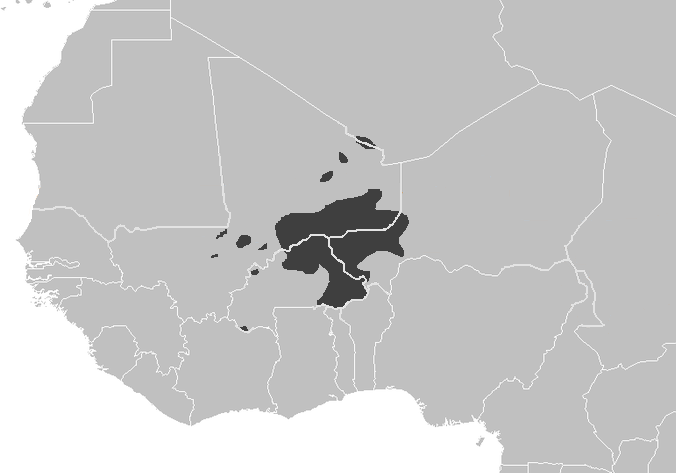
Africanews, relying on elements from AFP and analyses by Heni Nsaibia from ACLED, presents this battle as the deadliest clash ever claimed between the two coalitions. The Islamic State had already announced over 200 deaths in the same area at the beginning of September. Nsaibia estimates that fighting between the two organizations has caused around 2,200 deaths in more than 320 clashes since 2019.
These figures must be handled with caution. Jihadist groups use enemy losses as a propaganda weapon, and the villages in Oudalan are too isolated for quick verification. What is confirmed is the existence of fighting and the intensification of the pace. We do not yet know if the 400 deaths correspond to a single battle, several days of operations, or an inflated toll to prepare for a counter-offensive.
Why Oudalan is a strategic lock
Oudalan forms the northern lock of Burkina Faso. To the west, the province opens towards the Malian Gourma and Ménaka. To the east, it provides access to Tillabéri in Niger. Between these areas, there is not a continuously held border, but seasonal tracks, water points, and transhumance corridors. A column of motorcycles does not need a border post to pass. It needs a guide, a relay, and a community that does not speak.
The area also commands the routes that connect markets and livestock reserves. Whoever controls a track can impose a levy, close a market, or escort a convoy for payment. This is the logic of real territory, the one that administrative maps poorly describe. The distance between two posts does not measure the authority of the state; it measures the time during which an armed group can act without being disturbed.
Two models of jihadist domination
JNIM generally seeks to root itself. It exploits local grievances, negotiates with certain notables, imposes religious courts, and taxes convoys. This method is no less brutal. It is more patient. A locality that accepts a tax and allows a motorcycle to pass may seem calm, while it is already living under parallel authority.
The Islamic State in the Sahel follows a more coercive and transnational line. It tolerates local arrangements less and punishes communities that refuse its authority. For it, JNIM's compromise is a doctrinal weakness and an opportunity for recruitment. For JNIM, the rival branch primarily threatens the social networks that allow it to hold an area without stationing a significant force there.
A defection does not only transfer a fighter. It can transmit routes, caches, contacts, and the schedule of patrols. That is why a quarrel between commanders can quickly become a purge operation. In the Sahel, tactical information is sometimes worth more than an additional pickup.
Are the juntas gaining a window?
At first glance, Ouagadougou, Bamako, and Niamey may let their adversaries wear each other out. This window exists, but it is short. The armies of Burkina Faso, Mali, and Niger do not automatically control the territory abandoned by a defeated group. Whoever recovers the weapons, prisoners, and local relays also regains operational depth.
The report from the United Nations expert commission estimates JNIM's forces at between 7,000 and 8,000 fighters, compared to about 2,000 for the Sahel branch of the Islamic State. These estimates remain imperfect, but they highlight the problem. JNIM has broader human reserves; the Islamic State compensates with local concentration, mobility, and coercion that can empty a village in a few hours.
The rivalry does not necessarily reduce the threat. If JNIM strengthens Oudalan, the Islamic State can open an axis towards Tillabéri, Tahoua, or northwestern Nigeria. If it loses its positions in Mali around Ménaka, it can disperse its cells rather than disappear. For national armies, this means fewer visible columns and more ambushes on secondary roads.
The next indicator will be a road
In the coming weeks, three concrete signs will need to be monitored: the closure of markets and water points, the emergence of new checkpoints on secondary tracks, and the movement of fighters towards the Nigerien border. The figure of 400 deaths will attract headlines. The most important signal will be to know which faction can still move fuel, men, and ammunition after the end of the rainy season.
Burkina Faso, Mali, and Niger have promised to regain control of their territory after the departure of French forces. But no statement closes a corridor between Ménaka and Oudalan. A force that passes through a village in the morning and leaves in the evening does not yet exercise sovereignty there. It leaves a trace.
The available information remains incomplete, but the time frame is short. An abandoned track today can become the rear base of an offensive against Niger or Nigeria before the general staffs assess its scope.
The battle for Oudalan is therefore not a parenthesis between two rival groups. It is a test of operational depth. Whoever controls the roads will control recruits, markets, and the next theater of operations.
Sources
Clashes between JNIM and ISIS in Oudalan, Burkina Faso, resulted in over 400 reported deaths claimed by ISIS in October 2026. This conflict marks a significant escalation in the ongoing jihadist struggle in the Sahel, with both groups vying for control over territory and resources. JNIM is estimated to have 7,000 to 8,000 fighters, while ISIS has around 2,000.
- JNIM and ISIS are engaged in violent clashes in Oudalan, Burkina Faso.
- ISIS claims to have killed over 400 JNIM fighters in October 2026.
- The conflict represents a significant escalation in the Sahel jihadist war.
- The JNIM has approximately 7,000 to 8,000 fighters, while ISIS has around 2,000.
- The area is strategically important for controlling trade routes and resources.