
JNIM and the Islamic State escalate violence in Mali, Burkina Faso, and Niger — 2,845 incidents in 2025 and already 2,145 in 2026
 S.W
S.WJNIM and the Islamic State escalate violence in Mali, Burkina Faso, and Niger — 2,845 incidents in 2025 and already 2,145 in 2026
In the three countries of central Sahel, the map of violence is no longer just expanding. It is becoming denser. According to figures compiled by the Armed Conflict Location & Event Data Project (ACLED) and published on September 16, 2026, by The Guardian, events involving jihadist groups increased from 63 in 2016 to 2,845 in 2025. As of September 16, 2,145 events had already been recorded in 2026. At the current rate, the threshold of 3,000 will likely be crossed before the end of the year.
It is important to be precise. An event recorded by ACLED is not necessarily a battle won by JNIM or the Islamic State, and not all deaths can be attributed to jihadist groups. But the operational trend is undeniable: Mali, Burkina Faso, and Niger have become a permanent theater of operations, where the state no longer always chooses the location of contact.
A war that leaves the margins
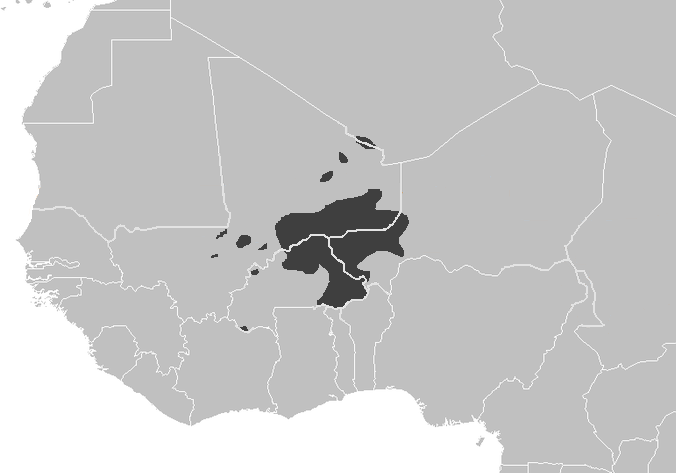
JNIM, the Sahelian branch linked to Al-Qaeda, maintains its preferred method: pressure on roads, taxation of villages, infiltration of local networks, and attacks on isolated garrisons. The Islamic State in the Sahel, on the other hand, remains particularly dangerous in western Niger and border areas. The two organizations rarely cooperate in a structured manner, but their competition produces the same effect for the populations: multiple authorities, multiple levies, no continuous security.
In Burkina Faso, JNIM claimed more than 130 attacks in 2026, some at a worrying distance from Ouagadougou. In Niger, it claimed at least 17, while the Islamic State remains more active there according to a recent United Nations report cited by The Guardian. These claim figures are not judicial tallies: they do, however, indicate where the groups want to demonstrate their striking capability. The uncertainty about actual losses remains a battlefield data point, not a secondary gap.
The toll of Barkhane remains visible on the ground
ACLED reminds us of a reality that political statements sidestep: French interventions, the UN mission MINUSMA, and the G5 Sahel force have not produced lasting stability. This does not mean that every choice made by Operation Barkhane was correct or that the French presence could be maintained indefinitely. It means that the withdrawal removed a layer of intelligence, air mobility, and logistical support before an equivalent regional architecture was ready.
I have seen, on the ground, what a road that appears controlled on a map represents. Between two posts, a convoy can travel for hours without reliable radio coverage, without rapid medical evacuation, and without a reserve capable of intervening before nightfall. A garrison holds its enclosure; it does not necessarily hold the fifteen kilometers of track, the nearby market, and the families that inform it. This is exactly the space in which JNIM thrives.
Moscow does not replace an intelligence architecture
Russian auxiliaries deployed in Mali have brought combat capability and political freedom that Bamako appreciates. They have not solved the geographical problem. Better-armed men can retake a post; they cannot, on their own, monitor every axis, convince communities, and maintain a daily presence in rural areas. Punitive operations and accusations of abuses sometimes even exacerbate the task of jihadist recruitment, especially when civilians can no longer distinguish protection from predation.
The paradox of 2026 is therefore brutal: global violence related to terrorism is declining, but the Sahel concentrates an increasing share of the danger. The Global Peace Index, cited by The Guardian, estimates that more than 9,000 people died in 2025 in security incidents in Burkina Faso, Mali, and Niger. This total includes several categories of violence and should not be confused with only the victims of jihadism. It nonetheless measures the human cost of a territorial control system that no longer functions.
The real threat is control, not the spectacular attack
Analysts cited by The Guardian emphasize that Sahelian groups have not, to date, demonstrated the planning of an attack in Europe or the United States. Their power is local. This is precisely what makes it sustainable. JNIM does not need to strike Paris to win: it only needs to make a road impassable, impose a tax, close a school, or force a municipality to negotiate.
This logic transforms the border into an administrative illusion. The corridor between northern Burkina Faso, central Mali, and western Niger remains more important than the lines drawn in the capitals. AES forces can announce a territorial recovery, but the tactical question is more demanding: who holds the road the next day, who protects the market the following day, and who responds when an informant is threatened?
The figure to watch is not just the number of attacks. It is the time during which a population can live without seeing the state.
If ACLED's trajectory is confirmed, the end of 2026 will bring not a single offensive but an accelerated wear of fixed points. Garrisons close to secondary axes, rural markets, and corridors to the Gulf of Guinea will be the first tests. An army that retakes a city but loses the road that supplies it does not control its theater of operations. It holds an island.
Sources : The Guardian, September 16, 2026; ACLED, Conflict in the Sahel; Global Peace Index 2026.
JNIM and the Islamic State have escalated violence in Mali, Burkina Faso, and Niger, with 2,845 incidents reported in 2025 and 2,145 in 2026. The Sahel has become a permanent operational theater for jihadist groups, undermining state control and security. Despite international interventions, stability remains elusive, with over 9,000 fatalities reported in 2025.
- JNIM and Islamic State have increased violent incidents in Mali, Burkina Faso, and Niger.
- 2,845 incidents were recorded in 2025, with 2,145 already in 2026.
- The Sahel region has become a permanent theater of operations for jihadist groups.
- French and UN interventions have not produced lasting stability in the region.
- Over 9,000 people died in security incidents in the Sahel in 2025.