
JNIM and the Islamic State push the Sahel towards 3,000 attacks in 2026
 S.W
S.WJNIM and the Islamic State push the Sahel towards 3,000 attacks in 2026
In Bamako, Ouagadougou, and Niamey, the figure does not resemble a military victory, but rather a change in operational regime. On September 16, ACLED data cited by The Guardian already counted 2,145 events involving jihadist groups in Mali, Burkina Faso, and Niger in 2026. At this rate, the annual total would exceed 3,000, following 2,845 events in 2025 and only 63 in 2016.
These figures do not only measure battles. They also record ambushes, kidnappings, attacks on roadways, and violence where an armed group is present. But the trend is clear. The theater of operations is expanding and intensifying at the same time.
A map of control, not a border
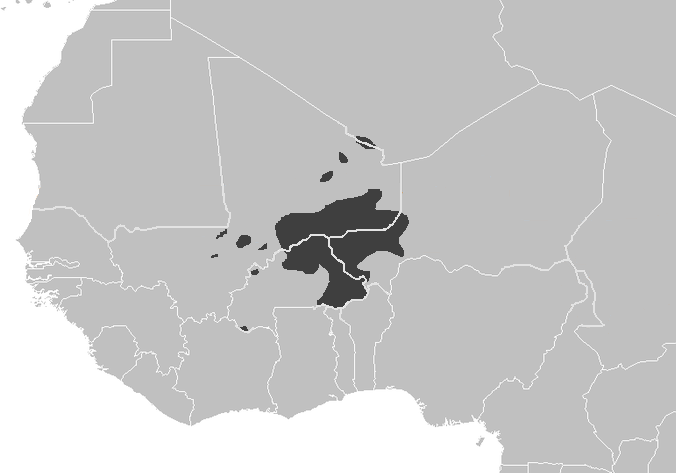
On the ground, JNIM — the Group for Support of Islam and Muslims, affiliated with Al-Qaeda — does not necessarily seek to hold every capital. It aims to control the conditions of movement between cities. A passable track for motorcycles, a market to collect zakat, a well, a telecommunications relay, or an intimidated local chief may count more than an isolated forward post.
This is why the logic of the three states of the Sahel States Alliance remains insufficient. The general staffs reason in national borders and capitals. The katibas reason in corridors. A column leaving northern Burkina Faso can cross an area of low state presence, reach western Niger or the outskirts of Mali, and then disappear before a regular force can establish contact.
The threshold of 3,000 events
The figure projected by ACLED does not mechanically announce 3,000 major confrontations. It rather indicates a saturation of response. When events rise from 63 in 2016 to 2,845 in 2025, the question is no longer whether an army can retake a village, but whether it can maintain a presence there after its departure.
In Burkina Faso, JNIM has claimed more than 130 attacks in 2026 and has moved closer to Ouagadougou. In Niger, the group is reportedly less active than the Islamic State in the Sahel, but attacks against Niamey and the Tahoua base show that the threat space is no longer limited to desert areas. In Mali, the coordinated offensive on April 25 with the Azawad Liberation Front struck Bamako, Kati, Gao, Kidal, and Mopti. The death of the Minister of Defense and the loss of Kidal demonstrated that a force supported by Russian auxiliaries could be disorganized at multiple points simultaneously.
Military assessments remain incomplete and sometimes contradictory. A claim from JNIM is not an independent confirmation, just as a general staff statement is not sufficient to establish lasting control over a territory.
Russia does not fill the French void
The end of Barkhane has removed from the theater a capability that Sahelian forces have not replaced identically: persistent aerial intelligence, medical evacuation, protected mobility, and coordination between sectors. Russian forces, whether designated as Africa Corps or otherwise according to sources, provide fighters and political protection to the juntas. However, they do not recreate a local intelligence network capable of distinguishing a katiba from a criminal group 200 kilometers from a garrison.
The difference is concrete. A drone can spot a column on a track; it does not always indicate who controls the village crossed, who supplies the fuel, or why the inhabitants refuse to inform the army. JNIM precisely exploits this gray area between insurrection, taxation, and smuggling. Sweeping operations can kill fighters and produce, in the same movement, new recruits if they indiscriminately strike communities.
The real risk is in the south
The UN Security Council described in July an acute threat in central Sahel and northern Nigeria, with groups modernizing their communications, employing drones, and strengthening their ties with criminal networks. The coastal states of the Gulf of Guinea are therefore not a tranquil rear area. They are becoming the logistical and financial depth of the conflict.
Ghana, Togo, and Benin still have a crucial advantage: their local institutions and trade routes function better than those in the besieged northern areas. But this advantage also creates targets. A successful attack on a convoy, a border market, or a telephone link can be enough to increase insurance costs, slow down transport, and push populations to negotiate directly with armed men.
After my experience on the ground, I am wary of maps that color a province red or yellow. Jihadist control is often intermittent, but it becomes real as soon as a truck changes its route, a teacher leaves their village, or a post no longer receives supplies.
Warning for the upcoming dry season
The upcoming dry season will give motorized groups better mobility on the tracks and armies a window to concentrate their columns. The test will not be the capture of a city announced with great fanfare. It will be the ability to reopen and then securely maintain the routes between northern Burkina Faso, central Mali, and western Niger.
If capitals continue to measure the war by the number of "cleansed" localities, JNIM and the Islamic State will measure their success differently: by the cost of movement, the reliability of markets, and the silence of informants. The threshold of 3,000 events will then not be a statistical record. It will be the health report of a theater of operations that states no longer control continuously.
Sources
- The Guardian, September 16, 2026, ACLED data and analysis of recent offensives.
- ACLED, Conflict in the Sahel, armed actors and regional evolution.
- UN Info, July 7, 2026, adaptation of groups, displacements, and links to crime.
JNIM and the Islamic State are conducting a significant increase in jihadist attacks across the Sahel, with over 2,145 events reported in 2026, projected to exceed 3,000 by year-end. The operational focus has shifted from capturing capitals to controlling movement between cities, with notable attacks in Mali, Burkina Faso, and Niger. The end of French military operations has left a security gap that jihadist groups are exploiting.
- JNIM and the Islamic State are projected to conduct over 3,000 attacks in the Sahel by the end of 2026.
- In 2026, over 2,145 jihadist events have already been recorded in Mali, Burkina Faso, and Niger.
- JNIM has claimed over 130 attacks in Burkina Faso and is approaching Ouagadougou.
- The operational landscape is expanding, with attacks occurring beyond traditional conflict zones.
- The end of French Operation Barkhane has created a security vacuum in the region.