
JNIM strikes 30 cities in Mali — the 2026 urban offensive pushes Bamako towards dialogue
 Marie Dubois
JNIM strikes 30 cities in Mali — the urban offensive of 2026 pushes Bamako towards dialogue
Bamako, November 23, 2026. In the streets of the Malian capital, the threat is measured not only by gunfire. It is measured by the price of fuel, by trucks that no longer arrive, and by routes that drivers avoid after dark. According to a summary published by DNE Africa on November 23, the operations of the Group for Support of Islam and Muslims (JNIM, or GSIM) have affected around thirty Malian cities. The International Crisis Group, in an analysis published three days earlier, calls for addressing this pressure on urban centers through a combination of local security and political openness.
The figure of thirty cities should be interpreted with caution. It does not mean that JNIM controls thirty municipalities, nor that each has suffered an attack of the same intensity. The available information mixes ambushes, temporary checkpoints, intimidation, attacks on convoys, and infiltration of economic networks. But the operational signal is clear: the organization is no longer just seeking to hold rural areas. It wants to make travel to the cities costly, irregular, and politically explosive.
An operations map focused on the roads
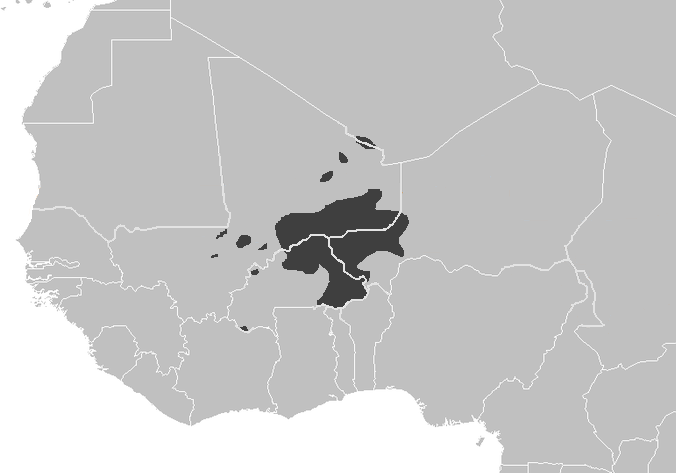
On the ground, the logic is less about a border and more about a network. The routes connecting Bamako to the regions of Ségou, Mopti, and Tombouctou form a succession of checkpoints, markets, and garrisons. A group that strikes a fuel tanker to the west, cuts a track to the east, or threatens a secondary post does not need to officially close a road. It is enough to impose an escort, a detour, or a day of waiting.
This method produces a disproportionate effect. The state must protect kilometers of routes with limited units, while JNIM chooses the time and place of the attack. Convoys then become military targets, but also economic levers. Local shortages, transport slowdowns, and rising costs of goods transform a tactical action into a governance crisis.
The urban center becomes the political target
The Crisis Group's analysis of the JNIM threat in the "urban hearts" of the Sahel points to an important change. Cities are not just targets to be taken; they are amplifiers. An attack on an isolated base may remain confined to the theater of operations. A disruption around Bamako, Ségou, or a major commercial crossroads immediately affects the administration, merchants, and families who depend on the roads.
JNIM also exploits gaps in presence. In a city where the state holds the military camp but does not secure the road, the market, or neighboring villages, its control remains administrative rather than real. This is the difference between occupying a position and controlling a space. From experience, an armored patrol can retake a crossroads for a few hours; it does not restore, on its own, the trust of transporters for the following week.
Therefore, one must avoid a simplistic reading of the offensive. JNIM does not need to defeat the Malian army in a conventional battle. It seeks to make the state pay for every kilometer of sovereignty until the authorities must choose between protecting the capital, supplying the regions, or holding advanced garrisons.
The dilemma of Bamako
The proposal for dialogue mentioned by Crisis Group raises a particularly sensitive question for the transitional authorities. Negotiating with representatives linked to JNIM could provide a way to reduce pressure on certain routes and test the internal fractures of the movement. However, a poorly prepared negotiation could also legitimize an armed organization, divide communities, and give the group time to rebuild its forces.
The exclusively military response carries its own risk. Malian forces, supported by foreign partners, can retake positions; they cannot place a garrison behind every truck. The mobility of units, human intelligence, and protection of markets matter more than the announcement of a new sweeping operation. Without a local dispute resolution mechanism, each tactical victory leaves behind the same recruitment conditions.
The realistic choice is therefore not between capitulation and total victory. It consists of isolating the most radical commands, exploiting opportunities for surrender or mediation at the local level, and maintaining pressure on financial and logistical networks. This requires an intelligence chain capable of distinguishing a fighter, a smuggler, a coerced trader, and a notable playing both sides. The boundary between these categories is precisely the maneuvering ground of JNIM.
The coming weeks will be decisive
Public sources do not yet allow for confirmation of the exact list of thirty cities, nor for measuring the uniformity of the attacks. This uncertainty is significant: the figures from armed groups and official reports often serve opposing narratives. However, the convergence between the media reporting of DNE Africa and the analysis of Crisis Group is sufficient to identify a credible operational trend: pressure is shifting towards urban nodes and the routes that supply them.
The next indicator will not necessarily be a spectacular attack in Bamako. It will more likely be visible on a secondary route: a convoy that stops moving, a city that runs out of fuel, a post that no longer receives relief, or a market that closes before noon. If these signals multiply, JNIM will have achieved de facto control without raising its flag.
For Bamako, the warning is concrete. Holding the capital is not enough if the roads that feed it become a permanent theater of operations. The next battle will be less about a camp than about the ability to move, supply, and inform. This is where the urban offensive of 2026 can transform a diffuse threat into a strategic crisis.
Sources
JNIM has launched operations affecting urban areas in Mali, particularly targeting supply routes to Bamako, Ségou, Mopti, and Tombouctou. These actions are intended to create economic pressure on the Malian state and disrupt transportation networks. The situation reflects a shift in JNIM's strategy towards urban centers, indicating a significant operational trend as of November 23, 2026.
- JNIM has targeted approximately thirty cities in Mali.
- The operations aim to disrupt supply routes and create economic pressure.
- Bamako and other urban centers are becoming focal points for JNIM's strategy.