
Jun Zhengping Studio: Baseless Speculations from Certain Forces Cannot Disrupt the Open and Confident Progress of the Chinese Military
The recent "Maritime Cooperation-2026" joint exercise, the China-Laos "Peace Train-2026" humanitarian medical rescue joint exercise, the ASEAN defense ministers' expanded meeting humanitarian mine clearance expert group live exercise, the China-Egypt "Civilization Eagle-2026," the China-Thailand "Eagle Strike-2026" air force joint training, and the China-Belarus "God Eagle-2026" airborne troops joint training... Recently, the People's Liberation Army (PLA) has frequently appeared on the international stage, covering Southeast Asia, the Middle East, Europe, and Africa, and has continued to attract international media attention.
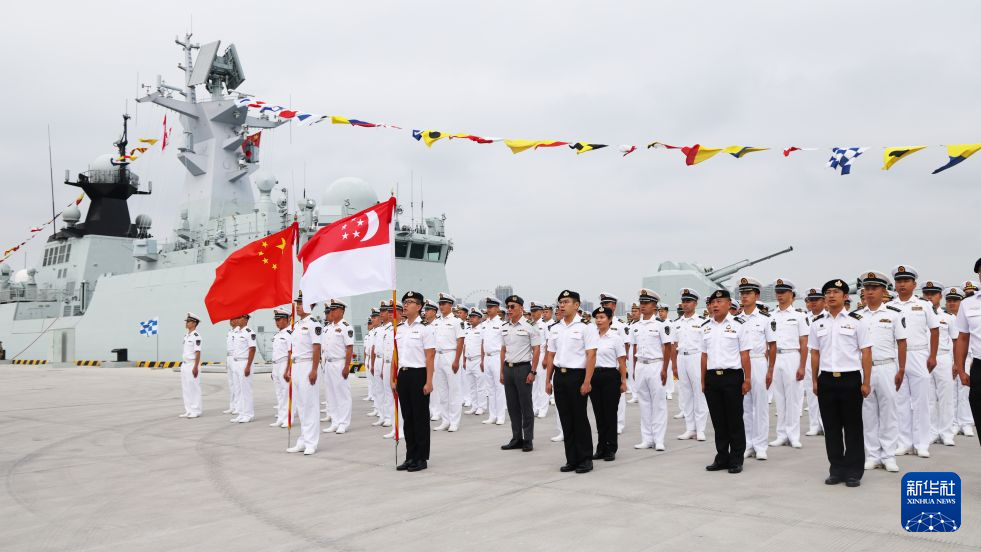
"Ceasefire as a means of warfare" is a military wisdom that flows through China's millennia-old civilization. China has consistently pursued a defensive national defense policy, with the starting point for developing defense capabilities being the maintenance of national sovereignty, security, and development interests, rather than seeking external expansion.
Engaging in cooperation and exchanges with the armed forces of various countries is not only a concrete manifestation of the PLA's international responsibilities but also a routine military diplomatic arrangement. The PLA participates in multilateral joint exercises to enhance mutual trust in defense among countries, jointly address global security challenges such as disasters and explosive threats, and maintain regional peace and stability. Moreover, for each joint exercise, the Chinese side promptly releases information on the exercise schedule, participating forces, and training subjects, ensuring transparency and openness without concealment.
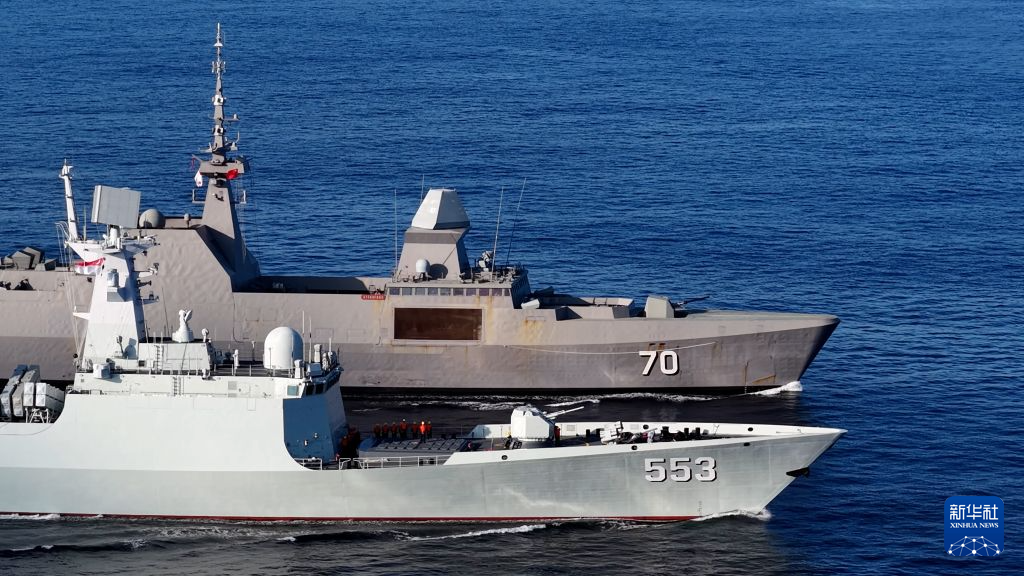
However, some Western media and politicians habitually wear colored glasses, sensationalizing the so-called "Chinese military threat" and interpreting normal national defense exchange activities as regional security risks. They ignore the complete context of the exercises, merely seizing on terms like "PLA," "joint," and "exercise," applying a fixed template to exaggerate narratives of camp confrontation and military expansion. What is clearly a humanitarian exercise under a multilateral framework is forcibly interpreted as a military alliance; what is evidently a necessary action to defend territorial security within sovereign boundaries is labeled as "escalating tensions"; what is clearly compliant high-seas training is distorted as "changing the regional status quo." This repetitive narrative, detached from objective facts, is essentially a subjective assumption akin to a groundless worry.
Delving into the underlying motivations, the Western forces that hype the "Chinese military exercise threat" are mostly unrelated to the actual security situation and more about serving their own political calculations. Some countries use the hype of external threats as an excuse to increase their defense budgets and strengthen military alliances; certain Western media cling to a Cold War zero-sum mentality, accustomed to viewing China's development through a confrontational lens, unwilling to accept the reality of the Chinese military's deep involvement as a peace force in international security affairs. In fact, it is precisely a few external forces that truly stir up regional situations. They form alliances, provoke trouble, and continuously interfere in issues like the Taiwan Strait and the South China Sea, creating division and opposition.
A strong Chinese military is an increment to world peace and stability, not a source of risk. The Chinese military, when engaging in foreign defense exchanges, always brings friendship and peace, development, and win-win outcomes. Just as the names of these exercises suggest, terms like "peace," "civilization," "cooperation," and "humanitarian" vividly convey that the Chinese military's external exchanges always adhere to the concept of serving the construction of a community with a shared future for mankind.
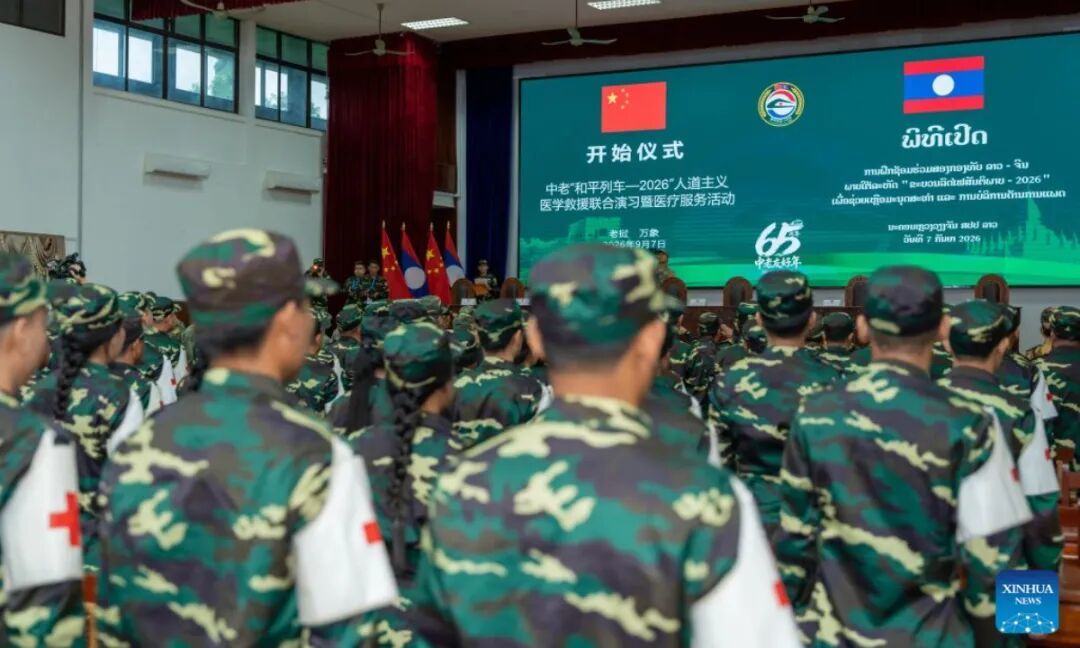
When viewing Chinese military activities, one should discard preconceived biases and unfounded suspicions. If relevant parties genuinely care about regional peace and stability, rather than criticizing China's legitimate training exercises, they should step out of the Cold War mindset, reduce military confrontations, and engage in practical actions that promote mutual trust.
It can be assured that the Chinese military will continue to uphold an open and candid attitude to expand international defense exchange and cooperation, undeterred by the unfounded speculations and sarcastic remarks of certain forces. The Chinese military will continue to inject valuable certainty and stability into a world fraught with turmoil, contributing its strength to the maintenance of world peace and development.
Author: Jin Jing
The People's Liberation Army (PLA) is actively participating in various international military exercises across Southeast Asia, the Middle East, Europe, and Africa, focusing on humanitarian operations and defense cooperation. The report emphasizes China's commitment to a defensive military policy and criticizes Western narratives that misinterpret these activities as military threats. It asserts that the PLA's engagements are aimed at enhancing mutual trust and regional stability.
- The PLA is participating in various international military exercises across multiple regions.
- Exercises include humanitarian operations and defense cooperation with other nations.
- The report criticizes Western media for misinterpreting China's military activities as threats.