
Larijani Assassinated, Tehran Launches Revenge, Iranian President: The Murderer Will Be Severely Punished
[Global Times Correspondent in Egypt Huang Peizhao, Global Times Reporter Bai Yunyi, Line Yifan] The Iranian Supreme National Security Council issued a statement early on the 18th, confirming that the Secretary of the Supreme National Security Council, Ali Larijani, was killed in an airstrike. The Iranian Islamic Revolutionary Guard Corps announced on the 18th the launch of the 61st wave of the "Real Commitment-4" operation in retaliation for Larijani's assassination. According to descriptions from media outlets such as CNN, Larijani was Iran's "highest-level security official" and a key architect of the country's military and diplomatic strategy since the outbreak of the conflict. However, Iranian Foreign Minister Amir-Abdollahian emphasized in an interview that Larijani's death would not deal a "fatal blow" to Iran's leadership, asserting that Iran's political structure is strong. Israeli Defense Minister Katz also stated on the 18th that Iranian Intelligence Minister Ismail Khatib was killed in an attack by Israeli forces on the night of the 17th. This information was later confirmed by the Iranian president. Another development on the 18th drew significant attention. According to the Iranian Mehr News Agency, the South Pars phases 3 to 6 gas refinery in Iran was attacked by American and Israeli drones. In response, a spokesperson for the Qatari Foreign Ministry quickly stated that Israel's strikes on Iranian gas facilities were "dangerous and irresponsible." The Iranian Tasnim News Agency reported on the 18th that the Iranian Islamic Revolutionary Guard Corps stated it would launch strikes against certain petrochemical facilities in Saudi Arabia, the UAE, and Qatar, urging local residents to evacuate.
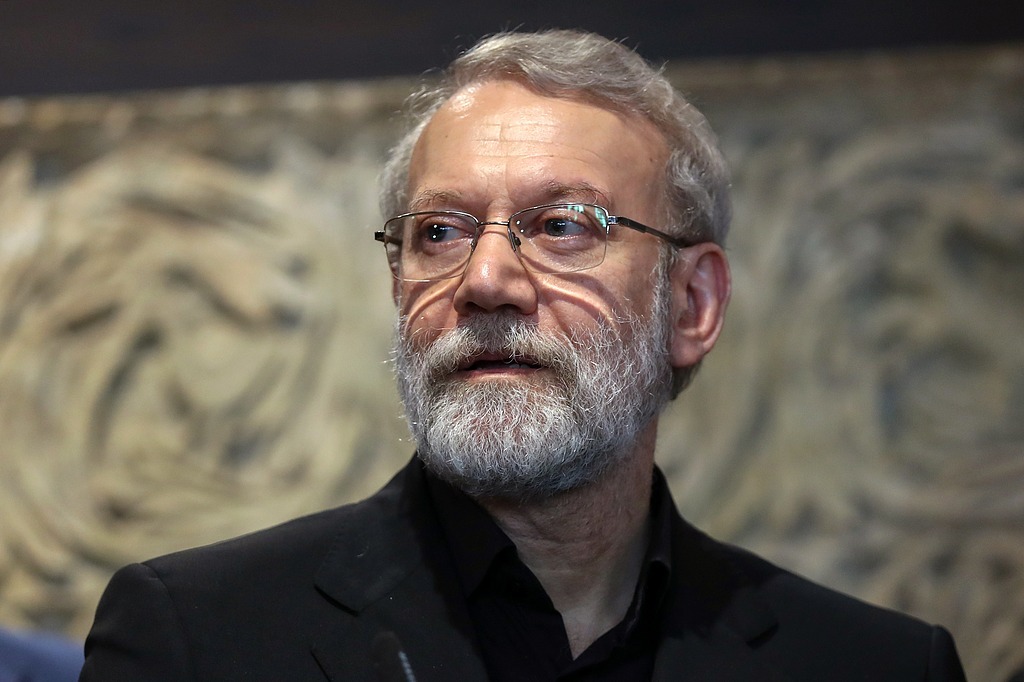
Pezehiziyan: Severe Punishment for the Killers
On the 17th, the Israeli Prime Minister, Defense Minister, and military officials stated that Larijani was killed in an attack by Israeli forces. For many years, Larijani was considered one of the most senior members of the Iranian leadership and a close associate of the late Iranian Supreme Leader Khamenei.
The Iranian Supreme National Security Council confirmed on the 18th that Larijani was killed in the airstrike. The Iranian Tasnim News Agency quoted a statement saying that Larijani died in the line of duty on the morning of the 17th. His son, Morteza Larijani, the deputy for security affairs at the Supreme National Security Council Secretariat, and several accompanying personnel were also killed.
Iranian President Pezehiziyan expressed condolences over Larijani's assassination and vowed revenge. In a statement, Pezehiziyan said that Larijani's death is an irreplaceable great loss, and the killers will be severely punished. Iran will continue its path of resistance, combining "rationality and foresight."
Media reports indicate that Larijani was born in 1957 into a wealthy family in Najaf, Iraq. After the victory of the Iranian Islamic Revolution in 1979, he joined the Iranian Islamic Revolutionary Guard Corps and later transitioned to government roles. From 2008 to 2020, Larijani served three consecutive terms as the Speaker of the Iranian Islamic Consultative Assembly and made significant contributions to the 2015 Iran nuclear deal. In 2025, Larijani was appointed Secretary of the Supreme National Security Council.
CNN quoted Aziz, a visiting scholar at the German Institute for International and Security Affairs, saying that Larijani was a "true insider, at the core of the system for decades." Aziz believes that someone with Larijani's "extensive experience is not easily replaceable." He stated that Larijani's assassination will have limited direct impact on the war, but the political management of the war will become more complex. Recently, he became Iran's "main spokesperson" on the international stage, visiting countries such as Russia, Lebanon, the UAE, and Oman.
CNN commented that "Larijani's assassination may prolong the war." Bloomberg also mentioned that some are concerned that his death could hinder potential diplomatic efforts aimed at "quickly ending" the war. The report stated that since the outbreak of the war, Larijani had been rejecting U.S. demands for Iran to "surrender." On the other hand, he had previously generally supported diplomatic efforts to alleviate Iran's economic isolation while working to maintain Iran's position in the Middle East at a strategic level. The Egyptian newspaper Al-Masry Al-Youm stated that although Larijani took a hardline stance on Western issues, he was often seen as a pragmatic figure. Bloomberg reported that some diplomats from other countries believe that if the war continues, Larijani could become a bridge for negotiations. "Israel seems to be turning its attention to those who might push for a political solution to the current crisis," said Grameyer, Deputy Director of the Middle East and North Africa Program at the European Council on Foreign Relations.
Iranian Foreign Minister Amir-Abdollahian stated in an interview with Qatari Al Jazeera on the 18th that Larijani's assassination would not deal a "fatal blow" to Iran's leadership, saying, "I don't know why the Americans and Israelis don't understand this: Iran's political structure is strong, with a complete political, economic, and social system. The existence or absence of a single individual will not affect this structure." Iranian Fars News Agency reported on the night of the 17th, citing informed sources, that Iran had pre-designated 3 to 7 alternative candidates for all key government officials and military commanders to ensure the continuity of the country's core functions in the event of emergencies.
Attacks on Iranian Gas Facilities Become New Focus
The Iranian Islamic Revolutionary Guard Corps announced on the 18th that it had launched the 61st wave of the "Real Commitment-4" operation in retaliation for Larijani's assassination. According to the Iranian Fars News Agency, the statement said that in this round of strikes, Iran launched "Castle Destroyer" and "Imad" missiles, as well as multi-warhead "Khoramshahr-4" and "Qader" missiles. The missiles "hit over a hundred military and security targets" in Tel Aviv, Israel, "without any interference." According to Iranian sources, after this airstrike, power outages occurred in some areas of Tel Aviv.
Thick smoke rose in multiple locations in Israel early on the 18th after Iranian missiles were launched. Footage released by Israeli Channel 12 that day showed suspected missile debris hitting a train station in downtown Tel Aviv, damaging the platform and trains.
On the other hand, Israeli attacks on Iran and Lebanon continue. According to Al Jazeera, Israeli Defense Minister Katz stated on the 18th that the Israeli military's attack on Iran on the night of the 17th resulted in the death of Iranian Intelligence Minister Ismail Khatib. According to a statement from the Defense Minister's office, Katz said at a security assessment meeting that he and Prime Minister Netanyahu jointly decided to authorize the military to strike "any Iranian senior official" without needing approval.
Additionally, the Iranian Islamic Revolutionary Guard Corps confirmed on the 17th that the commander of the Iranian Basij militia, Soleimani, was killed in a joint attack by the U.S. and Israel. According to the Israeli military, the Basij militia is an important component of Iran's armed system.
According to Iranian media reports on the 18th, some petrochemical facilities in Iran's Bushehr Province, including South Pars and Assaluyeh, were attacked. The Iranian Mehr News Agency reported that the South Pars phases 3 to 6 gas refinery was attacked by American and Israeli drones. Israeli public broadcaster reported on the 18th that the Israeli military attacked Iran's "largest gas facility" located in southern Bushehr. This news quickly drew widespread attention from international media. According to AFP, after the attack on Iranian gas facilities, Brent crude futures rose by 5% to $108 per barrel.
According to the New York Times on the 18th, Israel also intensified its airstrikes on downtown Beirut, Lebanon, destroying buildings and forcing residents to flee what were previously considered safe neighborhoods. The report stated that this marked a "dramatic escalation" of Israel's military actions against Hezbollah in Lebanon.
"Not Losing is Victory" vs. "Not Winning is Defeat"
The Australian website "The Conversation" published an article on the 17th stating that the war in the Middle East has entered its third week, with Iran, the U.S., and Israel showing no signs of stopping the fighting. The war is becoming increasingly brutal. It is evident that the U.S. and Israel have launched a war lacking clear objectives, strategy, timeline, and justification. Although Iran lacks the powerful firepower of the U.S. and Israel, its resilience has exceeded its opponents' expectations, and it is more goal-oriented and strategically minded than its adversaries.
The Tasnim News Agency on the 18th quoted analyses from Iranian experts stating that one of the enemy's misjudgments is the belief that Iran would adopt a policy of appeasement in at least some areas. However, Iran is well aware that appeasement has proven to be a failure. The conflict between Iran and the U.S. and Israel is an asymmetric war, and in such a war situation, firepower advantage is not the decisive factor in the outcome; the key is whether one can make the other side feel that the costs of continuing the war are heavy and meaningless. For Iran, "not losing is victory," while for the U.S., it is the opposite: "not winning is defeat." Tehran is very clear that it must not fear losses; if it cannot establish sufficient deterrence through this war and chooses to ceasefire recklessly, it will still lose everything in the next round of conflict. Iran's goal is to achieve long-term deterrence and must fight to the end for long-term survival.
Iran's Islamic Revolutionary Guard Corps launched Operation 'Real Commitment-4' on October 18, 2023, in retaliation for the assassination of senior official Ali Larijani. The operation involved missile strikes targeting over a hundred military and security sites in Israel. Iranian President Raisi vowed to hold the perpetrators accountable, while the IRGC confirmed the deaths of multiple officials in the airstrike.
- Ali Larijani, a senior Iranian security official, was killed in an airstrike on October 17, 2023.
- The IRGC launched Operation 'Real Commitment-4' in retaliation for Larijani's assassination.
- Iranian President Raisi vowed to punish those responsible for Larijani's death.
- Israeli Defense Minister confirmed the death of Iranian Intelligence Minister Ismail Khatib in a separate attack.
- Iranian gas facilities were targeted by US-Israeli drone strikes.