
Launch deals grow by $985M a day after Vulcan failure
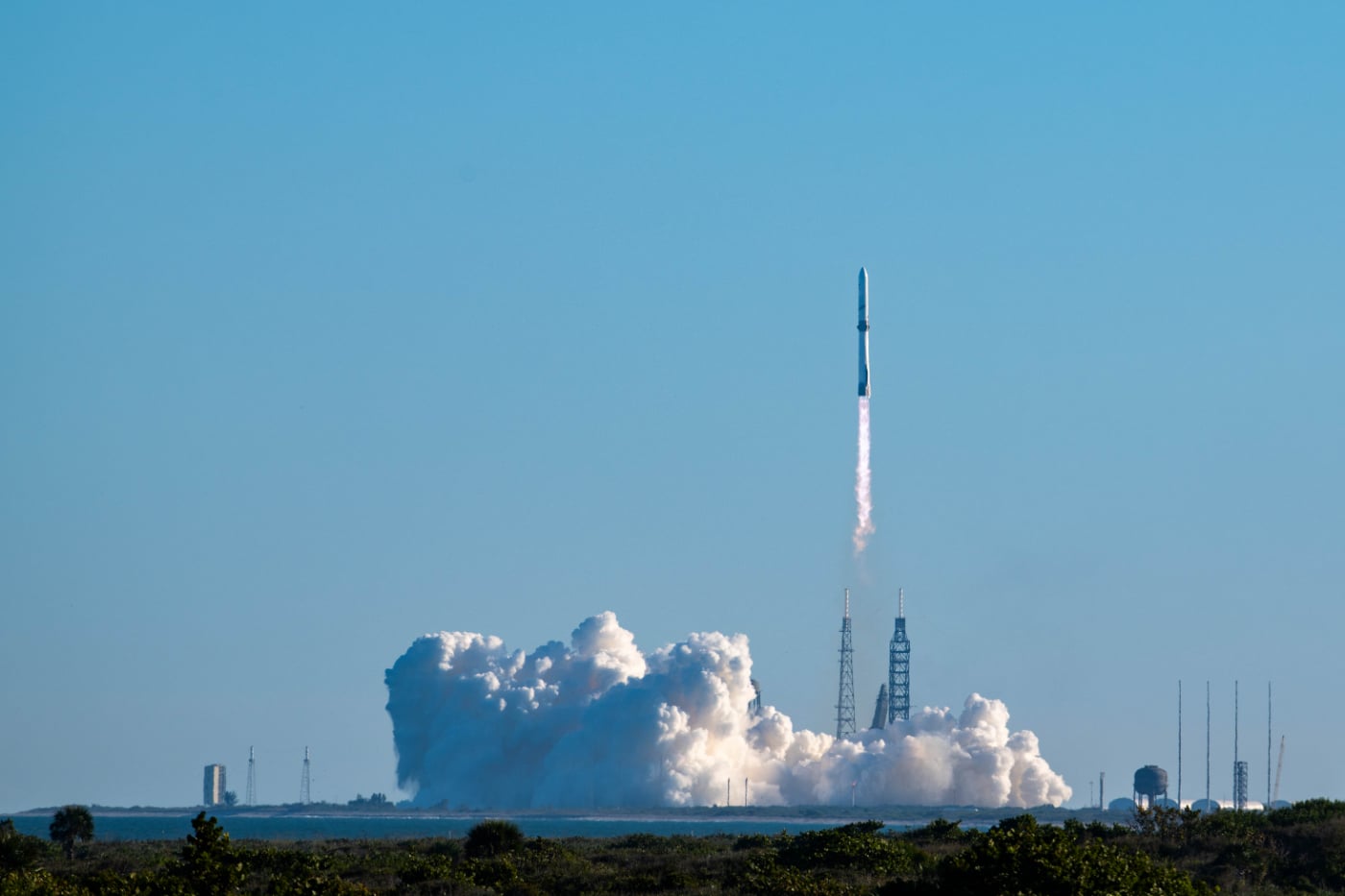
The U.S. Space Force added up to $985 million to its contracts with SpaceX, United Launch Alliance and Blue Origin for launching the military’s most important satellites, the U.S. Department of War announced on Nov. 16.
The award came a day after a ULA Vulcan rocket failed on its first flight in nine months. Blue Origin’s New Glenn hasn’t flown since an explosion on its launch pad in May. That leaves SpaceX’s Falcon 9 and Falcon Heavy as the only rockets currently cleared to carry these payloads.
The three contract changes carry “a combined maximum ceiling value of $985,000,000,” the announcement said. That’s a cap on what the U.S. Space Force can spend, not a payment. “No funds are being obligated at the time of award.”
The announcement doesn’t say how the $985 million is split among the three companies. It doesn’t say what the money is for, or whether it covers more launches.
The contracts are part of a program the U.S. Space Force calls National Security Space Launch Phase 3, Lane 2. It covers the military’s most valuable satellites and the hardest orbits to reach, including GPS navigation satellites, spy satellites and military communications satellites.
The U.S. Space Force signed the deals in April 2025. SpaceX won about $5.9 billion for an expected 28 missions. ULA and Blue Origin together won more than $7.7 billion, ULA for 19 missions and Blue Origin for seven. Together, the three contracts covered about 54 launches.
So far, nearly all the work has gone to SpaceX. In the first two yearly rounds of orders, SpaceX got 12 missions and ULA got four. Blue Origin hasn’t received any, because New Glenn isn’t yet certified for these flights.
For scale, the U.S. Space Force paid SpaceX $714 million for five missions in the second round. ULA got $428 million for two.
ULA’s troubles have pushed even more work to SpaceX. The U.S. Space Force stopped flying military payloads on Vulcan after a problem with one of its side boosters on a February mission. By Oct. 1, it had moved six missions from Vulcan to SpaceX, according to Breaking Defense.
Vulcan was supposed to start its comeback on Nov. 15. About 10 minutes after liftoff from Cape Canaveral, Florida, the rocket failed and 40 Amazon Leo internet satellites were lost. It was ULA’s first complete mission failure since Boeing and Lockheed Martin set up the company in 2006. The cause isn’t known yet.
Blue Origin is stuck too. Its New Glenn rocket exploded during an engine test at Cape Canaveral on May 28, damaging the company’s only working launch pad. Blue Origin has pushed its return to flight to January 2027, CNBC reported.
The announcement doesn’t connect the new ceiling to either setback. Extra room in the contracts could make it easier for the U.S. Space Force to move missions between companies, or absorb delays, without signing new deals.
SpaceX has its own changes coming. The company plans to shift its launches to its giant Starship rocket around 2030 and has stopped taking commercial Falcon bookings for flights after 2028, according to Breaking Defense. These contracts run past both dates.
The U.S. Space Force also runs a second, lower-risk lane meant for newer launch companies. It added Impulse Space and Relativity to that lane in July.
Work under the new changes will take place at the companies’ own plants and at Cape Canaveral, Kennedy Space Center and Vandenberg Space Force Base in California. It “is expected to be completed by April 2033,” the announcement said.
Content preview only. Full article available at source. View Full Article
On November 16, 2023, the U.S. Space Force awarded up to $985 million in contracts to SpaceX, United Launch Alliance, and Blue Origin for launching military satellites. This decision followed the failure of ULA's Vulcan rocket during its first flight in nine months. Currently, only SpaceX's Falcon 9 and Falcon Heavy are cleared for these missions, while Blue Origin's New Glenn remains grounded due to previous incidents. The contracts are part of a broader program aimed at securing military satellite launches.
- U.S. Space Force added $985 million to contracts with SpaceX, ULA, and Blue Origin.
- The contracts are for launching military satellites as part of National Security Space Launch Phase 3.
- SpaceX's Falcon 9 and Falcon Heavy are currently the only rockets cleared for these payloads.
- ULA's Vulcan rocket failed on its first flight after nine months, leading to contract adjustments.
- Blue Origin's New Glenn has not flown since May due to an explosion.