
Lebanon and Syria Enter CENTCOM Dialogue in Bahrain 2026 and 12 Countries Test Post-Iran War Security
 Ahmed Al-Rashid
Lebanon and Syria Enter CENTCOM Dialogue in Bahrain 2026, 12 Countries Test Post-Iran War Security
On July 1, 2026, the news was not that the U.S. Central Command held a new security meeting in Bahrain; this happens frequently in the Gulf. The real news is that the regional dialogue led by CENTCOM included 12 countries, and that Lebanon and Syria joined this type of table for the first time, according to Al Arabiya English's report on the meeting. From a military perspective, the presence of Damascus and Beirut in the same room with U.S. leadership just weeks after the Iran War is not a mere protocol detail, but an attempt to reconstruct a warning and control network that had been compromised from the Syrian side.
What Changed in Bahrain
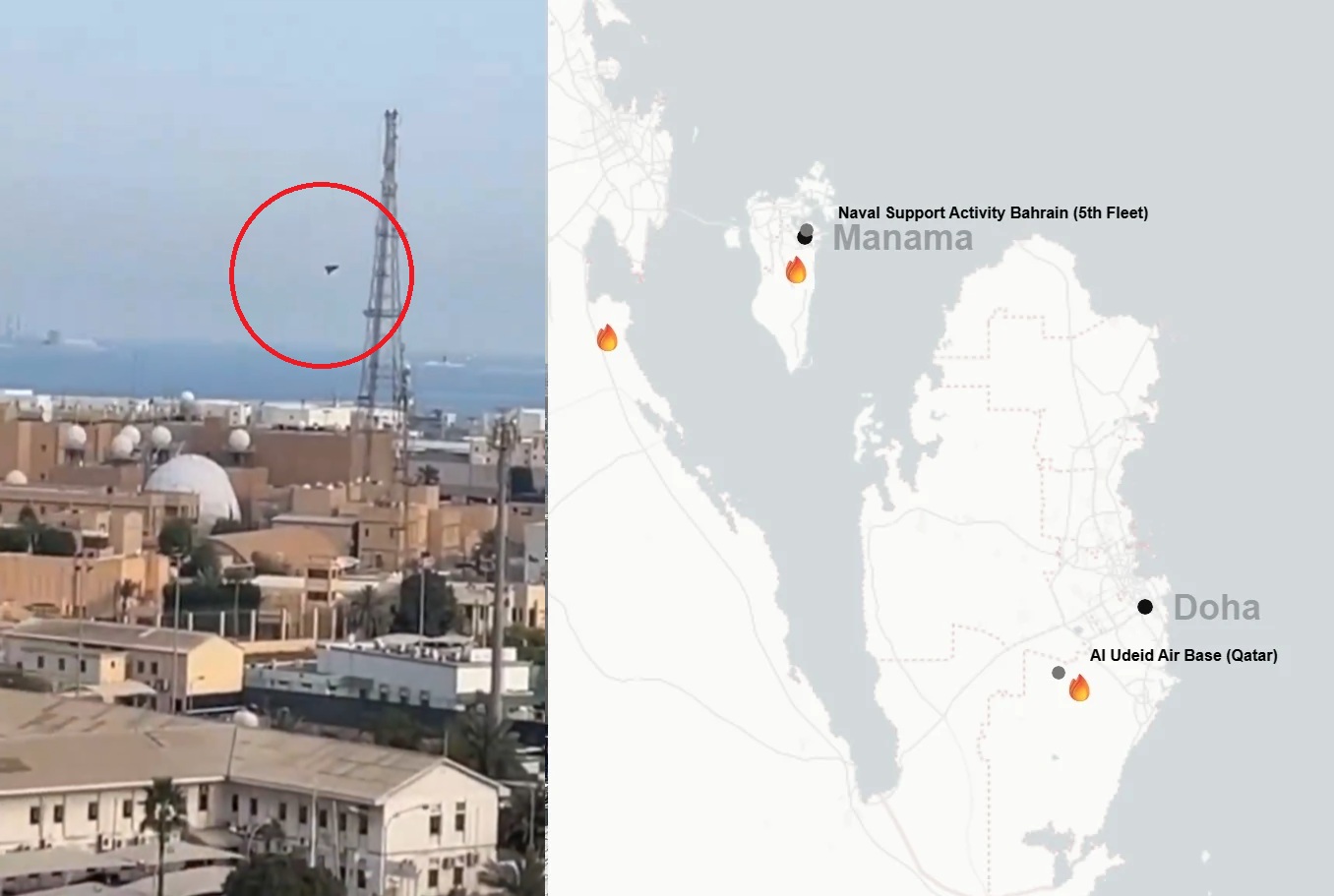
The meeting in Bahrain came after a series of converging indicators: reports of declining Gulf confidence in Washington's ability to keep the Strait of Hormuz open without political cost, U.S.-Israeli discussions about reallocating resources toward China, and a Syrian-Lebanese diplomatic move related to Hezbollah and the borders. Therefore, the dialogue should be read as a test of the command and control system, not a public relations conference.
Bahrain is not a neutral place in this context. It hosts U.S. naval support activities and is the heart of the Fifth Fleet's presence, which is the infrastructure that connects the Gulf to the Arabian Sea and the Red Sea. When Syria and Lebanon are added to a dialogue of this kind, the map becomes longer: from Gulf radars and Patriot and THAAD platforms to the Lebanese coast and the Syrian-Iraqi border where missiles, drones, smuggling, and political messages pass.
Three Levels of the New Dialogue
The first level is air and missile defense. The Iran War demonstrated that interception is not just a matter of having a battery. The battery requires early warning, a data exchange path, rules of engagement, and a stockpile of intercepting missiles. If each country continues to view the sky alone, then the ballistic missile or cheap drone will benefit from the political gaps between capitals. The inclusion of Lebanon and Syria, even in a dialogue channel rather than an alliance, aims to reduce these gaps.
The second level is maritime security and corridors. The Strait of Hormuz is not an isolated island from the Eastern Mediterranean. Iranian pressure or pressure from allies does not always move through an oil tanker or a fast boat; sometimes it moves through a port, or a land crossing, or a missile threat from a party that a Gulf state does not want to name publicly. Any officer who has served in the region knows that the map drawn by politicians on paper differs from the map on which armed networks operate.
The third level is reopening channels with Damascus and Beirut without granting an open political check. Washington does not trust Syrian and Lebanese institutions as it trusts Gulf armies, but it needs field information and de-escalation pathways. This is the difference between security coordination and military alliance. The former is a practical necessity, while the latter is a significant political decision that has not yet matured.
Lebanon and Syria Are Not Just Guests
The entry of Lebanon and Syria places Hezbollah at the center of the equation, even if its name is not mentioned in every statement. Israel says its forces will remain in Lebanon, Syria, and Gaza until security conditions change, and Israeli officials are calling for a broader alignment against Iran. In contrast, any Lebanese or Syrian government cannot appear to be part of a U.S. leadership directed against its own interior. Here lies the precision of the game: Washington wants information and de-escalation, while Beirut and Damascus want functional recognition, and Israel wants guarantees that no meeting paper can provide alone.
In my estimation, the direct military value of Lebanon and Syria in a Gulf air defense system is limited. There is no reliable radar infrastructure in Beirut or Damascus that can be integrated tomorrow with Gulf networks. However, the indirect political and operational value is significant: understanding intentions, controlling channels, and reducing surprises. In the Middle East, sometimes a phone call prevents a crisis more than a billion-dollar missile battery does.
The Gulf Between Buying Weapons and Building a System
This meeting brings us back to the triangle of capability that I often repeat: equipment, training, and institution. Gulf states have purchased enough equipment to provoke envy in half the armies of the world, but they still need a regional institution capable of turning Saudi radar, Emirati interception, the U.S. base, and Jordanian intelligence into a single decision within minutes. Practically, there is no regional air defense system if every capital needs political permission before passing a hostile target's path.
- The important number in the Bahrain meeting is 12 countries, as it indicates an expansion of coordination after the Iran War.
- The most significant addition is Lebanon and Syria, as it shifts the discussion from the narrow Gulf to the Eastern Mediterranean and the Levantine land.
- The biggest gap remains the rules of engagement, not the number of intercepting missiles or the number of U.S. bases.
This may sound harsh, but it is a military reality. Arab countries love to buy systems showcased at exhibitions, but they do not like to build the mundane daily procedures that make systems work at three in the morning. War does not ask for a leader's picture with new weapons; it asks who has the authority to press the button, and who pays the price of error if a missile falls in a friendly city.
Washington Is Not Building an Alliance but a Crisis Management Network
Americans know that a Middle Eastern alliance similar to NATO is unrealistic. The Saudi-UAE dispute, Qatari calculations, Iraq's sensitivities, Lebanon's situation, and Syria's partial return to the table all make the word "alliance" larger than reality. Therefore, they are moving towards a crisis management network: meetings, lines of communication, warning exchanges, and limited training. This network is less ambitious than an alliance, but it is more viable.
The problem is that networks do not endure if they lack institutional memory. A change in U.S. administration or a crisis between two Gulf states can paralyze it. Moreover, Iran and its allies will quickly understand the message: Washington is trying to bridge the gaps between the Gulf and the Levant. The response may not be a large missile; it could be a small test at the Lebanese border, or a drone over the sea, or political pressure on a weak government.
The old military saying goes that the map does not protect anyone if there are no clear orders behind it. The Bahrain meeting drew a broader map, but it has not yet proven that the orders will be clear when the sirens start.
Conclusion
The CENTCOM dialogue in Bahrain is not the birth of a new security system, but an acknowledgment that the old system is no longer sufficient. The Gulf cannot protect itself if it continues to view Iran only from above the waters of Hormuz, and Israel cannot impose security in the Levant solely through air power, while Lebanon and Syria cannot ignore that their security has become part of a larger regional network.
The structural contradiction will remain as it is: Arabs want an American umbrella when missiles fall, and they want political independence when the skies calm. Washington wants partners to share the burden, not clients waiting for protection. Between these two desires, this type of dialogue is born. It may succeed in managing the next crisis, but it will not become a real force unless the words in Bahrain turn into training procedures, data exchange authorities, and rules of engagement that capitals are not ashamed of when the test begins.
Lebanon and Syria participated in a CENTCOM dialogue in Bahrain on July 1, 2026, marking their first involvement in such discussions. The meeting included 12 countries and focused on regional security following the Iran war, aiming to enhance air defense coordination and intelligence sharing. This dialogue reflects a significant shift in military and political dynamics in the region.
- Lebanon and Syria participated in a CENTCOM meeting in Bahrain for the first time.
- The meeting involved 12 countries discussing post-Iran war security.
- The dialogue aims to improve air defense coordination and regional security.
- The U.S. seeks to gather intelligence and establish communication channels with Lebanon and Syria.