
Liaoning Aircraft Carrier Conducts Live Fire Training in the Western Pacific on May 19, PLA Aircraft Carrier Operational Rate Undergoes Stress Test
 Li Minghui
Liaoning Aircraft Carrier Conducts Live-Fire Training in the Western Pacific on May 19, PLA Navy Carrier Operations Enter Pressure Testing
On May 19, the PLA Navy organized the Liaoning aircraft carrier group to conduct training in relevant waters of the Western Pacific. The official announcement was brief, listing only four subjects: long-range tactical flight, live-fire shooting, support and cover, and comprehensive rescue. On the surface, this appears to be routine training as part of the annual plan, but placing the location in the Western Pacific, combined with recent aerial friction between China and Japan, means this event should not be viewed as a normal deployment.
The Most Critical Aspect of This Announcement Is Not the Live-Fire Shooting
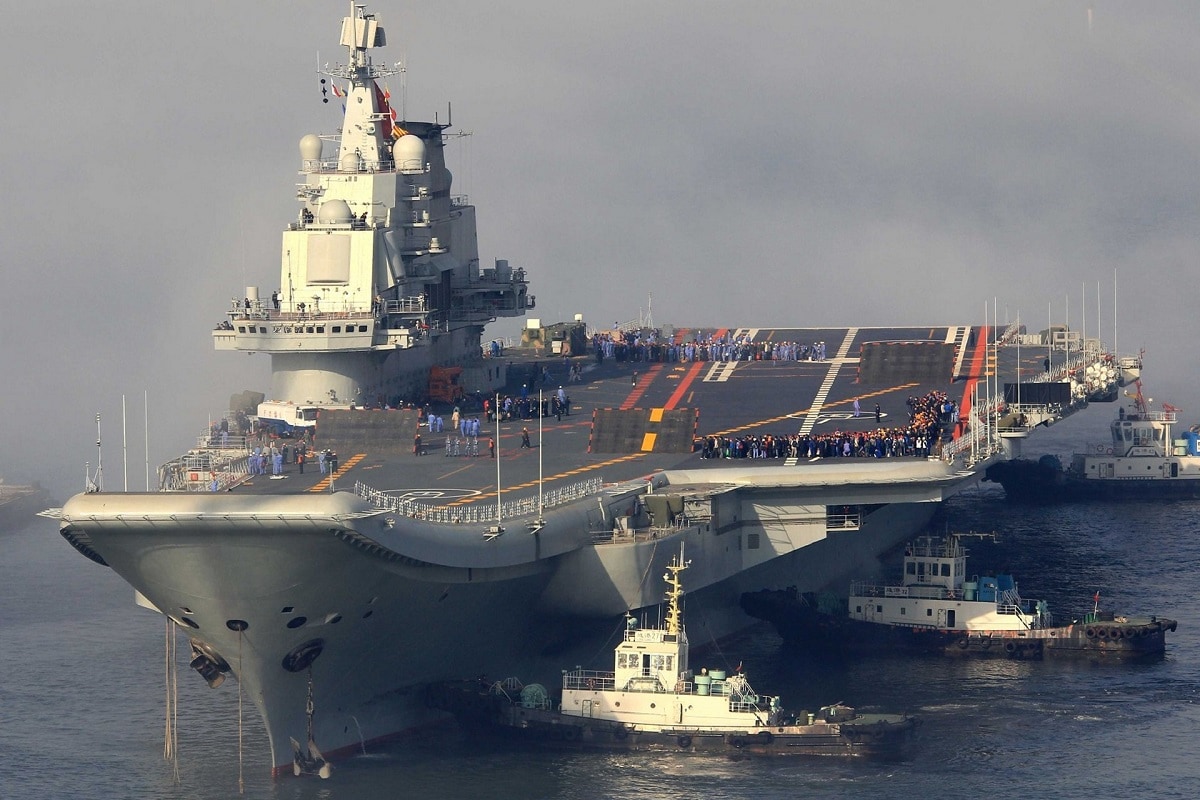
Live-fire shooting certainly attracts attention, but I am more concerned with the terms "support and cover" and "comprehensive rescue." The real challenge for the carrier group is not getting the J-15 to take off, but rather maintaining continuous launches, recoveries, resupply, and vigilance in a distant sea environment, and safely catching the chain of pilots, aircraft, and fleet in the event of an accident. In simple terms, the shortcoming of the Liaoning, a ski-jump takeoff carrier, lies not in single launches but in the organizational and logistical resilience of the deck after continuous high-intensity operations.
Both Xinhua News Agency and China National Radio quoted naval sources stating that this training was organized according to the annual plan and complies with international law and practices. The South China Morning Post added a useful background: last May, the Liaoning conducted similar exercises in the Western Pacific for about a month; in December, when Chinese carrier-based aircraft were training east of the Miyako Strait, it triggered a controversy over the Japan Air Self-Defense Force's F-15 closely monitoring and radar locking on the Chinese J-15. This background indicates that what Beijing is testing now is not a single long voyage, but a repeatable model of carrier presence in the distant sea.
The Liaoning Is Still a Training Ship, But the Training Targets Have Changed
Many people are accustomed to viewing the Liaoning as a "training aircraft carrier," and this assessment is not incorrect. Its ski-jump deck limits the carrier-based aircraft's ability to take off fully loaded with fuel and munitions, and it does not have the electromagnetic catapult capabilities of the Fujian. However, the issue is that today, the training targets for the Liaoning are no longer just the individual skills of pilots, but the system coordination of the carrier group outside the first island chain.
- The J-15 is responsible for long-range tactical flight, verifying the operational rhythm of carrier-based aircraft under surveillance pressure from the southwest of Japan.
- Destroyers and frigates undertake area air defense, anti-submarine vigilance, and communication relay, determining whether the group can operate continuously offshore.
- Logistics and rescue subjects test the often-overlooked logistics chain, especially the recovery capability after flight accidents, changes in sea conditions, and continuous missions.
This numerical reality is significant. The standard displacement of the U.S. Nimitz-class aircraft carrier is about 100,000 tons, and the catapults allow carrier-based aircraft greater margins in load and rhythm; the Liaoning's full-load displacement is typically estimated at about 60,000 tons, and the J-15 is a heavy carrier-based aircraft. Its ability to maintain stable operations with dozens of flights daily in the Western Pacific is more indicative of the maturity of the PLA Navy's carrier forces than any single "appearance."
What Japan Is Really Nervous About Is the Compressed Warning Time
From the map, if the Liaoning enters the Western Pacific via the Miyako Strait, its activity area will typically be close to the outer edge of Japan's southwestern islands. For Japan, the problem is not just that a Chinese aircraft carrier has arrived, but that the Japan Self-Defense Forces must continuously dispatch P-1 patrol aircraft, E-2D early warning aircraft, F-15s, or F-35s for tracking. Each tracking mission consumes flight hours, maintenance support, and pilot energy.
This is also why the aerial encounters between China and Japan in December were repeatedly mentioned by both sides. Whether the fire control radar was locked on is disputed, but one thing is clear: once the carrier group normalizes the activities of its carrier-based aircraft, Japan's interception and monitoring chain will enter a higher frequency of consumption. I do not believe the Liaoning currently possesses the global projection capabilities of U.S. carriers, but it is sufficient to keep Japan's early warning systems on high alert in the southwestern direction for an extended period.
The Fujian Has Not Fully Entered Service, the Liaoning Is Paving the Way
This training also has a time point that is easy to overlook. The Fujian is entering the stage of electromagnetic catapult and comprehensive verification for carrier-based aircraft, but it will still take time to form combat capability. The Liaoning's repeated entries into the Western Pacific at this time seem more like a prelude to familiarizing the subsequent catapult-equipped carrier with the routes, weather, resupply rhythms, and responses to monitoring from Japan and the U.S.
This should not be overstated. The training of the Liaoning's carrier group does not mean that the PLA can already suppress U.S. and Japanese maritime and air forces in the second island chain for an extended period. Information available publicly does not provide sufficient answers regarding distant sea anti-submarine operations, carrier-based fixed-wing early warning, ammunition resupply, and battle damage repair. The real question is: when the Fujian and J-35 join the same rhythm of distant sea training in the future, can Japan still maintain full tracking at the current frequency and cost?
Main sources: Xinhua News Agency's May 19 announcement on the training of the PLA Navy's Liaoning aircraft carrier group in the Western Pacific; China National Radio's same report; South China Morning Post's May 19 report on the Liaoning's Western Pacific exercises and the background of aerial friction between China and Japan.
The People's Liberation Army Navy (PLAN) conducted live-fire training exercises with the Liaoning aircraft carrier in the Western Pacific on May 19, 2023. The exercises included tactical flight operations and logistical support, aimed at enhancing the operational capabilities of the carrier group. This training is part of an annual plan and raises concerns for Japan regarding the increased presence and operational tempo of Chinese naval forces in the region.
- Liaoning aircraft carrier conducted live-fire training in the Western Pacific on May 19, 2023.
- The training included tactical flight operations, live-fire shooting, support cover, and comprehensive rescue.
- The exercise is part of the annual training plan and complies with international law.
- The training aims to test the operational capabilities of the carrier group under pressure.
- Japan is concerned about the increased operational tempo of the Chinese carrier group.