
Liaoning Aircraft Carrier Continues Training in the Western Pacific, PLA Carrier Group Pushes Pressure Line Towards the Second Island Chain
 Li Minghui
Liaoning Aircraft Carrier Continues Training in the Western Pacific, PLA Carrier Group Pushes Pressure Line Towards the Second Island Chain
On October 15, the Chinese Navy announced that the Liaoning aircraft carrier group would conduct routine training in the Western Pacific; Taiwan subsequently stated that it had been tracking its movements through intelligence, surveillance, and reconnaissance systems. A daily report released by Taiwan's defense department on October 22 indicated that six PLA warships and seven government vessels were detected around the Taiwan Strait in the previous 24 hours, but no PLA military aircraft activities were observed. This combination is quite interesting—while the carrier group trains in more distant waters, naval and government vessel activities remain near the Taiwan Strait, suggesting that the focus of this operation may not necessarily be to immediately create a high-intensity aerial crisis.
What the Liaoning Can and Cannot Do
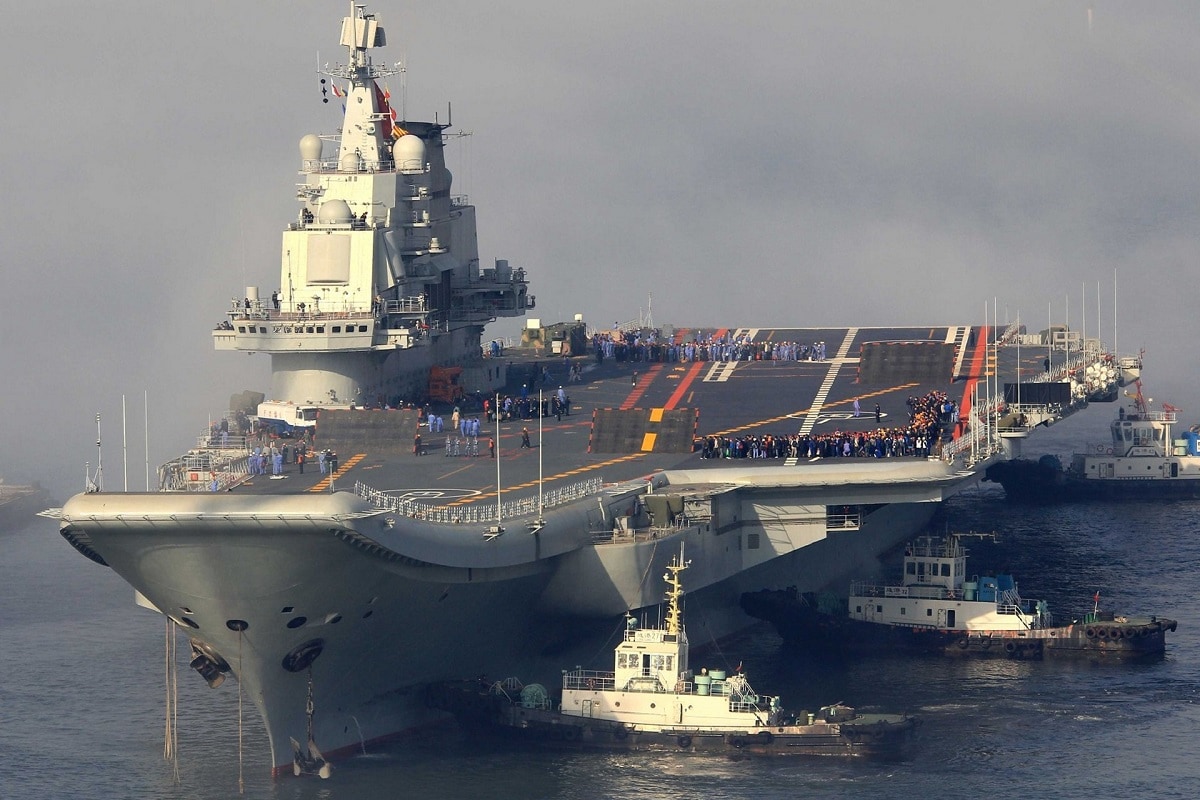
The Liaoning is China's first aircraft carrier, with a full-load displacement typically estimated at around 60,000 tons, utilizing a ski-jump takeoff and arrestor wire landing layout, with the core carrier-based aircraft being the J-15 series. Compared to the electromagnetic catapult system of the Fujian, the Liaoning's shortcomings are clear: heavy takeoff efficiency, fixed-wing early warning aircraft utilization, and sustained sortie rates are all limited by the deck layout. However, this does not mean it is merely a training ship. The group centered around the Liaoning can combine long-range air defense, anti-submarine warfare, maritime replenishment, and carrier aviation to test an entire set of offshore combat processes.
In simple terms, the most important metric for the Liaoning's current mission is not how far a single J-15 flies, but whether the group can maintain reconnaissance, alertness, replenishment, and flight training while being far from shore-based support. For the PLA Navy, this is closer to true carrier combat capability than a near-shore demonstration.
The Training Route Itself is a Signal
Beijing has referred to the operation as an annual routine training exercise and emphasized that it is not aimed at any specific country or target; Taiwanese media have noted that as the Liaoning group enters the Western Pacific, Taiwan has simultaneously warned that the PLA is combining military activities with cognitive warfare. These two narratives are not contradictory. Militarily, offshore training can accumulate navigation and aviation experience for the carrier group; in terms of communication, publicly releasing the group's location can force surrounding countries to invest more ISR resources for tracking.
Geographically, training in the Western Pacific means the Liaoning must face a more complex maritime and aerial environment, relying more on fleet coordination and logistical support. There has not been a simultaneous large-scale military aircraft activity in the Taiwan Strait and its surroundings, which instead indicates that the PLA may be intentionally separating "carrier presence in distant seas" from "pressure near the Taiwan Strait." This approach can reduce the risk of misjudgment and test the response speed of Taiwan and neighboring countries.
The Real Shortcoming Remains in Sustained Sortie Rates
I believe that the outside world should not equate the Liaoning's entry into the Western Pacific directly with the PLA having developed mature oceanic sea control capabilities. The scale of the Liaoning's carrier-based aircraft, ski-jump takeoff limitations, early warning aircraft support, and offshore maintenance capabilities will all affect how many missions it can continuously execute. The absence of PLA military aircraft detected by Taiwan on October 22 does not prove that the Liaoning had no flight activities, as the training area may have been far from Taiwan's daily monitoring range; however, it at least reminds us that publicly available information is still insufficient to assess the actual intensity of this training.
Sources include reports from Taiwan News on October 15, Taipei Times on October 16, and activity reports from Taiwan's defense department on October 22. What is truly worth observing next is not whether the Liaoning appears again, but whether the group will establish a stable supply chain, early warning aircraft coordination, and high-frequency carrier-based aircraft sortie records—if these data are never made public, the so-called "normalization of carrier operations in distant seas" can still only be considered an ongoing capability-building effort.
The People's Liberation Army Navy conducted routine training exercises with the Liaoning aircraft carrier group in the Western Pacific from October 15 to 22, 2023. Taiwan monitored the movements of six Chinese naval vessels and seven civilian ships but reported no military aircraft activity in the Taiwan Strait. This operation is part of China's annual military training, aimed at improving naval capabilities and testing regional responses.
- Liaoning aircraft carrier group conducted routine training in the Western Pacific.
- Taiwan tracked the movements of the Chinese naval vessels and civilian ships.
- No Chinese military aircraft were detected in the Taiwan Strait during this period.
- The training aims to enhance naval operational capabilities away from shore support.
- The operation is part of China's annual military training exercises.