

Summary and Key Points: Expert Sean Spoonts revisits NASA’s Hyper-X program, an eight-year, $230 million program run by Langley and Dryden that produced the 12-foot X-43A, a hydrogen-fed scramjet lifting body built by MicroCraft, Boeing Phantom Works, and Orbital Sciences. After the 2001 failure, it hit Mach 6.83 in March 2004 and Mach 9.68 (6,755 mph) that November, the fastest air-breathing aircraft ever, proving heat protection and control through plasma blackout. NASA’s Moon pivot ended it; the Air Force’s X-51 followed. And, yes, it was faster than the SR-71 Blackbird.
Military History Made: NASA’s X-43A Was Much Faster Than the SR-71 Blackbird.
NASA’s Hyper-X Program began in the late 1990s as one of the space agency’s “better, faster, cheaper” initiatives, aimed at delivering results at a reasonable taxpayer cost.
The program’s objective was to test flight and validate hypersonic combustion scramjets, which do not feed on internally carried oxygen but draw it from air it sucks in at hypersonic speeds.
The program also wanted to explore the aerodynamics, materials, and design methods needed for hypersonic flight.
The eight-year program was budgeted at $230 million and was jointly managed by NASA’s Langley Research Center for hypersonic development and the Dryden Flight Research Center for flight testing.
X-43A Specifications
Design Dimensions: 12-foot unmanned lifting body
Weight: Max weight of 2,200- 3,000 lbs.
Shape: Airframe-integrated. The front of the aircraft serves as the air intake, while the aft section is the engine exhaust nozzle.
Propulsion: Gas hydrogen-fed scramjet, silane ignition, copper alloy heat-sink engine by GASL
The Private Contractors Behind The X-43
To build the X-43A, NASA would rely on civilian contractors.
MicroCraft Inc. (Now ATK GASL) would build the airframe and scramjet engines. Boeing Phantom Works would design the thermal protection and internal systems, and the rocket boosters would be modified versions of the Pegasus rocket made by Orbital Sciences Corporation.
Why Use Scramjet Engines In The X-43?
In a normal jet engine, the intakes suck in air, and the internal compressor or fan blades compress it, mix it with vaporized fuel, and ignite it.
The explosive gases of this combustion create thrust that propels the aircraft forward.
A jet engine can reach impressive speeds up to about Mach 3.5, but beyond that the air enters the engines so fast that the internal compressor can’t keep up and fails.
The SR-71 used jet engines, but above Mach 2 it diverted air out of its fourth-stage compressor directly into the afterburners, making it a hybrid ramjet system. Above Mach 5, a ramjet loses efficiency.
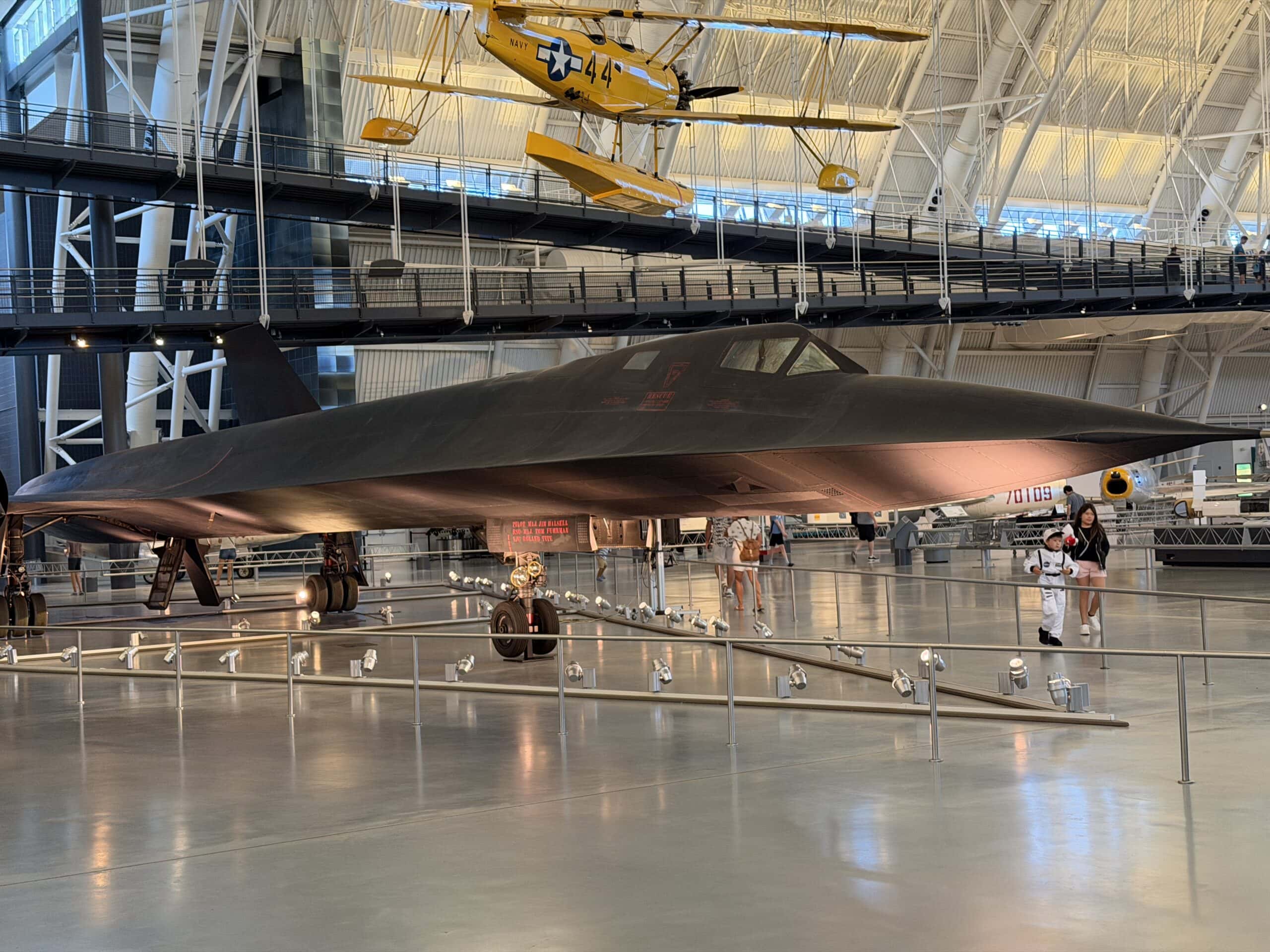
SR-71 Blackbird. Image taken at the Smithsonian on 6/30/2026 by 19FortyFive
This is where a scramjet comes in.
A scramjet has no moving parts, no compressors, fans, or blades.
Unlike a ramjet, which slows down hypersonic air before igniting it, a scramjet uses the aircraft’s extreme forward speed to create the hypersonic airflow it needs.
It injects fuel into the air and ignites it, generating tremendous thrust and acceleration.
On the ground, though, a scramjet is helpless without hypersonic airflow.
So, to reach true hypersonic speeds, you first need jet engines to get the aircraft up to the speed where you can start your ramjet engine, which then gets you up to the speed to use your scramjet engine, and then you can really start going places.
Or you can use a rocket to propel you up to Mach 5 and then start your scramjet. You can use a smaller rocket if you take your X-43A up to 95,000 feet slung under a bomber and drop it.
The first two X-43 tests failed.
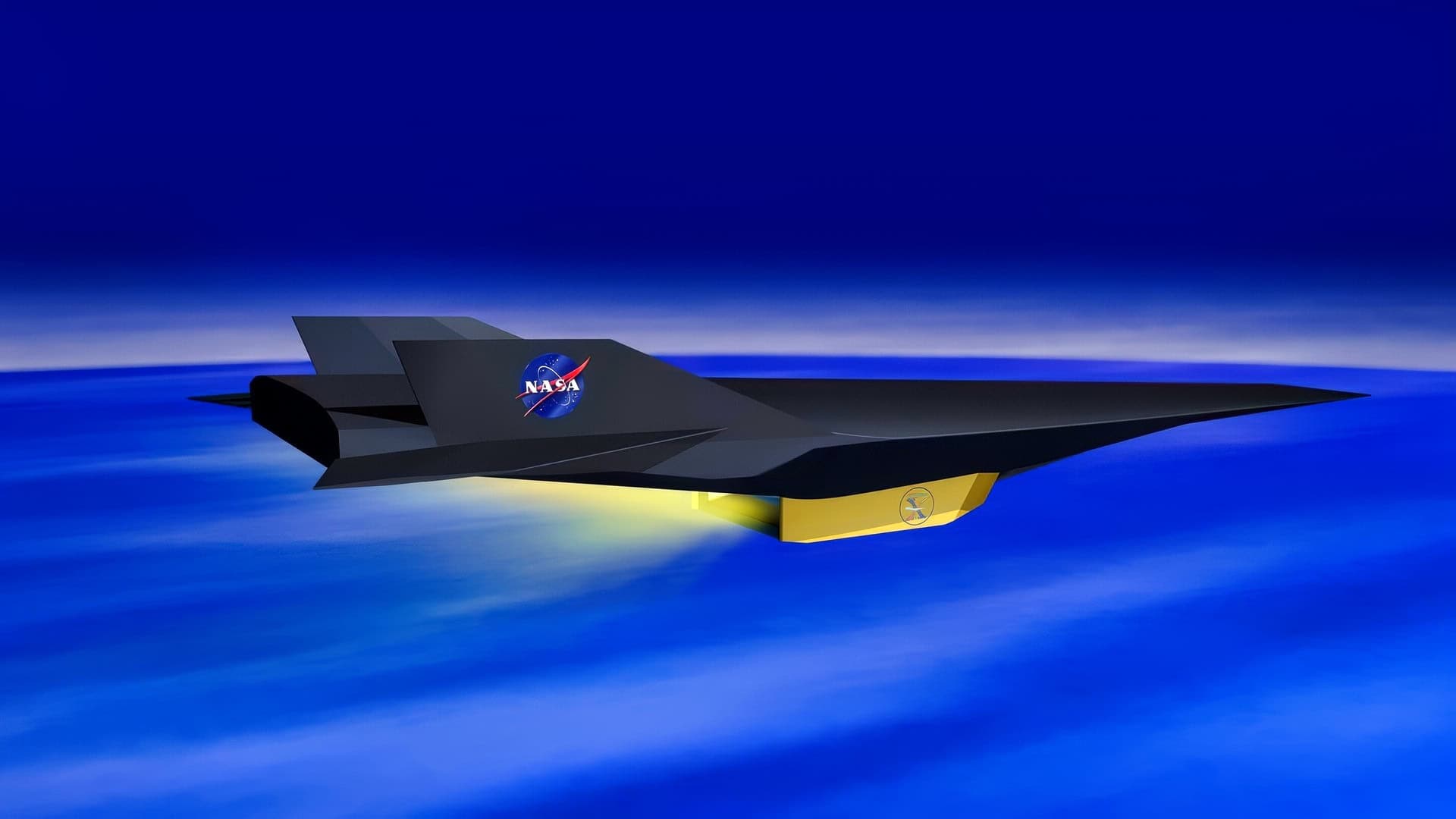
X-43D. Creative Commons Photo.
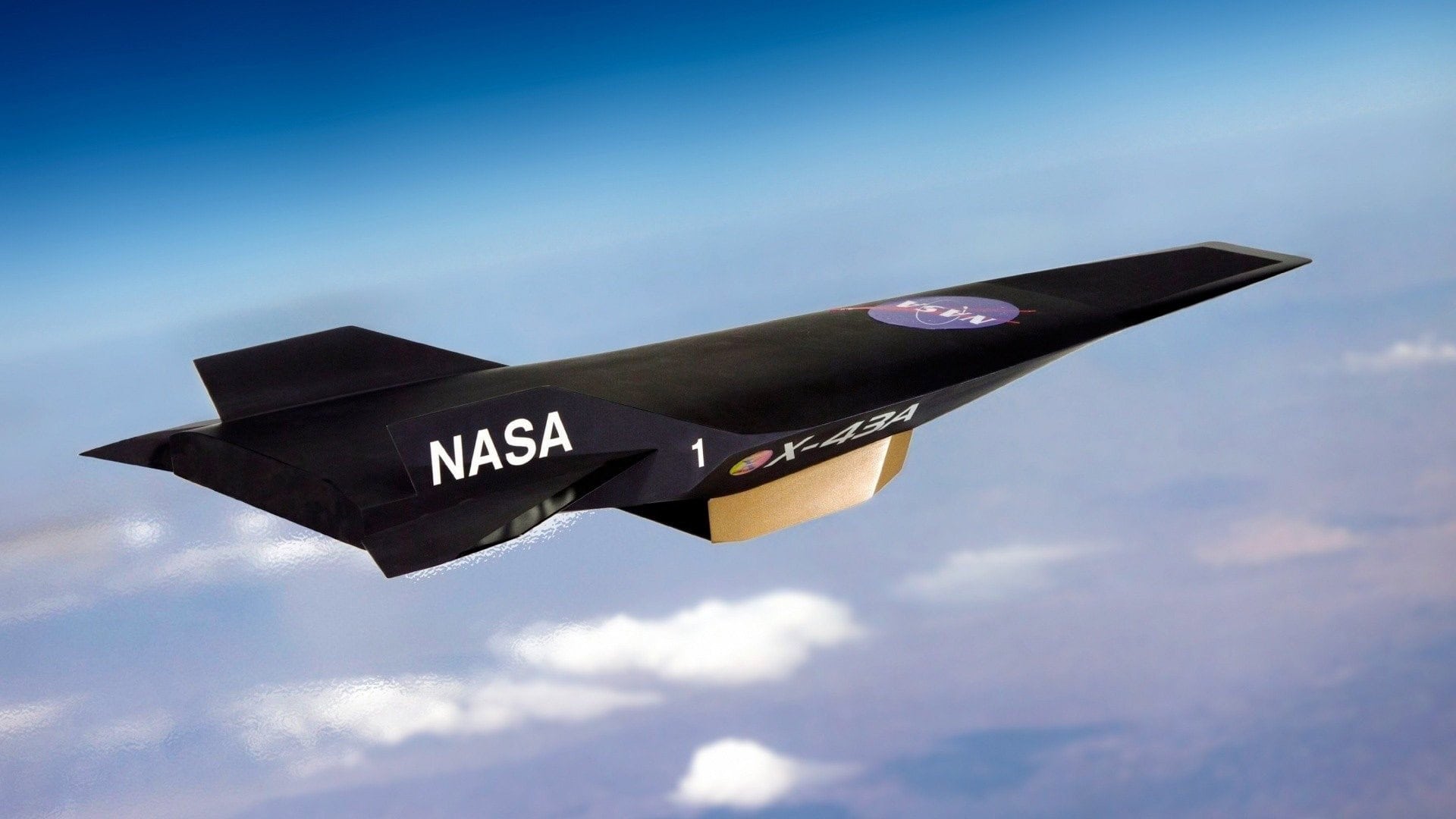
X-43A. Image Credit: Creative Commons.
On June 1, 2001, a NASA NB-52B Stratofortress hauled the X-43A up to 95,000 feet, the test plane’s rocket motor ignited, and it all went south from there.
Apparently, the X-43’s control system couldn’t handle transonic speeds and gave up. The X-43A started shedding pieces, and NASA blew it up in midair.
NASA spent a couple of years absorbing the lesson and launched a second test in March 2004, which worked.
The X-43A’s rocket booster fired, giving it a mighty push forward. When the rocket burned out, the X-43A jettisoned it and ignited its scramjet.
The craft then shot up to an incredible speed of Mach 6.83, or 4,653mph.
Equally impressive, controllers on the ground controlled it in flight as it traveled 15 miles in just 11 seconds, the time it took the scramjet to expend its fuel.
The X-43A then lost speed and fluttered down to a landing in the ocean. The test aircraft were not meant to be recovered. The X-43A had just become the fastest free-flying, air-breathing aircraft ever.
The Third Time Was The Charm For The X-43A
The third test took place that November.
This time, the B-52 dropped the X-43A at 40,000 feet.
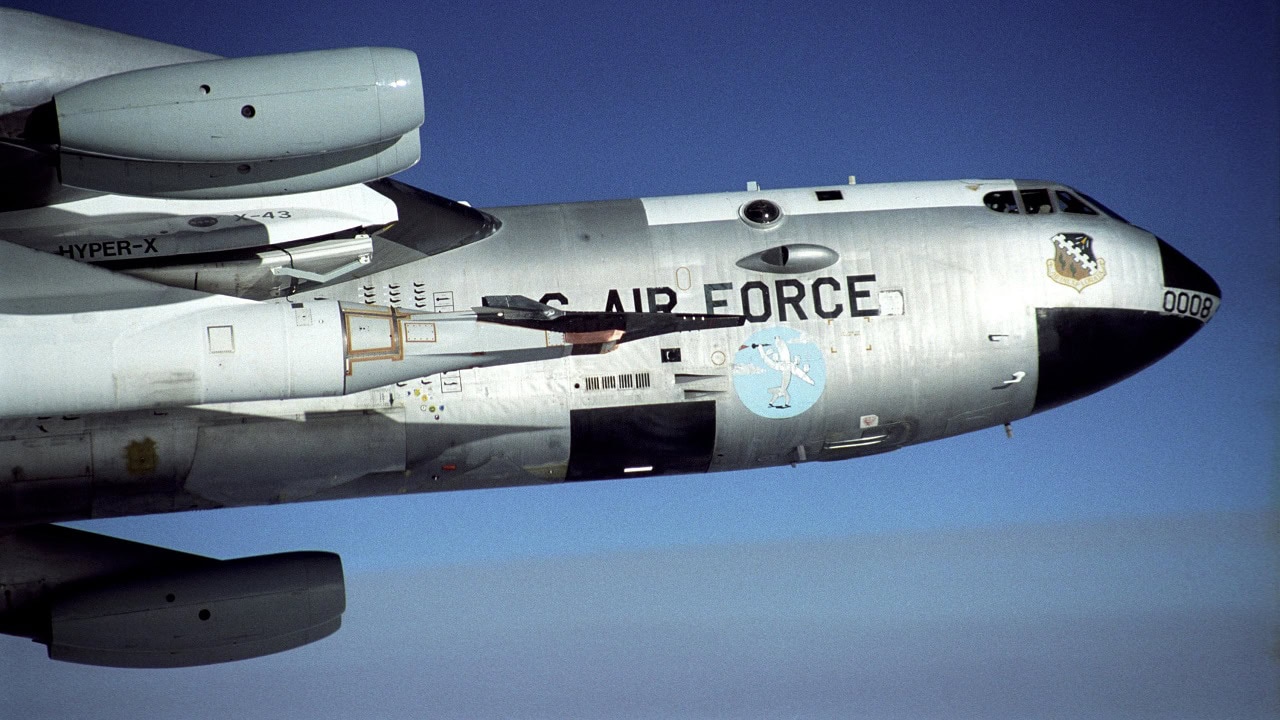
The X-43A was a small experimental research aircraft designed to flight-demonstrate the technology of airframe-integrated supersonic ramjet or “scramjet” propulsion at hypersonic speeds above Mach 5, or five times the speed of sound. Its scramjet engine is an air-breathing engine in which the airflow through the engine remains supersonic.
The rocket motor fired, and the craft soon reached Mach 10.
The scramjet cut the rocket loose, started up, and held Mach 9.68 for 12 seconds at 6,755 mph.
The X-43A once again became the world’s fastest air-breathing aircraft.
It took the aircraft a full 14 minutes to descend from 109,440 feet and land in the ocean.
NASA had big plans for this program.
The X-43A was a scale model of a much larger aircraft, with bigger rockets, variations on the scramjet engine, and different fuels to extend sustained flight.
NASA planned X-43B, X-43C, and a final X-43D model that would have reached Mach 15 to test engines and flight control systems.
The X-43A was not just about going fast. NASA had made significant gains in two important areas.
It learned how to keep hypersonic aircraft from melting at high speeds with heat-resistant materials, coatings, and chilled-water circulation.
It also proved it could send control-system inputs electronically to a hypersonic missile.
At these speeds, the air around the craft forms a plasma sheath that blocks communication signals from getting in or out. NASA somehow overcame this.
This solution supports hypersonic missile development. A hypersonic missile that can receive in-flight course corrections can hit a moving target.
The Plug Gets Pulled From The X-43
While these tests were underway in 2004, NASA announced a major shift in focus, expressed as its “Vision for Space Exploration.” The United States would return to the Moon with manned spacecraft.
NASA declared that the X-43 program had met its planned goals and funding ended.
The private companies that built the X-43A would now shift their efforts to the new Moon program.
The Air Force Takes Over
The end of the X-43A program did not end hypersonic flight research. The Air Force stepped in to fund its own hypersonic missile program, currently being tested and refined as the X-51 Waverider.
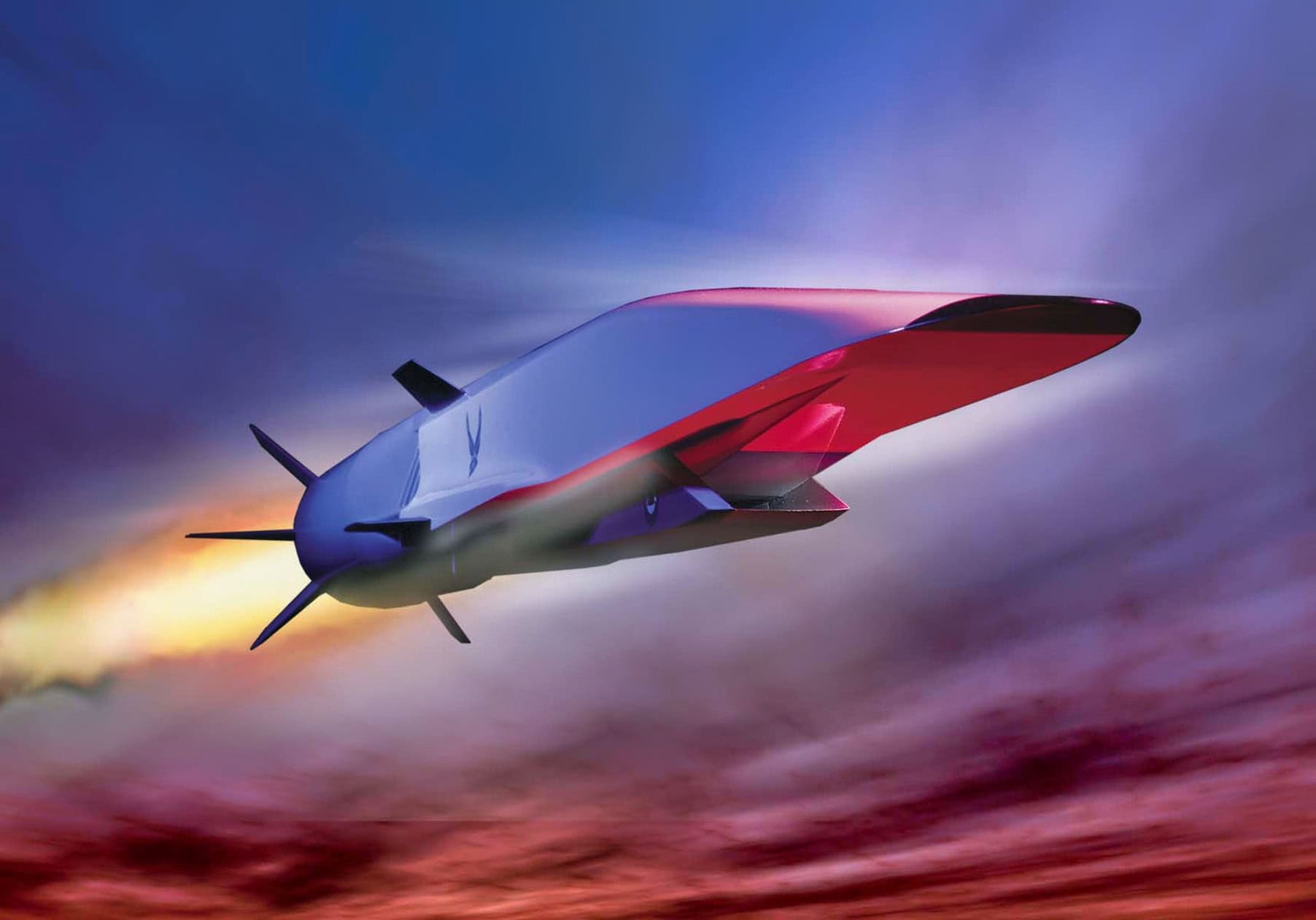
The X-51A Waverider is set to demonstrate hypersonic flight. Powered by a Pratt Whitney Rocketdyne SJY61 scramjet engine, it is designed to ride on its own shockwavem and accelerate to about Mach 6. (U.S. Air Force graphic)
Is NASA Back In The Hypersonic Saddle Again?
Then, in 2026, NASA announced its official return to high-speed, high-altitude flight with a successful test of its latest X-Plane, the X-59 Quest, built for civilian applications that require quiet supersonic speeds without window-shattering sonic booms.
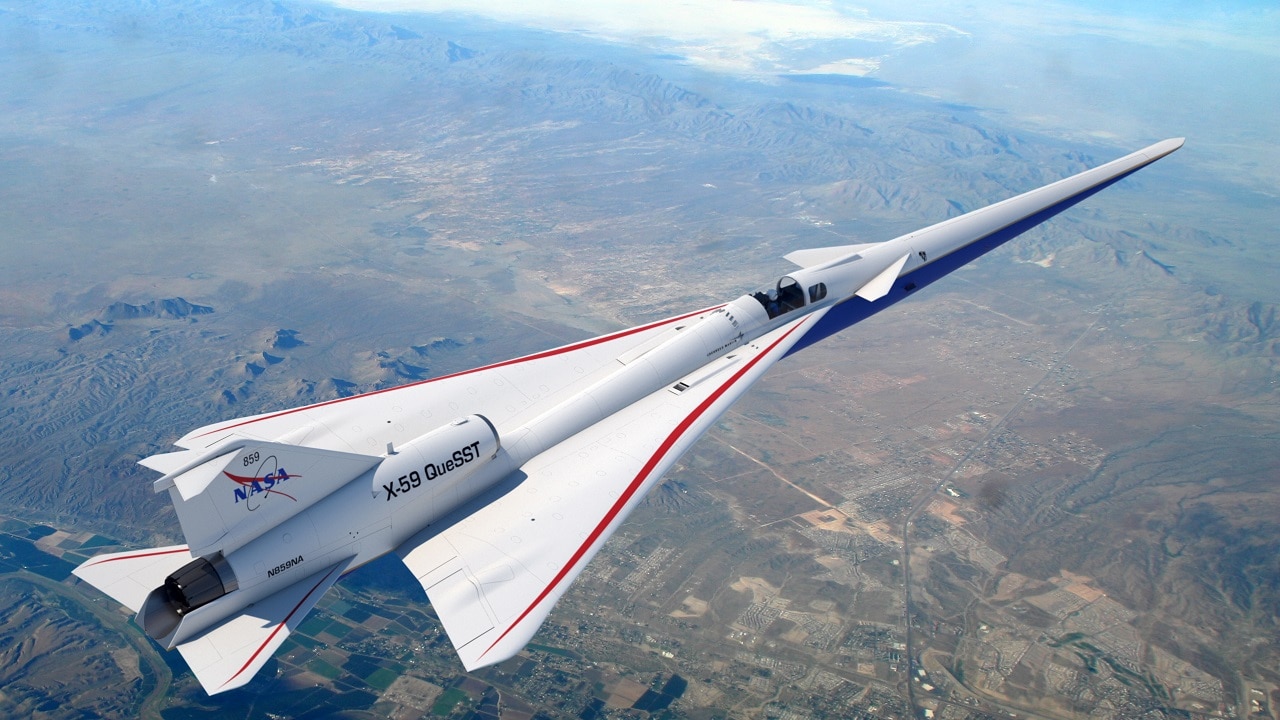
X-59. Image Credit: NASA.
The X-59 hit its initial benchmark speed of Mach 1.4 in testing last June, but it looks like it can go faster.
We’ll see if this latest X-Plane has its own hypersonic future someday.
About the Author: Sean Spoonts
Sean Spoonts is the former Editor-In-Chief of SOFREP.com. He is a military analyst, writer, and commentator whose work has appeared in Newsweek, CNS News, Ukrinform, and various military/veteran media networks and professional publications, including the Military Intelligence Professional Bulletin. He is a U.S. Navy veteran, having served as an Aviation Anti-Submarine Warfare Operator and Search and Rescue Helicopter Aircrewman.