
Mali 2026 — Kidal reclaimed by the army and the Africa Corps in a still contested North
 Marie Dubois
Mali 2026 — Kidal retaken by the army and the Africa Corps in a North still contested
In Kidal, on October 6, about 120 Malian and Russian vehicles advanced from Anéfis while the Azawad Liberation Front (FLA) was leaving the city. The Malian army and its partners from the Africa Corps thus regained, without any reported direct combat, the main symbol of their defeat in April. On the map, Bamako recovers a strategic point. On the ground, the situation is less clear.
A military entry prepared on several axes
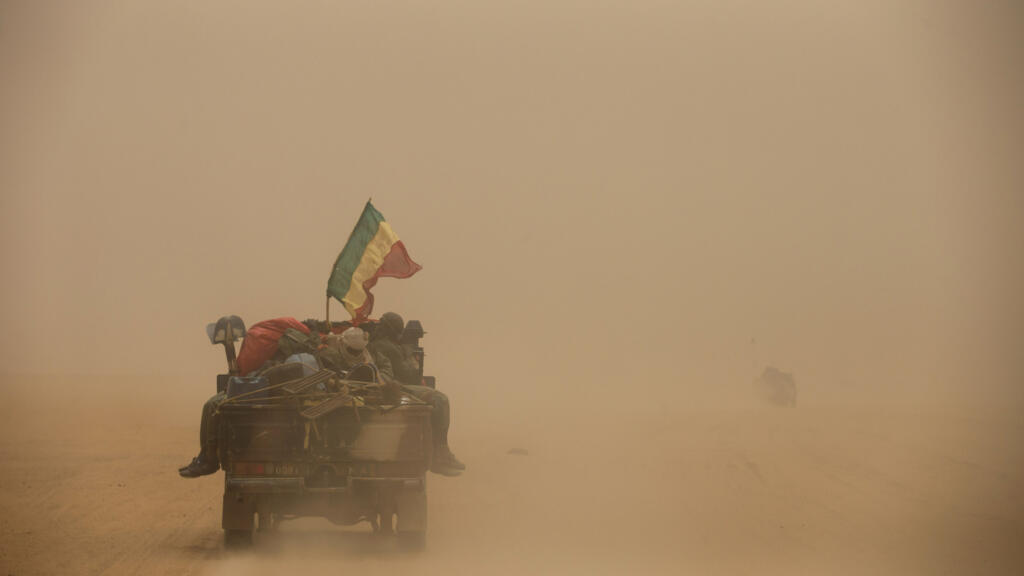
The convoy that left Anéfis included soldiers from the Malian Armed Forces, Russian military personnel from the Africa Corps, as well as fighters from the MSA and Gatia, two Tuareg groups integrated into the Malian forces. The army had reinforced its positions in Anéfis and Aguelhoc over the weekend, before intensifying its airstrikes around Kidal and in Tinzaouatène, near the Algerian border.
The Malian Chief of Staff described the operation as a large-scale air-ground campaign aimed at neutralizing armed groups and reopening circulation. The FLA, on the other hand, speaks of a "strategic withdrawal" and claims to have wanted to preserve its men and logistical means. Both narratives are compatible with a simple operational fact: the city changed hands because the defender withdrew before contact.
A political victory, not yet a territorial victory
The recapture of Kidal erases a specific humiliation. In April, the FLA and the Group for Support of Islam and Muslims (JNIM), linked to al-Qaeda, had retaken the city and inflicted heavy losses on Malian forces. This sequence had shown that the junta did not truly control the northern axis, despite its rhetoric of national reconquest. The entry on October 6 allows Bamako to restore an image of authority and boost the morale of its units.
But Kidal is not an autonomous security base. It is a node in a vast space, several hundred kilometers from the administrative and logistical centers of the South. Holding the city means securing the road, secondary tracks, water points, and connections to Aguelhoc and Tinzaouatène. A column can enter Kidal in one day; it cannot sustainably control the terrain if its convoys remain predictable and if its forward posts are isolated.
Analyses cited by AllAfrica and Deutsche Welle therefore describe this recapture as a victory that is mostly symbolic, and not as a decisive turning point against jihadist groups. This is the correct diagnosis. A garrison in Kidal does not eliminate the JNIM networks or the FLA's harassment capabilities. It could even become a fixed target, costly to supply.
The departure of the FLA does not mean the disappearance of the threat
The Tuareg withdrawal raises a more important question than the flag raised over the city. Does the FLA retain its forces outside of Kidal to prepare a counterattack, or is it trying to avoid an urban battle that would expose the population? Its statement mentions preserved human and logistical capabilities. This wording should be taken seriously.
The JNIM, on the other hand, benefits from a classic advantage of Sahelian theaters: it does not need to hold the city to control movements around it. It is enough for it to observe the convoys, strike the axes, and maintain pressure on the communities that serve as intermediaries. The tactical cooperation between separatists and jihadists that contributed to the fall of Kidal in April remains poorly documented. Nothing suggests that it is sustainable, but nothing also suggests that it is over.
The Africa Corps gains a symbol and inherits a problem
For the Russian partners, Kidal is a showcase. After the French withdrawal and the break with Western intelligence mechanisms, Moscow can present the operation as proof that direct military support allows the junta to regain its strongholds. However, air support and advisors do not replace a local intelligence chain, a present administration, and forces capable of holding villages between the bases.
The strikes in recent days also pose a political risk. The FLA accuses the army and the Russians of targeting shops, houses, a bus station frequented by migrants and gold panners. These accusations have not been independently verified, and the toll remains unknown. This uncertainty is central: in northern Mali, every civilian damage can provide the JNIM with new recruitment, an informant, or a pretext for reprisals.
The next test will be on the road, not in the city
The decisive question now is Bamako's ability to maintain a supply line between Anéfis, Aguelhoc, and Kidal. If the convoys circulate regularly, if markets reopen, and if civil authorities return, the recapture could become territorial control. If the city remains empty and dependent on escorted columns, it will only be a temporary military occupation.
My experience with Sahelian operations urges caution: distance is not only measured in kilometers, but in hours of rescue when the first vehicle is hit. Kidal has been recaptured. The North of Mali, however, has not yet been.
Sources
Malian and Russian forces advanced and took control of Kidal on October 6, 2026, without direct combat. This operation involved approximately 120 vehicles and was part of a larger campaign to neutralize armed groups. The FLA withdrew from the city, marking a symbolic victory for the Malian government, although the overall security situation in northern Mali remains precarious.
- Approximately 120 Malian and Russian vehicles advanced from Anéfis to Kidal.
- The operation was described as a large-scale air-ground campaign.
- The FLA withdrew from Kidal, citing a strategic retreat.
- The retaking of Kidal is seen as a symbolic victory for the Malian government.
- The situation remains unstable with ongoing threats from jihadist groups.