
Mali and Algeria Reopen Their Skies 2026 While JNIM and FLA Tighten Anéfis
 Marie Dubois
Mali and Algeria Reopen Their Skies in 2026 as JNIM and FLA Tighten Anéfis
In Tinzaouaten, north of Kidal, a Malian drone shot down on the night of March 31, 2025, had closed the skies between Bamako and Algiers. Fifteen months later, the two capitals announce the immediate reopening of their airspace, the return of ambassadors, and the lifting of retaliatory measures. The gesture is significant, but it comes at a bad time for Bamako: Anéfis, Gao, Aguelhok, Sévaré, and Kenieroba have just been hit in a series of coordinated attacks.
The Azawad Liberation Front (FLA) and the Group for the Support of Islam and Muslims (JNIM, affiliated with al-Qaeda) do not defend the same future for Mali. The former speaks of Azawad and the Tuareg cause; the latter wants to impose its jihadist order. On the ground, this difference can wait. Their immediate goal is common: to wear down the Malian army and its Russian partners from Africa Corps.
The Sky Reopens, but the Ground Route Remains Closed
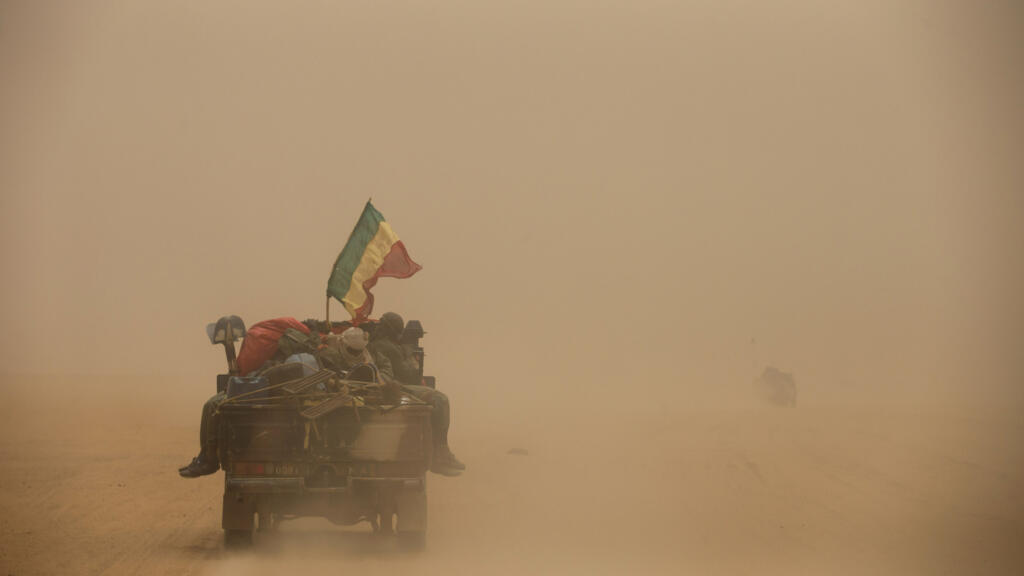
The reopening of the Algerian-Malian airspace is not just a matter of diplomacy. In the Sahara, the sky conditions evacuations, reconnaissance flights, civilian routes, and the maneuvering margins of drones. The 2025 incident had shown a simple vulnerability: possessing a sensor is not enough if its range touches a hostile or distrustful neighbor.
Tinzaouaten is located on a border that looks towards both Algeria and Niger. Further south, Kidal remains the political center of the rebel north, while Anéfis serves as a roadblock to Gao. From experience, a helicopter that cannot land in Anéfis is not a tactical detail. RFI reports that aircraft attempted to evacuate the wounded and deliver supplies but were prevented from landing under fire. This means that the immediate logistical bubble is contested.
Anéfis Changes Bamako's Calculations
Anéfis is located about 100 kilometers from Kidal, a city held by the FLA since the April offensive. One hundred kilometers may seem small on a map; on the ground, with the threat of mines, light drones, and indirect fire, it is a day of vulnerability. Whoever controls Anéfis controls part of the breathing space between Kidal and Gao.
According to RFI, Paul Melly from Chatham House describes the apparent loss of Anéfis as a serious military setback. The main camp where Russian forces from Africa Corps are still holding out is not enough to say that the area is secure. A camp can withstand and lose everything around it: water points, routes, local contacts. One holds the concrete, but the adversary holds the country.
Since the attacks on April 25 and 26, the Goïta regime has been experiencing a dangerous sequence: Kidal captured, Defense Minister Sadio Camara reportedly killed, followed by new simultaneous attacks in early July. Even taking into account the information fog and propaganda statements, the trend is clear. Armed groups have regained the initiative.
A Useful Alliance, Not a Fusion
The FLA brings social and geographical depth in certain Tuareg areas. It knows the families, the routes, and the old loyalties. JNIM brings clandestine discipline, broader networks in central Mali, and the ability to impose blockades. Together, they do not form a classic army. They form a mosaic that knows how to choose its weak points.
This is where the détente with Algeria takes on operational value. Algeria has long been a mediator in the Tuareg issue. Since the coups d'état of 2020 and 2021, Bamako has wanted to break away from this architecture and turn towards Moscow. The diplomatic resumption does not mean a return to the old order, but it recognizes a reality: no Malian power can sustainably manage Kidal while treating Algeria as a distant neighbor.
Civilians, the Blind Spot of Military Calculations
Human Rights Watch, cited by RFI, warns that abuses have multiplied since April, committed by JNIM, the Malian army, allied militias, and Russian partners. In central and northern Mali, the population is not only caught between two fires; it becomes a source of intelligence, forced labor, reprisals, and economic control.
Jihadist blockades dry up markets and force transporters to negotiate. Drone strikes and search operations, when they hit civilians or are perceived as collective, in turn feed rebel narratives. I do not claim that the available information allows for an exact measurement of losses around Anéfis. But the operational indicator remains clear: when convoys hesitate and helicopters no longer land, the state no longer has just a problem in the north. It has a problem of depth.
What Bamako Must Fear Now
Normalization with Algeria may reduce the risk of air incidents, reopen intelligence channels, and prevent the northern border from becoming a permanent friction line. But it does not reclaim Anéfis. It does not restore a demoralized Malian unity. It does not transform Africa Corps into a force capable of simultaneously securing Kidal, Gao, Sévaré, and the outskirts of Bamako.
The next test will be the road. If Malian and Russian forces cannot restore a reliable corridor between Gao and Anéfis, the reopening of the skies will remain a diplomatic victory above a land void. In the Sahel, losing a city is serious. Losing the ability to decide which road will be open tomorrow morning is even more so.
Mali and Algeria reopened their airspace after 15 months, while JNIM and FLA launched coordinated attacks on Anéfis and surrounding areas in April 2025. The control of Anéfis is critical for logistics between Kidal and Gao, and the situation has led to increased human rights abuses in the region. The Malian army faces significant challenges from these armed groups.
- Mali and Algeria reopened their airspace after 15 months.
- Coordinated attacks occurred in Anéfis, Gao, and surrounding areas.
- The FLA and JNIM are collaborating against the Malian army.
- The control of Anéfis is crucial for logistics between Kidal and Gao.
- Human rights abuses have increased since April 2025.