
Mali rejects the American option against JNIM — Washington discovers a front without a simple target
 Marie Dubois
Mali rejects the American option against JNIM — Washington discovers a front without a simple target
On July 24, in Bamako, Abdoulaye Diop chose a terse phrase to respond to rumors from Washington. The Malian Minister of Foreign Affairs stated that he had received no official confirmation of an American military action against Jama’at Nusrat al-Islam wal-Muslimin, JNIM, affiliated with al-Qaeda. He also added that Mali was not waiting for others to solve its problem.
The statement is politically useful. It protects the displayed sovereignty of the junta led by Assimi Goïta, appeases Moscow, and avoids publicly acknowledging that Bamako is once again looking towards Western capabilities. However, it does not address the operational question. If the Trump administration is indeed considering strikes in Mali, as reported by American media and confirmed by several specialized analyses, it is because the Malian theater is no longer just a Malian problem. It has become a laboratory for coordination among jihadists, separatists, and economic networks.
A crisis that has changed geography
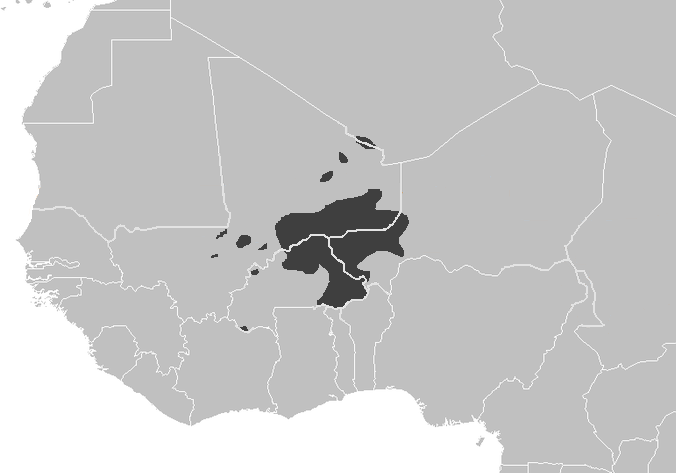
Since the coordinated offensive on April 25, 2026, northern Mali no longer resembles the fragmented theater that Western military staffs knew in the early 2010s. The Azawad Liberation Front, FLA, and JNIM have conducted parallel or coordinated actions from Kidal to Anéfis, from Tilemsi to Gao, and up to the axes leading to Sévaré. Their political objectives remain different. The FLA speaks of independence for Azawad. JNIM speaks of overthrowing the government and establishing Islamic governance. On the ground, for now, these divergences take a back seat to an immediate objective: to wear down the Malian army and the Russian forces of Africa Corps.
This point makes an American option difficult. One can strike a camp, a depot, a column, or an identified leader. One does not destroy a coalition of local interests, community grievances, Saharan trafficking, religious taxes, equipment captures, and secondary routes with an airstrike. In the Gourma region and around Anéfis, the enemy does not always present itself in battle order. It disperses, returns, cuts the road, and waits for the relief convoy. This is as old as the desert.
Russian weakness opens an American window
The American debate does not arise from a vacuum. It arises from the visible failure of the Russian gamble in Bamako. After the departure of Barkhane, Takuba, and then MINUSMA, the Malian junta presented Wagner, then Africa Corps, as a more robust and less moralizing alternative. For a time, this promise worked in political communication. It works much less on the ground.
According to an analysis published by The Soufan Center on July 28, recent attacks have demonstrated JNIM's ability to conduct complex operations, disrupt supply lines, and exploit the projection weaknesses of the Malian army. The case of Kouakourou, where a Russian Mi-24 helicopter was reportedly destroyed and where captured Malian soldiers were subsequently executed, remains shrouded in uncertainty. Precise figures must be treated with caution. But the operational signal is clear: Russian support no longer gives Bamako the freedom of movement it promised.
Washington therefore sees an opportunity. After the American withdrawal from Niger in 2024, an intervention against JNIM would allow a return to the Sahelian game without resuming the old French posture. This is tempting on a situation map. It is less so when calculating distances, available bases, overflight rights, human intelligence, and the potential recovery of a downed crew.
Why air power alone is not enough
From experience, a useful strike rarely begins in the cockpit. It starts with reliable, dated, corroborated information, and with a ground force capable of exploiting the element of surprise. However, current Mali lacks precisely this second element. Malian units hold garrisons, escort convoys, defend fixed points, and then react. JNIM often chooses the tempo. The FLA knows the northern tracks and the tribal logics that allow them to obtain fuel, a guide, or shelter.
The American risk would be to reproduce a well-known illusion: to confuse attrition with control. Killing twenty fighters in a strike may produce a good line in a statement. If the road remains closed the next day between Gao and Anéfis, if tankers hesitate to leave the Senegalese or Ivorian border, if the markets in Bamako begin to pay for the scarcity of fuel, the balance of power has not changed.
There is also a political effect. Until now, JNIM has primarily focused its narrative against Bamako, the Russians, and former French partners. An American strike would provide it with a more prestigious enemy. This does not mean that all action should be excluded. But one must understand the narrative cost of a missile fired from afar against a movement that thrives on proximity, taxation, and fear.
The paradox of Bamako
Abdoulaye Diop's statement is therefore less a definitive rejection than an exercise in balancing. Bamako does not want to appear as a supplicant. The junta has built part of its legitimacy on rejecting Western interference and on the Russian partnership. Publicly admitting an American need would mean acknowledging that this security architecture is insufficient.
Yet, the same junta cannot ignore that JNIM and the FLA have shifted the war. The threat is no longer just a series of rural ambushes. It affects the axes, the bases, the helicopters, the mines, the fuel flows, and the image of the state. Reuters has reminded us that jihadist and separatist groups can now exert influence over an arc of more than 3,000 kilometers across West Africa, with direct consequences for gold, lithium, uranium, and coastal states.
What to watch for now
The next phase will likely not play out in a spectacular announcement. It will be seen in the details: resumption of security contacts between Bamako and Washington, unusual intelligence movements, diplomatic pressures on neighboring countries for overflight facilities, or conversely, a public hardening of the Malian sovereignist line.
On the ground, the most important indicator remains the road. If Malian and Russian convoys can no longer move without heavy devices between held points, then JNIM does not need to take Bamako to weaken it. It is enough for them to choose where the army consumes its fuel.
The question is not whether the United States can strike JNIM. They can. The question is who will hold the track after the smoke.
The most vulnerable sector in the coming weeks is not necessarily the capital. It is the chain of points between the northern garrisons, the supply axes, and the localities where FLA and JNIM can cooperate without merging. If this coordination holds, an American air intervention risks becoming a tactical tool in a war that no one, in Bamako or Washington, truly owns on the ground.
Malian Foreign Minister Abdoulaye Diop stated on July 24, 2023, that Mali has not received official confirmation of U.S. military action against JNIM. The conflict has evolved, with JNIM and FLA conducting coordinated operations against Malian forces. The U.S. perceives an opportunity for intervention in Mali, particularly after its withdrawal from Niger, as the situation has become increasingly complex with jihadist and separatist groups involved.
- Mali's Foreign Minister Abdoulaye Diop stated no official confirmation of U.S. military action against JNIM.
- The conflict in Mali has evolved into a complex situation involving jihadists and separatists.
- Recent attacks have demonstrated JNIM's capability to conduct complex operations against Malian forces.
- The U.S. sees an opportunity to intervene in Mali following the withdrawal from Niger.