
May 21: The Airborne Deterrence Demonstrated by Two B-52s and Three F-35s of Japan and the United States
 Tanaka Takashi
May 21 B-52s and F-35s Demonstrate U.S.-Japan Air Deterrence
Looking at the fact that two B-52s entered the airspace over the Sea of Japan, it may seem like a typical patrol of U.S. strategic bombers visiting allied nations. However, what is interesting about the training on May 21 is that the Japan Air Self-Defense Force combined three F-35s and three F-15s against the two U.S. B-52s. According to a report released by the Ministry of Defense, the training area was in the Sea of Japan, where various tactical exercises were conducted by the U.S. and Japan. The following day, the nuclear aircraft carrier USS George Washington returned to Yokosuka. The movements in the air and at sea were placed on nearly the same timeline.
The author believes that this should not be viewed merely as a simple show of force. Rather, it serves as a small example of how the U.S.-Japan alliance can project air power in the initial stages of a crisis and how far political messages can be translated into military actions.
The Significance of the B-52 and F-35 Combination
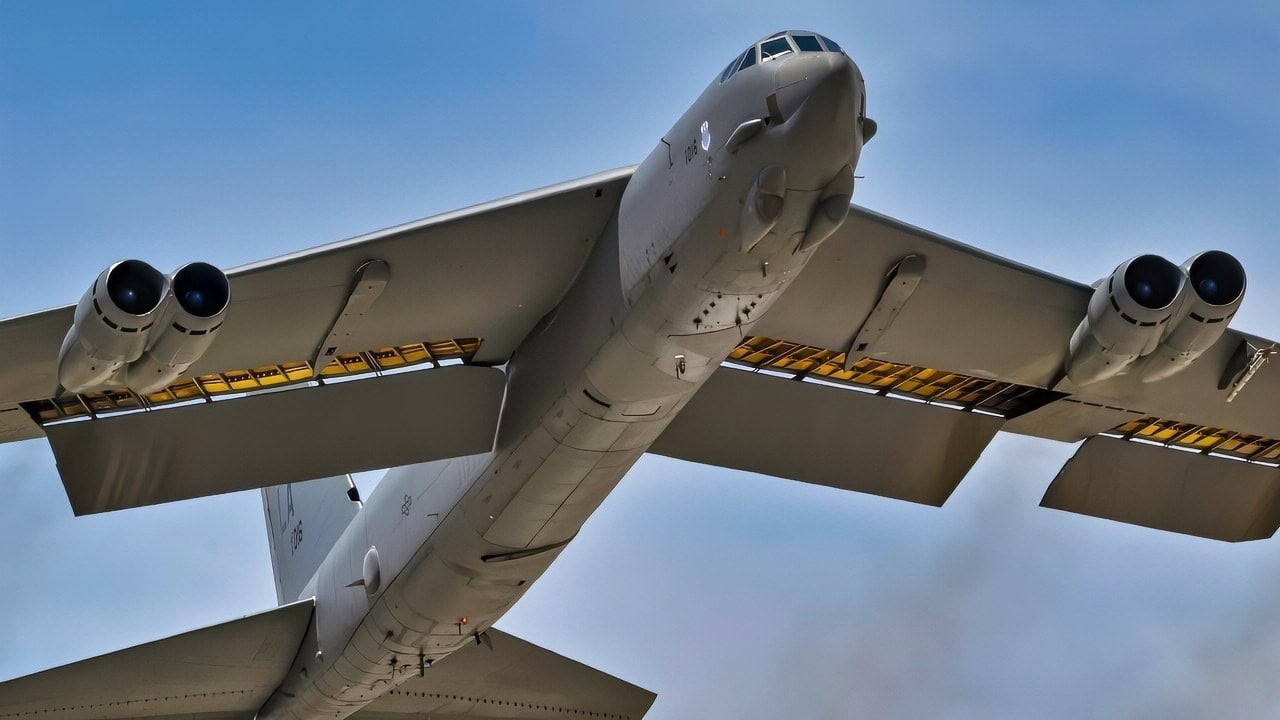
The B-52 is an old aircraft. However, the understanding that it is weak simply because it is old is misleading. With its long range, large payload capacity, and combination with cruise missiles and anti-ship weapons, the B-52 remains a significant presence both politically and militarily in the Western Pacific. The number of two aircraft is not large in terms of military deployment, but it is sufficiently substantial as a training signal.
In addition, three F-35s and three F-15s from the Japan Air Self-Defense Force were involved. The F-35 is an information-dominant aircraft centered on sensors and low observability, while the F-15 has long supported Japan's air defense operations as a large fighter. Thus, this formation is not just a classic image of escorting U.S. bombers. If we assume that the F-35 is responsible for detection, identification, and information sharing, while the F-15 complements with numbers and responsiveness, we can view this as a training exercise to confirm how well Japan's air power can connect with the operations of U.S. strategic bombers.
The Weight of the Airspace over the Sea of Japan
The Sea of Japan may not receive as much attention as the East China Sea or the southwestern islands. However, from the perspective of the Japan Maritime Self-Defense Force, this area is a complex front where the activities of the Korean Peninsula, Russia's Far East, and China's naval and air forces overlap. Through the Tsushima Strait, Tsugaru Strait, and Soya Strait, the movements of ships and aircraft are directly related to SLOC (Sea Lines of Communication) and homeland air defense.
As the Chinese military continues its naval and air training, coordinating U.S. bombers and Japanese fighters in the Sea of Japan has the effect of not allowing attention to be solely focused on the southwestern front. Even considering a crisis around Taiwan, the bases, air defense networks, and rear supply lines on the Sea of Japan side are not irrelevant. In particular, the operational capacity of air bases such as Misawa, Chitose, Komatsu, and Tsuiki cannot be measured by looking only at the southwestern islands.
The Political Effect of the Returning Carrier to Yokosuka
The return of the USS George Washington to Yokosuka around the same time is also too significant to be treated merely as a port call. According to the U.S. Navy, the ship is returning after completing training and patrol missions with allied and partner nations. The fact that a nuclear aircraft carrier with approximately 4,820 crew members is present in Yokosuka is part of base operations in peacetime and becomes the very air strike capability of the U.S. Seventh Fleet in times of crisis.
The forward deployment of the carrier and the arrival of the B-52s are of different natures. The carrier represents a sustained presence, while the bombers provide rapid reach capability. When both appear to be close in time, the signals conveyed to the adversary become simpler. It signals that the U.S. military can demonstrate both a long-term presence around Japan and the ability to respond quickly from afar.
The Strength and Fragility of Deterrence
However, there is also a structural fragility here. When listing the names B-52, F-35, F-15, and aircraft carrier, the military depth of the U.S.-Japan alliance becomes clear. But what is truly questioned in the initial stages of a crisis is not the names of the aircraft, but the speed of integrated command, airspace management, and target information sharing. To what extent can Japan flow F-35 information into the operations of U.S. bombers? How much of Japan's air defense mission is pre-integrated into U.S. operational plans? This aspect remains difficult to discern from publicly available information.
The Ministry of Defense reportedly explained that this training confirmed the strong will and readiness of the U.S. and Japan to not allow unilateral changes to the status quo by force. This expression is valid. However, there is always a distance between the expression of intent and operational capability. Especially on the Sea of Japan front, simultaneous occurrences of North Korean ballistic missile alerts, responses to Russian aircraft, and monitoring of Chinese vessels can arise. Being able to send six Self-Defense Force fighters to B-52 training is not the same as being able to sustain air missions across multiple fronts for several days.
Views of Takashi Tanaka
This training is more meaningful in its combination than in its flashiness. Two B-52s, three F-35s, three F-15s, and the USS George Washington in Yokosuka. These are not individual news items but components that constitute the initial response of the alliance in a crisis.
In the author's view, the most important point to pay attention to is not just how China and North Korea perceive this training. It is how the command structure within Japan can handle such short-term allied operations as a normal part of routine operations. Deterrence is built with large equipment, but failures often begin with small delays in adjustments.
Main references: South China Morning Post report on May 22, Ministry of Defense announcement on May 21, public communications from the U.S. Pacific Air Forces and Yokosuka U.S. Navy Base.
On May 21, two B-52 bombers and three F-35 fighters conducted a joint air training exercise over the Sea of Japan, involving the U.S. Air Force and Japan Air Self-Defense Force. This exercise coincided with the return of the USS George Washington to Yokosuka, emphasizing the military cooperation between the U.S. and Japan in response to regional threats. The training aimed to enhance operational integration and demonstrate deterrence capabilities.
- Two B-52 bombers and three F-35 fighters participated in a joint exercise over the Sea of Japan on May 21.
- The exercise involved tactical training between U.S. and Japanese forces.
- The USS George Washington returned to Yokosuka around the same time as the exercise, enhancing the military presence in the region.
- The combination of aircraft signifies a strategic message regarding U.S.-Japan military cooperation.
- The exercise is seen as a response to ongoing military activities by China and North Korea.