
Military Situation Update: Deployment of the 25th Anti-Ship Missile and "Tomahawk" Equipment - Military Experts: Japan's Ambition for Overseas Deployment is Very Urgent
According to a report by Kyodo News, on March 31 local time, Japan's Ministry of Defense deployed the "Type 25 Anti-Ship Missile" and the "Type 25 High-Speed Glide Bomb" at the Kengun Base in Kumamoto Prefecture and the Fuji Base in Shizuoka Prefecture, respectively. The "Type 25 Anti-Ship Missile," previously known as the "Land-Based Improved Type 12 Anti-Ship Missile," has a range of approximately 1,000 kilometers, which is five times that of the original, while also improving strike accuracy. Launched from the Kengun Base in Kumamoto Prefecture, its coverage can include the entire Korean Peninsula, parts of Russia's Far East, core areas along China's eastern coastal region, and the vicinity of northern Taiwan.
Does Japan now possess this preemptive capability?
The maximum range of the Type 25 anti-ship missile can reach over 900 kilometers, close to 1,000 kilometers, and it may be further extended in the future. It adopts a stealth design concept, enhancing its penetration capability, and employs a composite guidance mode, which objectively has strong anti-jamming capabilities. Therefore, it is a very expensive long-range strike system, not intended for defensive operations. If the Self-Defense Forces deploy the Type 25 anti-ship cruise missiles at the northern end of the Japanese archipelago or in its southwestern region, targeting large islands and important straits to the southwest of Russia, it would have a wide area fire coverage capability, capable of blocking straits, attacking island targets, and striking large naval vessels at long distances. It is a thoroughly offensive weapon system designed for preemptive strikes. If Japan perceives a threat, it can conduct preemptive fire strikes against its surroundings. Many acts of aggression are conducted secretly, preemptively, and without warning. The combination of the Type 25 long-range anti-ship missile and preemptive tactics indicates that the Japan Self-Defense Forces are becoming increasingly dangerous.
Why is Japan deploying its domestically produced long-range missiles while also equipping "Tomahawk" cruise missiles?
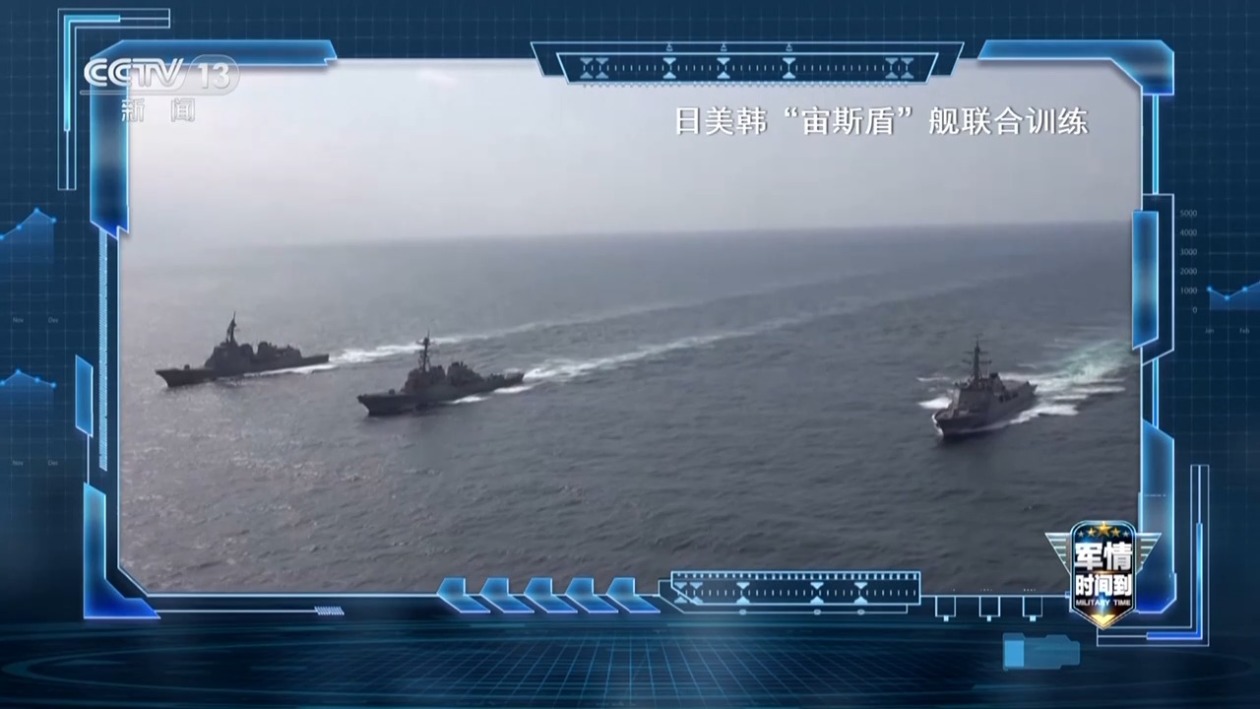
Firstly, the range of the Type 25 long-range anti-ship missile has not yet reached 1,000 kilometers; additionally, it flies at subsonic speeds. However, Japan's ambition for military expansion abroad is very urgent, so it needs a large number of mature, long-range cruise missiles. In the past, during the operational use of naval forces by the U.S. and Japan, the U.S. was the main force while Japan played a supporting role, often executing tasks related to air defense, anti-submarine warfare, and mine sweeping. Now, it is different. In the joint maritime combat system established by the U.S. and Japan, both are main forces. The U.S. Navy is tasked with offensive operations, and the Japan Maritime Self-Defense Force must also step to the front line, changing its supporting role and even aspiring to take the lead, aiming to conduct joint offensives with the U.S. Navy. For joint offensives, the standards for weaponry must be unified. The U.S. Arleigh Burke-class destroyers launch "Tomahawk" cruise missiles, and Japan's subsequent Aegis ships must also match the U.S. destroyers in missile defense capabilities and firepower against deep land targets, achieving the same level of standards, so that they can assist the U.S. military in joint offensives.
Japan deployed 25-type anti-ship missiles and Tomahawk cruise missiles at Kumamoto and Shizuoka on March 31. The 25-type missile has a range of about 1000 kilometers, enhancing Japan's offensive capabilities in the region. This deployment indicates Japan's urgent ambition for military expansion and a shift towards a more proactive role in joint operations with the U.S. Navy.
- Japan deployed 25-type anti-ship missiles and Tomahawk cruise missiles on March 31.
- The 25-type anti-ship missile has a range of approximately 1000 kilometers.
- The deployment covers areas including the Korean Peninsula and parts of Eastern Russia.
- Japan aims to enhance its offensive military capabilities.
- The Self-Defense Forces are transitioning to a more proactive military role.