

Summary and Key Points: The CIA’s A-12 Oxcart, built by Kelly Johnson’s Skunk Works after the 1960 U-2 shootdown, flew at Mach 3.2 and 90,000 feet and was 6 feet shorter and 15,000 pounds lighter than the SR-71 that replaced it.
The A-12 Oxcart Could Hit Mach 3.2
The CIA had flown two dozen deep penetration missions over the Soviet Union by 1960 with the U-2 spy plane.
The Russians had fired an equal number of surface-to-air missiles at the unarmed reconnaissance aircraft, trying to bring one down.
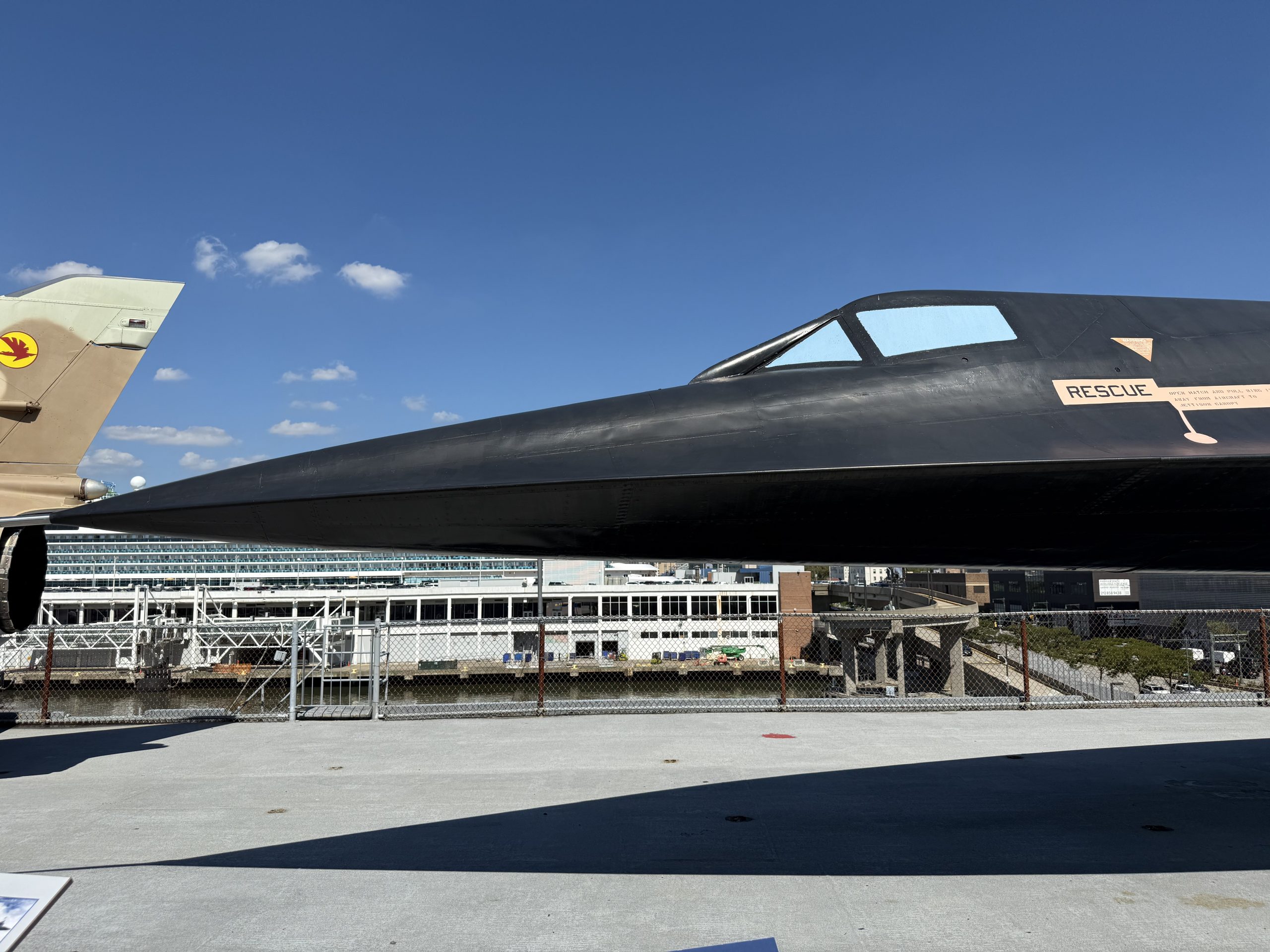
A-12 That Came From SR-71 Family USS Intrepid Photo Shoot 19FortyFive
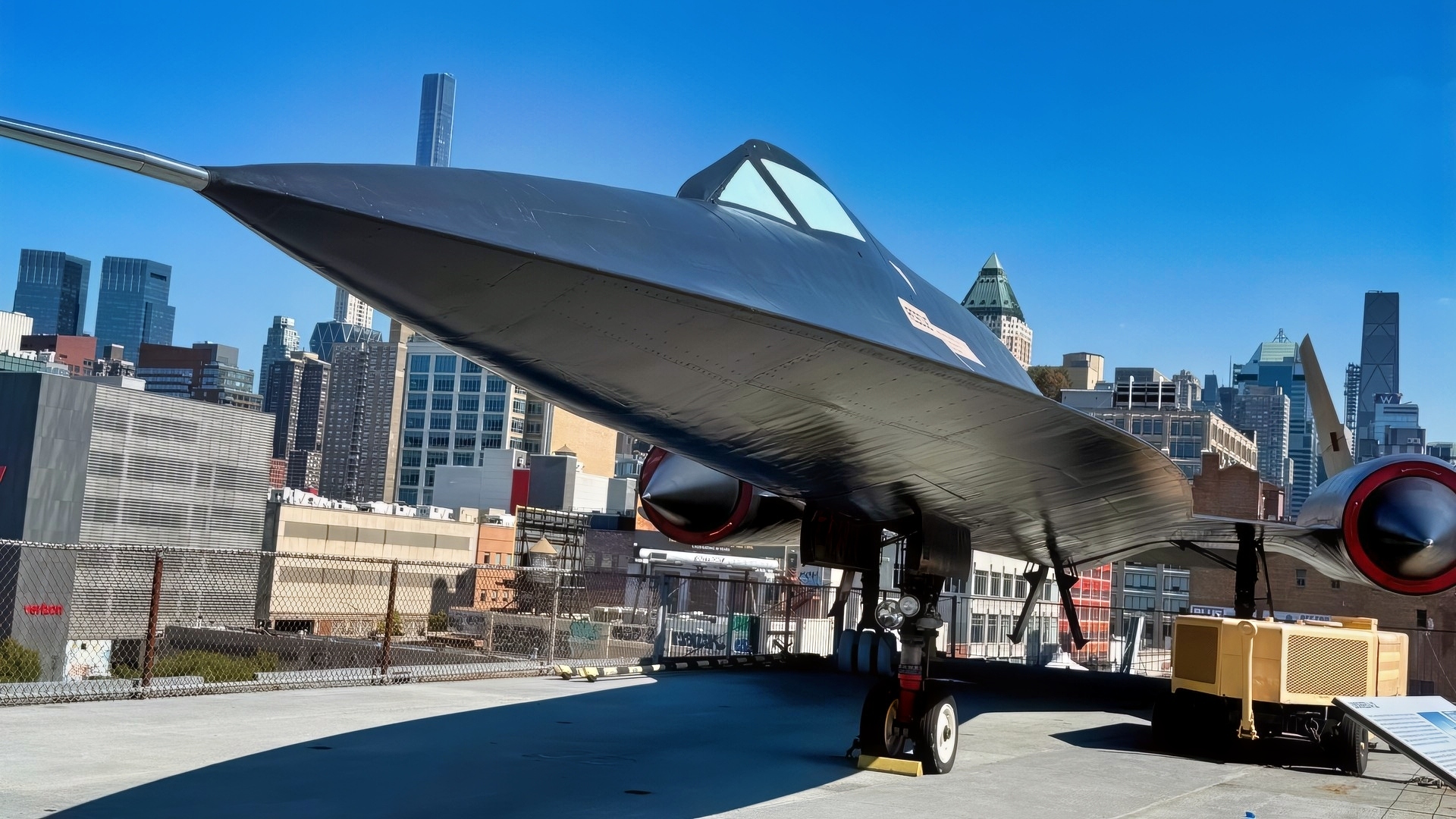
A-12 That Came From SR-71 Family USS Intrepid Photo Shoot 19FortyFive
On May 1st,1960 they succeeded, capturing CIA pilot Frances Gary Powers in the process.
This was a major embarrassment to the US.
The CIA determined that its covert spy missions over foreign countries now required an aircraft that could outrun any interceptor or surface-to-air missile in existence at the time.
The result was Lockheed’s A-12 Oxcart, designed by Kelly Johnson and his Skunk Works in Burbank, California.
Capable of a mind-shattering Mach 3.2 at 90,000 feet, the A-12 Oxcart could outrun any interceptor or surface-to-air missile in existence at the time, even our own.
Despite this, the A-12 Oxcart’s operational window was brief (1967-1968), and the Air Force later replaced it with the much more famous A-12-derived two-seat SR-71 Blackbird.
The A-12 Oxcart Was Most Responsible For Sightings Of UFOs Over Area-51
It was tested at Area-51.
To keep its top-secret development under the CIA, Oxcart testing and development took place at a facility at Groom Lake in the Nevada desert.
The A-12’s appearance was so unusual for aircraft at the time that it sparked stories about alien spacecraft in the US government’s possession.
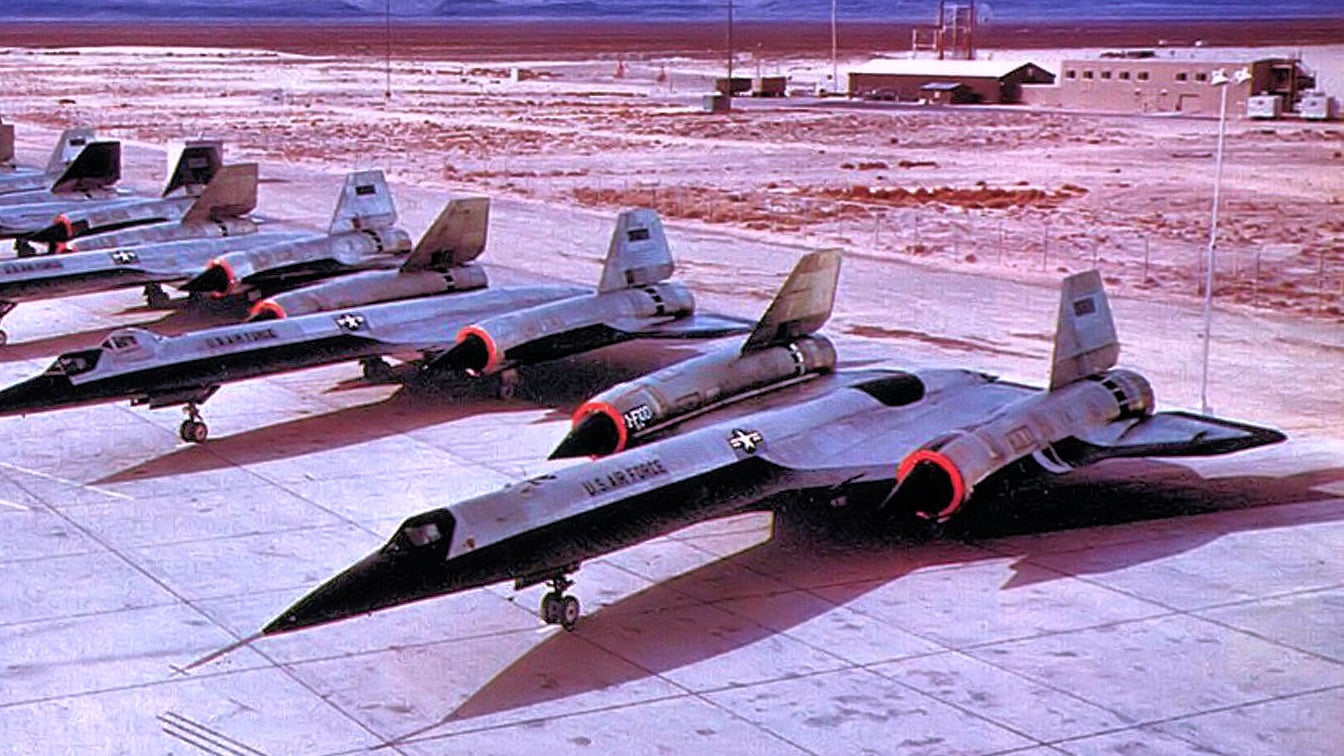
CIA A-12 Spy Plane. Image Credit: Creative Commons.
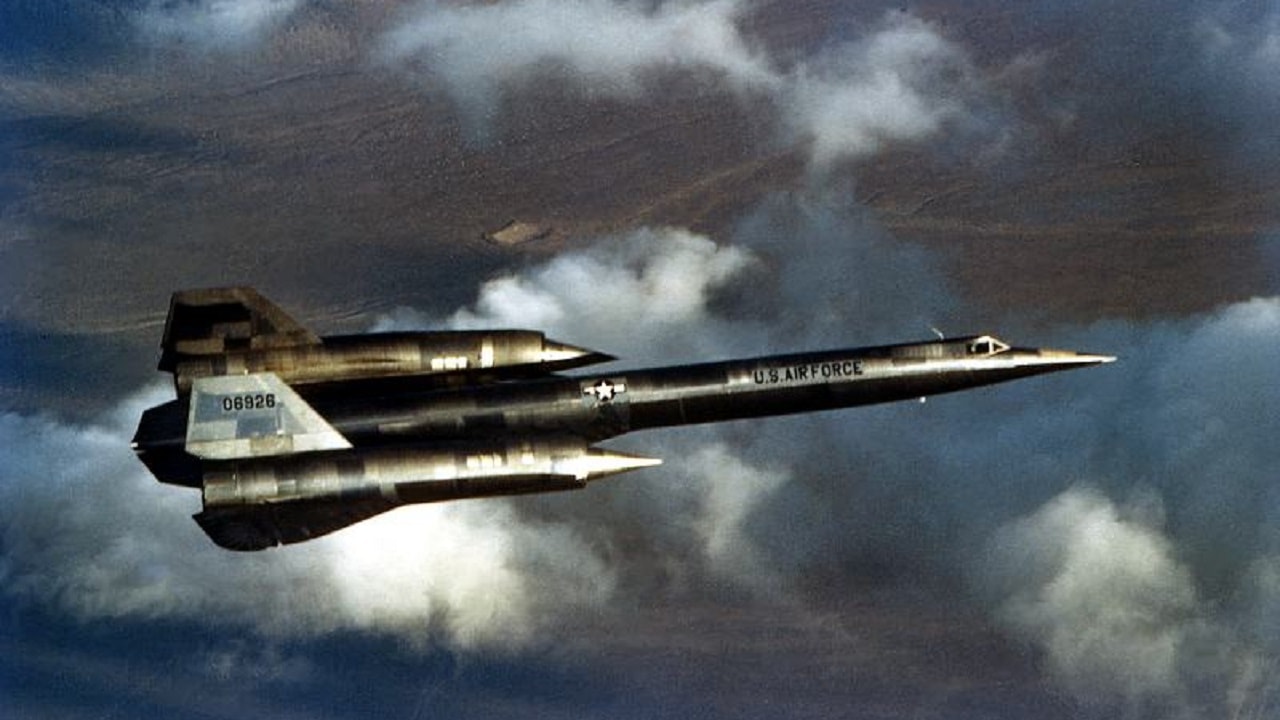
CIA A-12 Spy Plane. Image Credit: Creative Commons.
Its high-altitude flights over Nevada prompted most civilian reports of strange glowing objects in the night sky traveling at impossible speeds.
The Pilots Of The A-12 Had To Fly In Space Suits
At altitudes near 90,000 feet, the atmosphere was too thin and too cold to sustain life if the cockpit lost pressurization, so pilots wore the David-Clark S-901 space suit to create an additional pressurized environment in case of a loss of cabin pressure.
These suits also had their own air-conditioning system.
The friction of airflow over Oxcart’s surface was so intense that the cockpit temperature could rise to 150F.
If the pilot had to eject from the Oxcart without the full life support and thermal protection of his space suit, he would be killed by the freezing minus 56F degrees temperature outside.
The A-12 Oxcart Leaked Fuel Like A Sieve On The Ground
The A-12 Oxcart’s structure was made of a titanium alloy subjected to extreme temperature fluctuations in flight.
Because metal expands with temperature, the internal fuel tanks couldn’t be sealed without fracturing.
Instead, special seals were fitted to expansion joints that sealed tight once the A-12 reached operating altitude and speed.
The leak rate was closely monitored, with 5 to 60 drops of fuel per minute acceptable.
Catch buckets were placed at known leak points to collect and monitor fuel.
The A-12 Oxcart Could Fly Faster and Higher Than The SR-71
The A-12 Oxcart came before the SR-71 and is often confused with it.
The Oxcart was a substantially different aircraft: it was 6 feet shorter, carried a single pilot, and weighed 15,000 pounds less than the Blackbird.
As a result, the A-12 could fly slightly higher and faster than the SR-71.
The A-12 Oxcart Had More Than One Name
It’s not a bad idea for a super-secret spy-plane project to have more than one name, officially and unofficially.
If an adversary gets hold of information under one name, they may not be able to tie it to information they obtained about a program under a different name.
They may think they were fed false information or believe several spy plane projects are underway at the same time.
This was very true of the A-12 Oxcart. Officially, both Lockheed and the CIA referred to the A-12 as “Archangel” within a series of design concepts, with the A-12 as the 12th in that series. “Oxcart” was the classified name of the program under which the Archangel concepts were designed.
Pilots knew the A-12 as the “Cygnus,” a nickname pilot Jack Weeks gave it, inspired by constellations.
An interceptor variant for the Air Force was known as the “AF-12” and “YF-12A,” which only added to the confusion about what to call the A-12.
The A-12 Oxcart Was A Successful Design But Enjoyed A Very Limited Operational History
Ultimately, the A-12 Oxcart only flew one set of officially covert missions during the Vietnam War.
Operation Black Shield saw the A-12 fly 29 missions over East Asia between May 1967 and mid-1968. Its high-resolution cameras could zoom in from 17 miles away to objects as small as one square foot.
In the end, the exorbitant expense of the CIA trying to operate its own air force within the Air Force, better spy satellites in space, and the Air Force itself flying the SR-71 Blackbird compelled it to end the program.
The Public Can See Every A-12 Oxcart Still Remaining, Except For One
Eight A-12 Oxcarts are on display at museums around the country, but one remains hidden from public view.
It’s at CIA headquarters in Langley, Virginia, and “The Company” is keeping that one all to itself.
About the Author: Sean Spoonts
Sean Spoonts is the former Editor-In-Chief of SOFREP.com. He is a military analyst, writer, and commentator whose work has appeared in Newsweek, CNS News, Ukrinform, and various military/veteran media networks and professional publications, including the Military Intelligence Professional Bulletin. He is a U.S. Navy veteran, having served as an Aviation Anti-Submarine Warfare Operator and Search and Rescue Helicopter Aircrewman.