
Missile Stockpiles in Crisis, Ally Assistance Dwindles! Ukraine Faces Air Defense Predicament, Western Response Tepid
[Global Times Special Correspondent Chen Yang] Since July, Ukrainian President Zelensky has frequently called on the West to provide more air defense and anti-missile munitions to counter the increasingly fierce Russian missile attacks. However, the West has responded with indifference. In the more than four years of the Russia-Ukraine conflict, European countries have nearly exhausted their available air defense systems, while the United States, due to its simultaneous involvement in the Russia-Ukraine conflict and the Middle East, has also consumed a large amount of air defense munitions, making it difficult for Europe and the U.S. to maintain their previous level of support for Ukraine. Germany's Welt reported on the 15th that Zelensky is likely to "fall into despair" due to the severe shortage of interceptors for the U.S.-made Patriot air defense system.
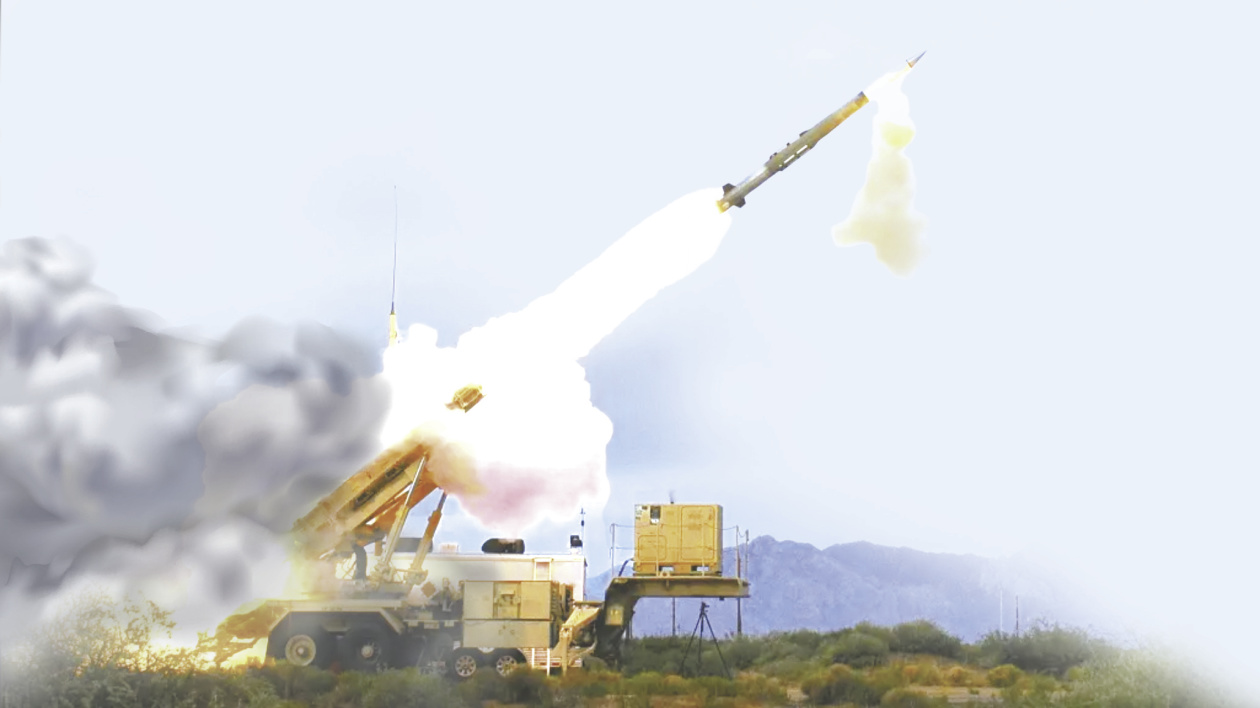
Ukraine's air defense system is unable to intercept Russian airstrike missiles
Welt stated that as a sign of the depletion of Ukraine's anti-missile system interceptors, the number of Russian ballistic missiles shot down by Ukraine in recent operations against Russian airstrikes was publicly reported as zero. Currently, Ukraine possesses several sets of Patriot air defense and anti-missile systems obtained from the U.S. and Germany, which are the core equipment for the Ukrainian military's current anti-missile operations. However, Zelensky revealed that including the Patriot system, the number of air defense missiles provided to Ukraine by Western allies this year is only 1/4 of what it was in the same period in 2025. In an interview with CNN, he complained that Ukraine currently has only 1/10 of the number of Patriot missiles it needs. The number of Patriot missiles received by Ukraine this year is significantly lower than in 2025, "while Russia is launching twice as many ballistic missiles each month as before." He also said that if the U.S. sold Ukraine 5% of its existing Patriot missile stock, "we could get through this winter," and if the U.S. "sold us 10%, we could intercept all the ballistic missiles launched by Russia," "but the reality is we have only 1%."
This shortage of air defense munitions has led to a dramatic drop in the Ukrainian military's interception rate of Russian ballistic missiles during airstrikes. According to data from the Ukrainian Ministry of Defense, in July, the Russian military launched 195 ballistic missiles, of which Ukraine intercepted only 29, resulting in an interception rate of just 14.9%. The situation became even more severe in August; during airstrikes on August 1 and 5, facing dozens of missiles launched by the Russian military, the Ukrainian military was almost entirely unable to intercept them. The Financial Times reported that due to a lack of interceptors, the Patriot systems within Ukraine have completely stalled in the past month. Former NATO Supreme Allied Commander in Europe, retired U.S. Navy Admiral Stavridis, recently revealed that the Ukrainian military can only launch 1 Patriot interceptor missile on average to respond to 27 incoming ballistic missiles.
The Frankfurter Allgemeine Zeitung reported that the Ukrainian military is now unable to intercept ballistic missiles. As a result, the Ukrainian Air Force no longer publishes statistics on the number of missile launches in its early reports, making it impossible for outsiders to assess the latest interception effectiveness of Ukraine's anti-missile system.
CNN stated that a significant reason for this situation is that the U.S. has launched military operations against Iran. To counter missiles or low-cost drones from Iran, the U.S. and Gulf countries have launched a large number of air defense missiles, and even the U.S. military's own interceptors for systems like the Patriot and THAAD are running low. In this context, the Pentagon and U.S. think tanks have called for the U.S. to prioritize increasing its own missile stockpiles for its anti-missile systems.
Previously, after a meeting between Zelensky and U.S. President Trump during the NATO summit in Ankara, Turkey, Zelensky stated that Trump had agreed to provide Ukraine with a production license for Patriot missiles. However, Trump later expressed uncertainty about this in an interview with the Financial Times, stating that the Patriot is a "very special weapon" and that "we must be careful about who we authorize." U.S. White House Press Secretary Levitt stated in response to Zelensky's request that the top priority for U.S. military leadership remains restoring and strengthening its own defense capabilities.
The Frankfurter Allgemeine Zeitung reported that European countries are also facing difficulties in providing air defense missiles to Ukraine. In previous aid operations, European countries have already delivered a large number of air defense weapons to Ukraine, and with no hope of an end to the Russia-Ukraine conflict, support for Ukraine within Europe has significantly weakened. For example, after Germany provided Ukraine with at least 10 IRIS-T SLM medium-range air defense systems and 2 Patriot anti-missile systems, some German officials stated that Germany is "indeed close to its limit," and the number of air defense systems provided to Ukraine has even exceeded Germany's remaining reserves. Poland has only transferred 5 Patriot-3 interceptor missiles to Ukraine, which has triggered political backlash domestically.
Russian missiles shift to "cost-effectiveness"
The Russian newspaper Komsomolskaya Pravda reported on the 15th that the Russian military's large-scale airstrikes against Ukraine mainly use three types of munitions: long-range suicide drones, ballistic missiles, and cruise missiles. In recent airstrike operations, the munitions used by the Russian military have been continuously upgraded, which has also brought greater difficulty to Ukraine's air defense and anti-missile operations.
The Financial Times reported on the 15th that Ukrainian intelligence agencies stated that the Russian military launched a record 198 ballistic and hypersonic missiles in July, "Russia produces about 60 ballistic missiles per month, but launched at least 65 in July." The Ukrainian Ministry of Defense's Main Intelligence Directorate revealed that due to Ukraine's increasing inability to intercept the ballistic missiles launched by the Russian military, Russia has completely halted the production of the expensive and ineffective Kinzhal air-launched hypersonic missiles, reallocating its production capacity to mass-produce the Iskander-M tactical ballistic missiles, which are easier and cheaper to manufacture, shifting to a consumption warfare model that emphasizes "cost-effectiveness."
At the same time, the Russian military is also massively using a new version of the jet-powered Geranium series drones, which are much faster than traditional piston-engine versions. According to data from the Ukrainian Ministry of Defense's Main Intelligence Directorate, the monthly production of jet-powered Geranium-4/5 drones has reached about 3,000 units, surpassing the monthly production of about 2,800 units of the Geranium-2. This means that the production of jet-powered Geraniums has exceeded that of traditional models.
Moreover, the proportion of these jet drones in Russian airstrikes is rapidly increasing, accounting for two-thirds of the total number of drones deployed in some attacks. The speed of these new drones has increased from the previous 150-200 km/h to 600 km/h, significantly reducing the effectiveness of Ukraine's electric intercept drones against traditional suicide drones, forcing them to rely more on expensive air defense missiles for interception, further exacerbating the consumption of air defense missiles by the Ukrainian military.
Following a similar "consumption warfare" approach, the Russian military has also begun to use a new type of low-cost cruise missile called "Little Package" in larger quantities. This missile uses a large number of commercial off-the-shelf components, making it extremely low-cost, with Ukrainian estimates placing the cost at only about $150,000 per unit, employing a combination of inertial guidance and GLONASS satellite guidance, primarily used to strike predetermined fixed targets. This fills the firepower gap between the cheap, slow Geranium drones and the expensive, high-end Kalibr cruise missiles.
Europe and the U.S. help Ukraine modify Soviet-era air defense missiles
Faced with the increasingly intense missile attacks from the Russian military, and with Europe and the U.S. unable to timely produce and assist with advanced anti-missile system interceptors, Ukraine has been forced to modify Soviet-era air defense missiles with technical support from Europe and the U.S.
The Russian newspaper Kommersant reported on the 16th that Ukraine and the U.S. have jointly launched a modernization project for Ukraine's S-300 long-range air defense system. Before the outbreak of the Russia-Ukraine conflict, Ukraine was equipped with about 25-30 sets of different models of the S-300 series air defense systems. Although some equipment has been lost in the conflict, the Ukrainian military still retains a considerable number of command posts, launchers, and radars. The U.S. has proposed a solution to first refurbish the old air defense missiles used by these S-300 systems, replacing defective solid fuel and installing new electronic equipment. At the same time, a new type of air defense missile equipped with Western guidance heads is being developed, which can be compatible with the existing S-300 air defense systems. Reports indicate that through this plan, Ukraine can obtain 100 to 300 interceptor missiles each year.
However, such limited modernization is far from sufficient to meet Ukraine's actual needs for air defense systems. U.S. Defense News revealed that nine countries, including Denmark, France, Germany, Italy, the Netherlands, Norway, Spain, Sweden, and the United Kingdom, have jointly advanced the "Freya" air defense system with Ukraine, which is also developed based on the S-300 systems equipped by Ukraine, aiming to create a lower-cost, higher-production anti-missile system as a supplement to the U.S.-made Patriot system.
It is reported that Ukraine hopes to conduct its first interception test in July 2027 and achieve operational capability within a year. It is said that the cost of a single missile is about $1.2 million, far lower than the nearly $3.8 million for a Patriot missile.
Ukraine is experiencing a critical shortage of air defense missiles, severely limiting its ability to intercept Russian missile attacks. In July, the interception rate dropped to 14.9%, and the situation worsened in August. The Ukrainian Armed Forces are modernizing Soviet-era S-300 systems with U.S. support to address these challenges.
- Ukraine's air defense interceptors are critically low, with only 1/10 of the needed Patriot missiles available.
- In July, Ukraine intercepted only 14.9% of Russian ballistic missiles, with a significant drop in interception rates in August.
- Ukraine is modernizing Soviet-era S-300 systems with U.S. assistance to improve air defense capabilities.