
NATO 2026 Ankara Deals Expose Europe Factory Problem
 Alexandra Reeves
NATO 2026 Ankara Deals Expose Europe Factory Problem
Money is no longer the most interesting NATO problem. That is the uncomfortable message from Ankara. The alliance can now talk about tens of billions in new procurement without sounding theatrical. What it still cannot do is prove that European and North American factories can turn that money into missiles, sensors, tankers, drones and air defence rounds at the speed a Russian war plan would demand.
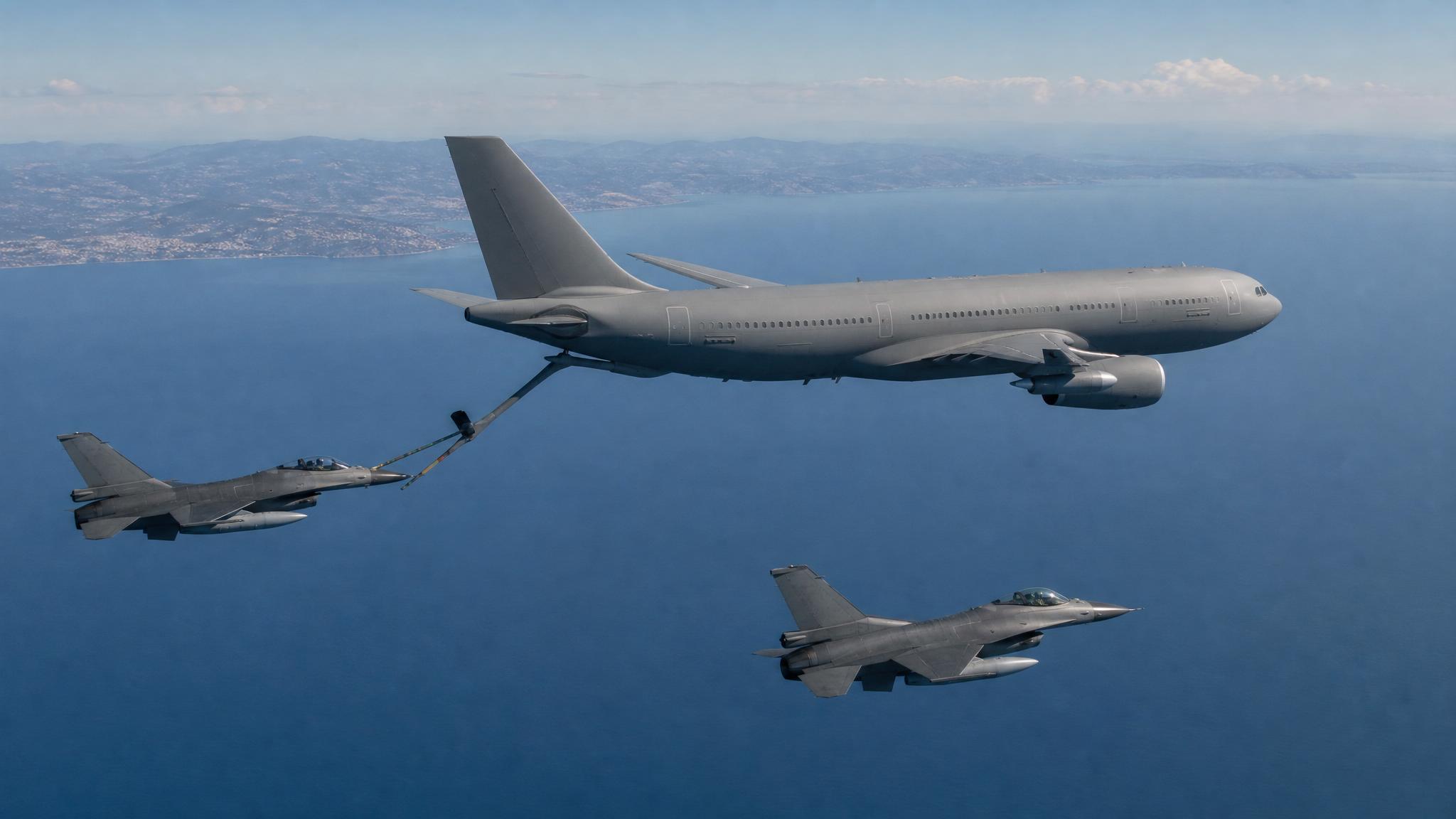
At the NATO Summit Defence Industry Forum in Ankara on 7 July, Secretary General Mark Rutte announced what NATO described as major new procurements and industrial initiatives. The list included delivery of the 10th Airbus A330 MRTT to the Multinational Multi-Role Tanker Transport Fleet, procurement of Northrop Grumman MQ-4C Triton uncrewed aircraft for maritime surveillance, joint procurement of Saab GlobalEye aircraft for airborne early warning, a new Drone Edge counter-drone initiative, and two bureaucratically dull but strategically important tools: the NATO Front Door for Industry and the NATO Engine.
The dull bits matter most. NATO has spent years telling allies to spend more. Ankara was about proving that the money can be converted into output. That is a very different test.
Ankara Was a Factory Summit Disguised as a Procurement Event
NATO says more than 100 companies attended the Defence Industry Forum, alongside allied ministers and senior officials. The public line was upbeat. Rutte said, according to NATO, that “the money is there, and more is coming,” and urged governments and industry to “do more, faster, together.” Strip away the summit language and the admission is plain: no single ally has enough spare industrial capacity for the air defence and strike requirements now being discussed.
That is why the NATO Engine may be more important than the aircraft announcements. NATO describes it as a framework for connecting available factory capacity and encouraging cross-border collaboration between European, Canadian and US companies. This is not glamorous. It is also exactly where deterrence now lives. A Patriot battery without interceptor production is a press conference with radar. A drone programme without electronics supply is a slide deck. A 5 percent GDP defence investment plan, the benchmark NATO referenced in its own Ankara materials, is only credible if production lines can absorb it.
Everyone in Washington loves to say Europe finally got serious after 2022. That is partly true. But seriousness is not a budget line. Seriousness is whether a Ukrainian brigade, a Polish air defence commander, or a Norwegian maritime patrol cell can count on replenishment when the first month of a crisis burns through the neat assumptions in a peacetime stockpile model.
The Equipment Choices Reveal the Real Fear
The specific systems announced in Ankara point to the alliance worry list. The 10th A330 MRTT expands the multinational tanker fleet, a quiet enabler of almost every serious NATO air operation. Tankers are not just support aircraft. They are range, persistence and political flexibility. Without them, fighter deployments across the High North, the Black Sea region and the eastern flank become shorter, thinner and more predictable.
The Triton purchase is another tell. Northrop Grumman describes the MQ-4C Triton as a high-altitude, long-endurance uncrewed aircraft built around a 360-degree multi-intelligence surveillance suite and persistent maritime domain awareness. NATO does not buy that kind of system because it wants more pretty pictures of the sea. It buys it because the alliance is worried about Russian submarines, sabotage routes, undersea cables, energy infrastructure and the widening gap between the amount of ocean NATO must watch and the number of crews it can put in the air.
GlobalEye fits the same pattern in the air domain. Saab markets it as an airborne early warning and control aircraft capable of wide-area surveillance across air, sea and land. NATO already selected Swedish GlobalEye as its future airborne warning replacement path earlier this week, so Ankara did not come out of nowhere. Still, putting it inside a wider procurement package signals that the alliance sees command-and-control and wide-area sensing as warfighting shortages, not modernization luxuries.
Then there is Drone Edge. NATO says the initiative will increase investment in counter-drone systems and expand drone operator training. That is the most Ukraine-shaped announcement in the package. Russia and Ukraine have made cheap drones a daily attrition tool. The alliance has watched enough trench-line video to understand that exquisite platforms are vulnerable when they enter a battlespace saturated by small sensors and cheap strike systems. Counter-drone defence is no longer a base protection niche. It is the price of keeping artillery, logistics and air defence units alive.
The Demand Signal Is a Small Revolution
The first public unclassified NATO demand signal may sound like procurement housekeeping. It is not. Defence firms hate vague political promises. They need to know whether a future requirement is a speech, a wish, or a funded market. NATO says the demand signal will outline innovation priorities and capability requirements over the coming years, available through the new Front Door for Industry.
This matters because European defence has often worked backwards. Governments announce urgency, ministries debate specifications, national industries protect their own lanes, and firms wait for contracts before investing in capacity. Russia does not have a better economy. It has a more ruthless wartime production logic. NATO cannot and should not copy that model, but it also cannot deter Russia with 32 separate procurement cultures moving at peacetime speed.
The Front Door is an attempt to reduce friction. The Engine is an attempt to find capacity. The demand signal is an attempt to tell industry what to build before the next panic order arrives. None of these tools will stop a missile tomorrow. But they could decide whether NATO has enough interceptors, drones, sensors and spare parts in 2028.
Ukraine Is the Test NATO Cannot Ignore
Ankara was not formally a Ukraine weapons conference. It did not need to be. Ukraine sits behind nearly every line of this procurement push. The war has shown that modern conflict consumes air defence missiles, artillery rounds, drones, electronic warfare gear and repair capacity at a rate Western planners treated as exceptional until it became normal. It has also shown that Russia can keep fighting while absorbing losses that would break most Western political calendars.
That is the part NATO officials rarely say directly. Deterrence is not just whether the alliance has better aircraft than Russia. It does. It is whether Russia believes NATO can replace losses, sustain tempo, and keep the industrial machine running after the first shock. A small number of superb systems can win a demonstration. They cannot sustain a long war unless factories, suppliers and trained maintainers sit behind them.
There is also a political edge. Rutte issued a call to financial institutions to increase capital flows into the defence sector. That sounds obvious until you remember how many European investors spent years treating defence as reputationally awkward. The result was a continent that wanted security guarantees without fully accepting the industrial and financial base required to produce them. Ankara is NATO saying, politely, that this contradiction is over.
The Hard Part Comes After the Summit
The alliance should get credit for moving from abstract burden-sharing to procurement mechanics. The A330 MRTT, Triton, GlobalEye and Drone Edge announcements all address real operational gaps. The new industry tools also attack a genuine weakness: fragmented demand, slow contracting and insufficient surge capacity.
But this is where the easy applause should stop. NATO has announced an industrial logic. It has not yet proved an industrial rhythm. The next test is whether contracts arrive quickly, whether smaller firms can actually enter the system, whether national governments allow cross-border production to move faster than their politics, and whether air defence and strike munitions become production priorities rather than summit vocabulary.
The key finding from Ankara is simple: NATO now knows that deterrence is built on factory floors as much as in headquarters. The forward-looking question is sharper. By 2028, will Moscow see an alliance that can replace what it fires, or an alliance that can only afford to announce what it needs? The real danger is not that NATO lacks money. It is that NATO may still be learning how to spend it at wartime speed.
NATO announced major new procurements and industrial initiatives during the Defence Industry Forum in Ankara on 7 July 2026. The initiatives include the delivery of the 10th Airbus A330 MRTT and the procurement of Northrop Grumman MQ-4C Triton for maritime surveillance. NATO emphasizes the need for improved industrial capacity to meet defense requirements, particularly in light of the ongoing conflict in Ukraine.
- NATO announced major procurements at the Defence Industry Forum in Ankara.
- The procurement includes the 10th Airbus A330 MRTT and Northrop Grumman MQ-4C Triton.
- NATO aims to improve industrial capacity and cross-border collaboration among member states.
- The report highlights the urgency of addressing air defense and strike requirements.
- Ukraine's conflict influences NATO's procurement strategy.