
NATO Avenger Triad 26 Shows Europe's Leadership Problem Despite 4,000 Soldiers
 Dr. Klaus Weber
NATO Avenger Triad 26 Shows Europe's Leadership Problem Despite 4,000 Soldiers
On October 15, Avenger Triad 26 concluded after ten days with around 4,000 soldiers in France, Germany, the Netherlands, and Poland. About 2,000 U.S. soldiers and 2,000 multinational forces practiced together with NATO how a large-scale war should be conducted in Europe. This is a significant advancement in readiness. However, it is not yet proof of European strategic autonomy. On the contrary: The exercise demonstrates how much Europe's leadership capability still relies on American staffs, American software, and American infrastructure.
A Realistic Test of NATO Defense Planning
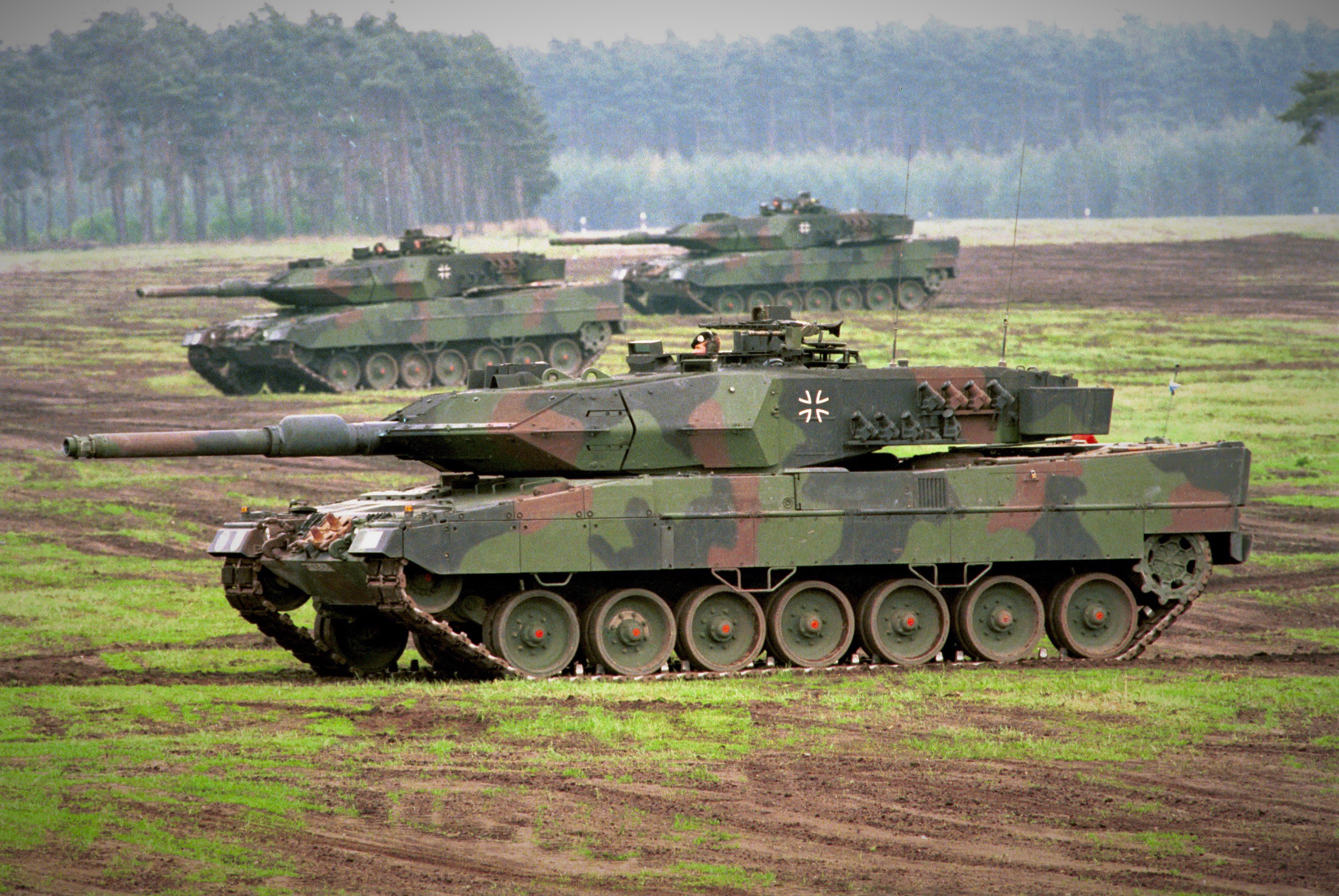
Avenger Triad was not merely a symbolic command post exercise. U.S. Army Europe and Africa and NATO's Allied Land Command operated from Clay Kaserne in Wiesbaden as an integrated command staff. Involved were the U.S. V Corps, the 2nd Polish Corps, the 1st French Corps, and the German-Dutch Corps. Simultaneously, Steadfast Duel 26 connected strategic and operational decision-making levels of all 32 NATO states.
The crucial point lies in translating political defense plans into concrete operational procedures. The staffs had to coordinate forces over great distances, organize logistics, and prepare joint fire support under the pressure of a simulated adversary. This aligns more closely with the actual demands of an Article 5 scenario than the usual photo opportunities at multinational maneuvers.
The Technical Side is Modern, the Institutional Side Remains American
The exercise relied on sensors, drones, cloud computing, and shared data. The Maven Smart System helped create a common operational picture and shorten the time between reconnaissance and effect. The operational idea is plausible: A target on the eastern flank should not be engaged only after multiple national approvals but should be directly connected to an appropriate means of effect through a resilient digital link.
However, this is precisely where Europe's problem begins. A common operational picture is not a European capability if the key data architectures, staffs, and interfaces come from the United States. The term Multi-Domain Operations should not obscure the fact that Europe still has gaps in satellite reconnaissance, strategic communication, electronic warfare, and long-range precision weapons. NATO can train technical integration, but it cannot conjure missing national capacities.
What the Exercise Says About Germany and the Eastern Flank
Germany appears in Avenger Triad as a geographical and organizational hub. Wiesbaden connects American, German, Dutch, and other allied structures. This is strategically valuable because Germany would be indispensable as a transit, logistics, and command area in case of an emergency. At the same time, the exercise reveals that Berlin has so far fulfilled its role more as a platform than as an independent military actor.
A German or German-Dutch corps staff can lead within NATO. However, the question is whether it could ensure the same quality of reconnaissance, air defense, communication, and fire support without American reinforcement. The answer today is sobering. Several billion euros in additional defense spending do not automatically solve this problem. What matters is whether this leads to deployable units, sufficient ammunition, protected networks, and permanently available command resources.
For Poland, the development is particularly relevant. Warsaw is investing more rapidly in land forces and taking on more responsibility on the eastern flank. Deploying the 2nd Polish Corps in a joint exercise strengthens the military credibility of the region. However, Poland's rearmament remains dependent on an alliance that includes American reconnaissance and American reinforcement. Europe's security dilemma is thus not diminished but made more precise: The frontline states are increasing their military mass while the crucial enablers are still organized transatlantically.
The Lesson for European Defense Integration
Avenger Triad and Steadfast Duel provide an important benchmark for the debate on the European pillar of NATO. European leadership must not only mean that a European general leads a multinational staff. It must mean that Europe actually possesses the necessary capabilities. This includes robust C4ISR systems, air and missile defense, strategic transport, supplies, space data, and the ability to continue military operations even with limited U.S. support.
The exercise has shown that 32 nations can exchange data and coordinate corps over thousands of kilometers. This is the necessary foundation for credible deterrence. However, it is only a foundation. The announced further development up to Steadfast Defender 2027 must therefore be assessed based on measurable European contributions: How many deployable brigades are actually available? How long will ammunition and spare parts last? Which command networks function if American satellite or reconnaissance capabilities fail?
My conclusion is therefore deliberately uncomfortable: Avenger Triad 26 proves that NATO is practicing better. It does not yet prove that Europe can defend itself better. Europe's political leadership role is growing faster than its military enablers. As long as this gap remains, European defense autonomy is an ambitious formula — but not yet a capability.
Sources: Defence Industry Europe, October 15, 2026; Stars and Stripes, Report on Avenger Triad 26; Deutsche Welle, Report on German Support for Poland.
NATO conducted the Avenger Triad 26 exercise involving 4,000 soldiers across France, Germany, the Netherlands, and Poland, focusing on operational readiness and coordination. The exercise revealed Europe's ongoing dependence on American military capabilities and infrastructure. Germany acted as a strategic hub, while Poland is enhancing its military role in the region. The exercise emphasized the need for Europe to develop its own military capabilities for effective defense.
- Avenger Triad 26 involved around 4,000 soldiers from NATO member states.
- The exercise highlighted Europe's reliance on American military infrastructure and capabilities.
- Germany served as a strategic hub for the exercise, connecting various allied forces.
- Poland is increasing its military capabilities and responsibilities in the region.