
NATO Conducts Surprise Exercises Near Kaliningrad — 25 Aircraft Test Russian A2/AD for Resilience
 Dmitri Volkov
NATO Conducted Surprise Exercises Near Kaliningrad — 25 Aircraft Testing Russian A2/AD for Resilience
On August 18, NATO conducted large-scale air exercises near the borders of the Kaliningrad region without prior notification. About 25 allied aircraft — from the E-3A Sentry long-range radar detection aircraft to AH-64E Apache attack helicopters — operated from bases in Poland and the Baltics in close proximity to the Russian exclave (according to AirNav Radar and Allied Air Command, August 18, 2026). This is not a routine patrol flight, but a rare large-scale sudden concentration of aviation near Kaliningrad, and its composition indicates that something more than the declared "improvement of defensive capabilities" was being practiced.
What Exactly Flew Near the Exclave

The list of aircraft recorded by monitoring systems is telling. The E-3A Sentry AWACS (aircraft NATO02) served as the "eyes" of the entire operation, providing a unified radar field over the Baltic Sea. The American EA-37B Compass Call II electronic warfare aircraft (SHOCK55) — designed to suppress air defense systems — operated alongside Polish Gulfstream G550s (PLF110, PLF105), which performed reconnaissance and electronic warfare functions. Additionally, there were A330 MRTT tankers from the multinational MMF fleet, a Lithuanian L-410, American C-40A aircraft, and AH-64E Apache attack helicopters. Separately, in the Skagerrak Strait between Norway and Denmark, a British P-8A Poseidon patrol aircraft and a German military aircraft operated for several hours — a typical pairing for submarine search operations (data from Globe ADSB Exchange, August 18).
Professor Carlo Masala from the Bundeswehr University in Munich noted on X: "Today, there was a significant concentration of air forces around Kaliningrad" (quote from Die Welt, August 19, 2026). The NATO Allied Air Command confirmed the maneuvers but declined to provide details, citing operational security. A notable detail: previously, such operations were typically conducted as part of pre-announced exercises.
Why "Surprise" is a Doctrinal Shift
This is worth pausing on. Surprise readiness checks are a favored tool of the Russian military leadership, from the Serdyukov-era "surprise checks" of 2013 to annual maneuvers like "Zapad." The logic is simple: announced exercises test training, while unannounced ones test actual combat readiness, reaction time, and the resilience of the command system. Now NATO is applying the same tactic to the Russian exclave, and this mirroring is something that Moscow cannot overlook.
The composition of the group reveals the intent. The E-3A, EA-37B, and G550 are not conducting a defensive patrol, but rather a combination of "reconnaissance — air defense suppression — command." The tankers ensure prolonged loitering, while the Apaches conduct operations in the coastal zone and along the Suwalki Corridor. All together, this is a rehearsal of a scenario in which the alliance breaks through the Russian A2/AD "bubble" or, at the very least, tests its reaction: when Russian radars will activate, where fighters will position themselves, and how the command system will respond. For Moscow, this is doubly unpleasant because the Baltic Fleet and the district's aviation are not the strongest parts of the Russian grouping, and the Kaliningrad exclave, despite its significance, remains isolated.
The Kaliningrad Fortress and Its Vulnerability
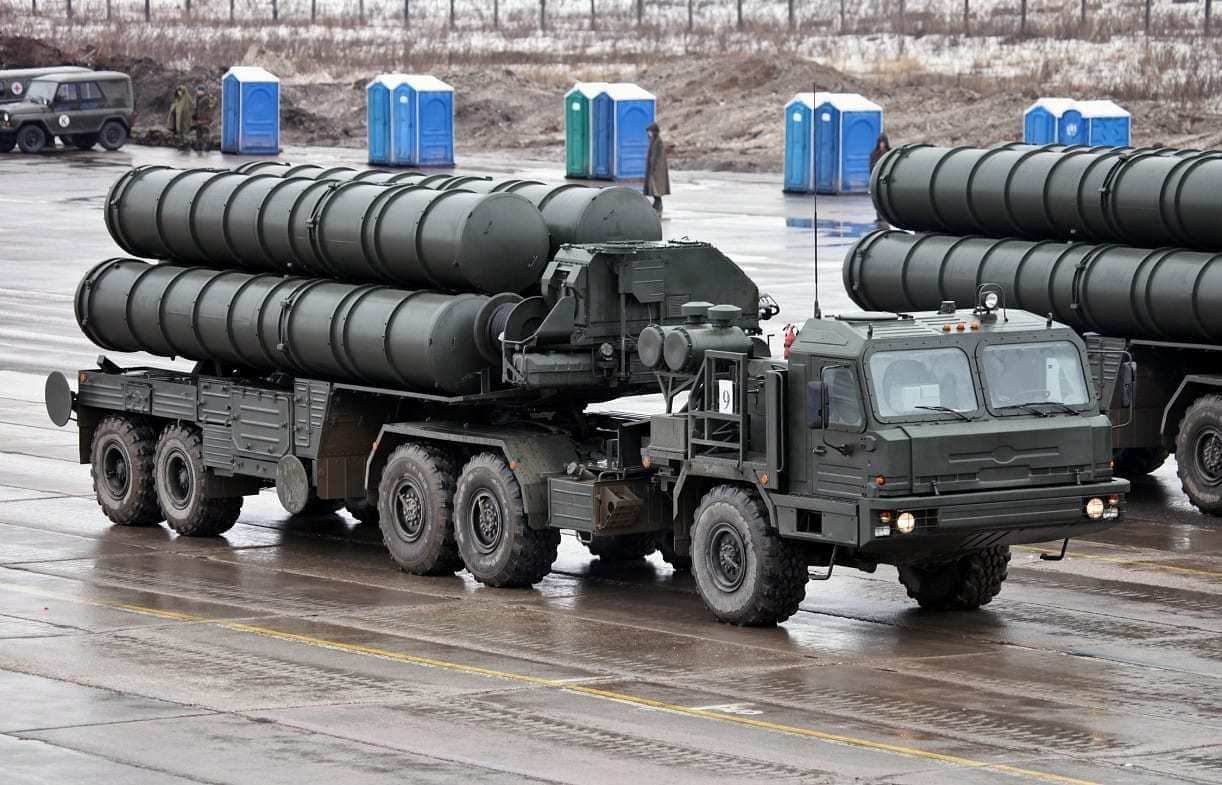
From the Russian perspective, the exclave is traditionally viewed as an "unsinkable aircraft carrier": Iskander-M, S-400, Bastion coastal missile systems, and Baltic Fleet divisions. This is a means of asymmetric deterrence — the ability to block the Suwalki Corridor with a single strike and paralyze NATO's communications with the Baltics. However, the exercises on August 18 also reveal the other side: the dense but stationary air defense of the exclave is vulnerable to coordinated electronic warfare and reconnaissance efforts, while the district's aviation is outnumbered by what the alliance can deploy from Polish and Baltic bases within hours.
The timing is also telling. The maneuvers took place against the backdrop of Washington contacts, as Moscow demonstrates a willingness to negotiate while on August 19, it launched a massive strike on Ukraine (270 drones and 10 missiles, according to the Ukrainian Armed Forces). NATO, led by the U.S., responds symmetrically: diplomacy is ongoing, while military pressure continues. Both sides are simultaneously rehearsing a "double game" — and both, apparently, consider it the norm.
The paradox of the current situation is that surprise has ceased to be a Russian invention. Once, the notification mechanisms of the OSCE and CFE made large maneuvers predictable — now they are dead, and both sides have returned to Cold War practices: check your neighbor without warning.
What This Means for Russian Military Planning
For the General Staff, this means the need to reconsider the operational mode of the exclave's air defense: keeping radars constantly on is not possible — it reveals parameters and provokes reconnaissance, while turning them off increases the risk of a surprise strike. A likely response is asymmetric: enhancing electronic warfare, increasing the frequency of its own surprise checks in the Baltic, redeploying additional Iskander and Bastion systems, as well as rhetorical escalation in the spirit of "retaliatory measures." It is telling that Russian officials have so far limited themselves to routine statements — but Moscow has clearly understood the signal.
Worse still is the following. When both sides make surprise the norm, the risk of an incident increases not out of malice, but by mistake: an interceptor and a reconnaissance aircraft on converging courses, a misread maneuver, a communication failure between the pilot and the ground station. In the Baltic region, where the distance between NATO fighters and Russian Su-27s is measured in minutes of flight, such a mistake can be very costly. I remember times when notifications about exercises were routine, not exotic — no one wants to return to that now, but it was this routine that once distinguished a professional army from a hysterical one.
A forecast, with caveats. If NATO continues surprise concentrations near Kaliningrad, and Moscow responds symmetrically, the Baltic will become a permanent zone of "signal exercises," where every radar activation risks being interpreted as preparation for a strike. A breakthrough is only possible with a return to notification transparency, and for that, negotiations are needed, which both sides are currently conducting more for show. Until then, the question is not whether an incident will occur, but whether it will be serious enough for both sides to want to remember the old rules.
NATO conducted large-scale air exercises near Kaliningrad on August 18, 2026, involving 25 aircraft, including E-3A Sentry and AH-64E Apache. The unannounced exercises aimed to test Russian A2/AD capabilities and involved electronic warfare and reconnaissance operations. This sudden military activity reflects a shift in NATO's approach to readiness and deterrence in the region.
- NATO conducted large-scale air exercises near Kaliningrad on August 18, 2026.
- 25 allied aircraft participated, including E-3A Sentry and AH-64E Apache.
- The exercises were unannounced and involved electronic warfare and reconnaissance.
- The operation aimed to test Russian A2/AD capabilities.
- The exercises occurred amid heightened tensions and military activity in the region.