
NATO Makes a $40 Billion Ukraine Drone Bet Too Slowly
 Alexandra Reeves
NATO Makes a $40 Billion Ukraine Drone Bet Too Slowly
Forty billion dollars sounds like a revolution until you remember what Ukraine has been doing with workshops, volunteer networks and battlefield feedback loops for years.
At the Ankara summit, NATO Secretary General Mark Rutte announced Drone Edge, a five-year allied investment in uncrewed systems worth $40 billion. In the same press conference, he pointed to more than $50 billion in new procurement deals, a EUR27 billion fuel supply-chain modernization effort and at least EUR70 billion in military equipment, assistance and training for Ukraine in both 2026 and 2027. The Ankara declaration also says European Allies and Canada now finance the vast majority of Ukraine security assistance.
That is not small change. It is also not proof that NATO has learned the right lesson from Ukraine.
The Numbers Are Finally Serious
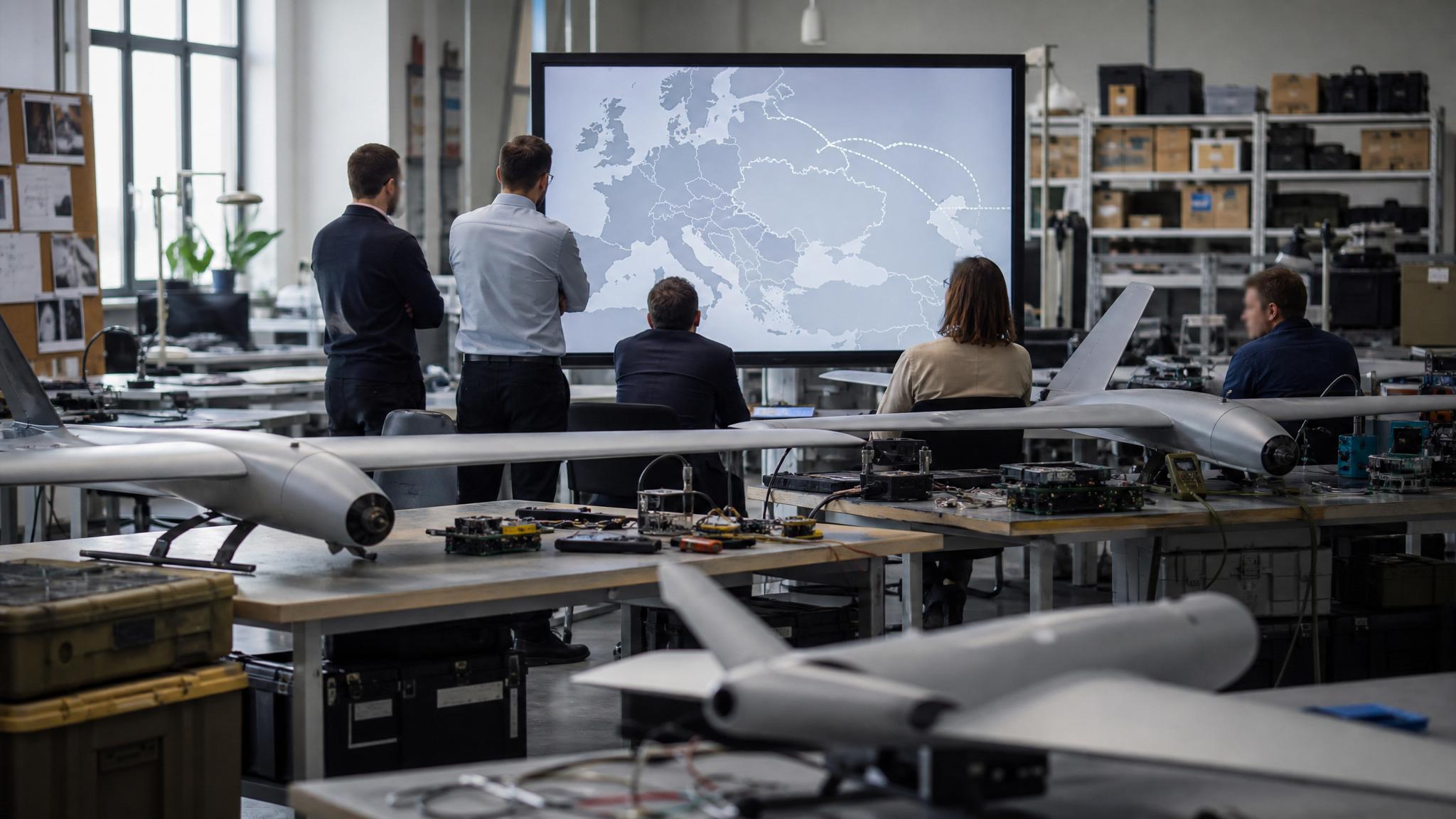
The most important line in Rutte’s Ankara remarks was not the usual Article 5 language. It was the shift from target-setting to delivery. NATO has spent the past several years announcing percentages, pledges and capability goals. Ankara put harder industrial figures on the table: $40 billion for uncrewed systems over five years, more than $50 billion in procurement deals in one day and a fuel infrastructure programme designed to move energy eastward where a European war would actually be fought.
That package tells us what the Alliance is now afraid of. It is afraid of Russian mass. It is afraid of running out of interceptors, ammunition, repair capacity and fuel before political leaders have finished their communiques. Above all, it is afraid that Ukraine has exposed a NATO force design that is exquisite, expensive and too slow to regenerate under pressure.
The drone figure matters because it is specific. NATO is not merely saying that uncrewed systems are useful. It is making them a formal investment category at alliance scale. That includes one-way attack systems, reconnaissance drones, loitering munitions, naval drones, electronic warfare payloads and the data architecture needed to connect them. The technical edge is not one platform. It is the cycle: find, strike, assess, adapt, repeat.
Ukraine Built a War Economy Before NATO Built a Programme
Here is the uncomfortable part. Ukraine did not wait for a perfect acquisition process before building a drone force. It used commercial components, small manufacturers, military units with direct feedback from the front and brutal trial by fire. The result has been messy, uneven and sometimes wasteful. It has also changed the battlefield.
Russian armour, artillery, logistics vehicles and command posts now move under constant aerial observation. Cheap first-person-view drones have made trench lines more lethal. Longer-range Ukrainian drones have struck Russian energy and defence infrastructure far beyond the front. Rutte acknowledged that dynamic in Ankara, saying Ukraine is striking deep into Russia against energy and defence infrastructure while the front has settled into something close to stalemate.
NATO wants the effect without the disorder. That is understandable. Alliance militaries need safety certification, spectrum management, cyber protection, training pipelines and rules for cross-border operations. A Polish battery, a German brigade and a Canadian headquarters cannot simply improvise their way through a drone war.
But the danger is obvious. If Drone Edge becomes another slow procurement container, NATO will buy yesterday’s Ukrainian lesson at tomorrow’s prices. Russia is adapting too. Moscow has expanded electronic warfare, fibre-optic drone use, decoy tactics and massed strike packages designed to exhaust air defences. A five-year plan is useful only if it creates a production and adaptation system, not just a shopping list.
The Logistics Line Is the Real Tell
The EUR27 billion fuel supply-chain investment deserves more attention than it will get. Drones are the fashionable headline. Fuel is the boring thing armies discover they cannot fight without.
Rutte said the programme will modernize storage and distribution infrastructure and support new facilities, including pipelines toward the eastern part of the Alliance. That is a quiet admission that NATO deterrence is no longer about whether a battalion can deploy to the Baltics for an exercise. It is about whether multiple corps can keep moving after Russia attacks ports, rail hubs, depots, power grids and fuel nodes.
Ukraine has already shown what this looks like. The war is not split neatly between the front and the rear. Rear areas are target sets. Repair plants are target sets. Airfields, substations, railway junctions and ammunition depots are target sets. If NATO is serious about defending its eastern flank, it has to treat logistics as a combat system.
That is why the Ankara package should be read together. Drone Edge is about sensing and striking. The procurement surge is about filling magazines. The fuel plan is about keeping heavy forces alive long enough to matter. The EUR70 billion annual Ukraine pledge is about preventing Russia from turning battlefield endurance into political leverage.
The Alliance Still Has a Speed Problem
The mainstream assumption in Washington is that money solves the gap. It helps, but it does not solve the core problem. NATO has money. It has advanced industry. It has world-class militaries. What it lacks is Ukraine’s ability to compress the distance between a battlefield failure and a design change.
That is a cultural problem as much as a budget problem. Defence ministries like programmes of record. Ukraine has been forced to think in production runs, software updates and disposable systems. NATO likes interoperability standards. Ukraine has had to privilege survival. Neither model is perfect, but only one has been tested every day against Russia.
So the question after Ankara is not whether $40 billion is enough. The question is whether NATO can spend it in a way that produces adaptation rather than bureaucracy. A drone bought in 2028 to answer a 2024 battlefield lesson is not innovation. It is archaeology with a defence budget.
What To Watch Next
The next indicators are concrete. Watch whether Drone Edge funds smaller firms as well as the familiar primes. Watch whether Ukraine is integrated as a design partner, not just treated as a battlefield case study. Watch whether allied exercises punish headquarters, logistics nodes and air defence units with realistic drone saturation. And watch whether the new eastern fuel infrastructure is protected against missiles, sabotage and cyber disruption.
The key finding is simple: Ankara shows NATO has finally put real money behind the Ukraine drone lesson, but the Alliance is still moving at alliance speed. Russia does not need NATO to ignore drones. It only needs NATO to institutionalize them slowly.
That is the uncomfortable test ahead. If Drone Edge becomes a living arsenal, it could harden NATO deterrence and give Ukraine better tools for the next phase of the war. If it becomes another beautifully governed procurement lane, Moscow will have learned the faster lesson.
NATO announced a $40 billion investment in uncrewed systems at the Ankara summit, alongside over $50 billion in procurement deals and EUR27 billion for fuel supply-chain modernization. This investment aims to enhance military support for Ukraine amid concerns about Russian capabilities. The alliance is focusing on adapting its military strategies to improve logistics and drone technology in response to the ongoing conflict.
- NATO announced a $40 billion investment in uncrewed systems over five years.
- More than $50 billion in procurement deals were made in one day at the Ankara summit.
- EUR27 billion will be invested in fuel supply-chain modernization.
- NATO is concerned about the effectiveness of its military response to Russian capabilities.
- Ukraine has effectively utilized drones in its military operations against Russia.