
NATO's 5 Percent Target 2026 First Faces 50 Missing US Fighter Jets
 Dr. Klaus Weber
NATO's 5 Percent Target 2026 First Faces 50 Missing US Fighter Jets
Fifty fighter jets are not a budget argument, but an operational gap. If the United States reduces its F-16 and F-15E aircraft designated for NATO operations in Europe from about 150 to around 100, as European officials confirmed following a New York Times report, then the alliance does not lose abstract American generosity. It loses sorties, reconnaissance, refueling flexibility, and political predictability. This is precisely why the agenda of the NATO defense ministers' meeting on June 18 in Brussels appears so sober and simultaneously so brutal: support for Ukraine, the 5 percent promise, defense industry. These three points are interconnected. Europe cannot simultaneously promise more responsibility, lose American enablers, and continue to act as if 2035 is a realistic military horizon.
The American Cut is More Precise than Europe's Response
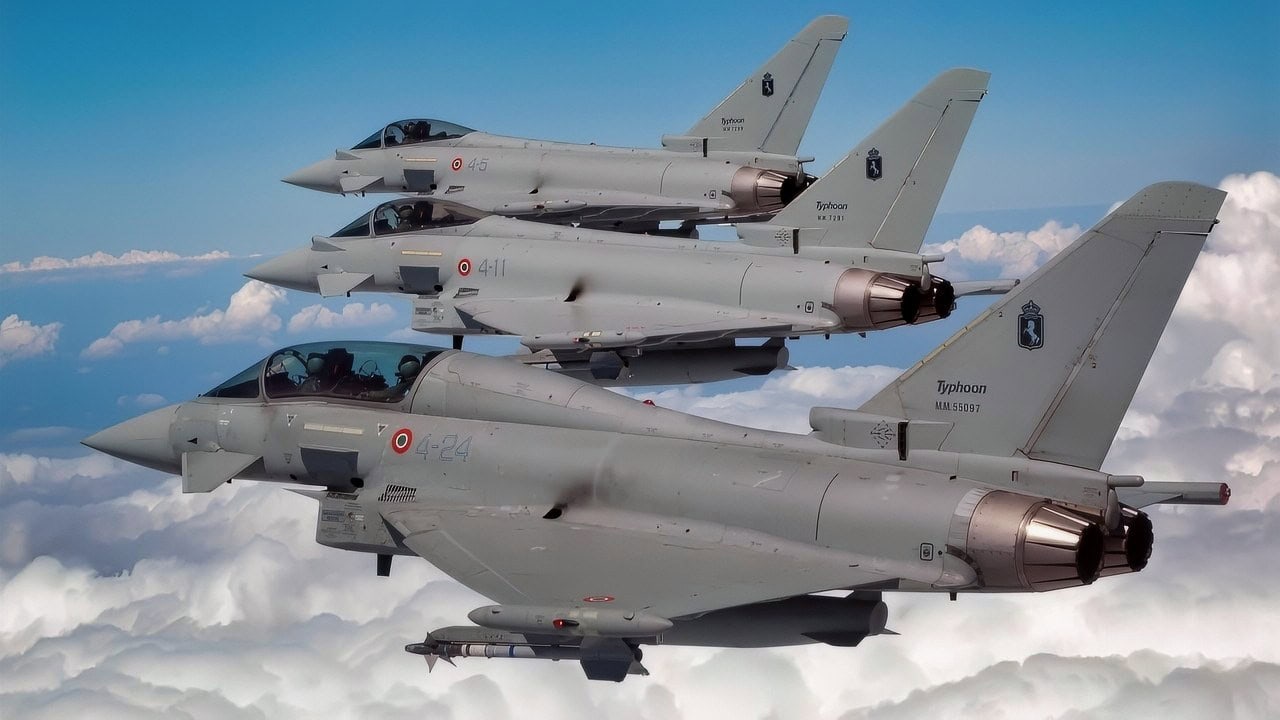
The reported numbers are politically uncomfortable because they are specific. According to the report, not only will fighter jets be withdrawn. Maritime reconnaissance aircraft are also expected to decrease from 26 to 15, eight tankers will be completely removed, and there is the potential relocation of a submarine platform, an aircraft carrier, and a bomber task force from the European operational area. This directly affects those capabilities that European states can replace the slowest: strategic reconnaissance, air refueling, maritime domain awareness, and deep strike options.
NATO is trying to frame this development as institutional maturation. Less over-dependence on one ally, more sustainable burden-sharing, more European responsibility. This is not wrong. But it is only more than a press formula if Europeans prioritize in the coming months what they have previously distributed over years. One percentage point more of GDP does not produce a maritime patrol squadron. A summit communiqué does not replace pilots, spare parts, or ammunition stocks. The sober question, therefore, is not whether Europe will pay more. The question is whether Europe will use the additional money to buy the gaps that will actually arise.
The 5 Percent Promise Conceals the Wrong Timescale
The new NATO target of 5 percent of GDP, with 3.5 percent for conventional military capabilities and 1.5 percent for resilience and defense-related infrastructure, is politically effective. It signals to Washington that Europe no longer views American patience as a free good. It signals to Moscow that European deterrence no longer consists solely of American forward forces. But the operational logic is harsher. If American air and sea components are reduced starting in 2026, while European budgets are not expected to reach their full target size until 2035, a dangerous transition phase will emerge.
This transition phase is the real issue of the Brussels ministerial meeting. NATO can be much wealthier in 2035 and still weaker in 2027. An additional euro in the investment budget often only leads to operational equipment after five to ten years. For air defense, fighter jets, and ships, the timeframe is even longer. Even if Germany, Poland, the Netherlands, or Italy order more Eurofighters, F-35s, corvettes, drones, and air defense systems today, no capability will emerge in the short term at the same pace that Washington can shift forces.
The alliance thus faces a classic Weber problem: it confuses fiscal targets with military availability. Capability is not Capacity; an order is not a squadron; a percentage target is not an operational plan.
Ukraine Shows a Different Procurement Logic
The Kiel Ukraine Support Tracker provides a useful contrast. Europe's military aid to Ukraine remained high in the first four months of 2026, but its focus shifted significantly: drones became the center of support. Germany provided military aid worth 4.2 billion euros in March and April, primarily for air defense and drones. The UK reported 1.3 billion euros, Norway 600 million euros. Confirmed European drone commitments rose from 400 million euros in 2022 to 1.6 billion euros in just the first four months of 2026.
These numbers are not just Ukraine statistics. They show what procurement becomes politically possible when urgency, industrial proximity, and tactical utility converge. Drones can be scaled faster than aircraft, they create technological feedback loops with Ukrainian manufacturers, and they force European armed forces to rethink the old hierarchy between expensive platforms and cheap mass. Former British Minister of State Al Carns put it more sharply in the House of Commons: In Ukraine, a navy without ships destroyed a navy, and a drone costing thousands can destroy a tank costing millions.
But this does not mean that Europe can simply replace American enablers with swarms of drones. Drones assist in reconnaissance, target acquisition, and deep strikes. They do not replace tankers, air superiority, long-range maritime reconnaissance, or nuclear assurance. The operational mistake would be to derive a convenient savings thesis from Ukraine. The correct lesson is more uncomfortable: Europe needs both cheap mass and expensive enablers, and it needs them faster than its procurement processes allow.
The UK is a Warning Signal, Not a Special Case
The British dispute over the Defence Investment Plan shows how quickly political commitments can crumble under budgetary mechanics. Rich Knighton, the head of the British General Staff, warned on June 16 that the UK would have to scale back exercises and operational activities without additional funding. John Healey criticized after his resignation that the plan does not provide a clear path to 3 percent by 2030 and 3.5 percent by 2035. This is not just a British problem. It is the European norm: governments accept higher NATO targets, but finance ministries translate them into later paths, technical assumptions, and departmental compromises.
For the alliance, this difference is crucial. Russia does not plan according to European budget years. Washington does not shift forces according to European procurement cycles. And Ukraine cannot equip its air defense with European declarations of intent. Therefore, when NATO discusses the defense industry on June 18, it must talk less about abstract production increases and more about a hierarchy of bottlenecks: air defense, ammunition, drone production, air refueling, maritime reconnaissance, command and control systems. Without this prioritization, the 5 percent target will only be a larger version of the old 2 percent problem.
The European Industry Paradox
The European defense industry is indeed growing. The EU Council cites an industry revenue of 183.4 billion euros for 2024, 13.8 percent more than the previous year and 48.1 percent more than in 2021. Employment rose to 633,000 jobs. These are not insignificant numbers. They show that Europe's industrial base is not empty. But they also reveal the paradox: a growing industry can still deliver the wrong products, too late, and in too many national variants.
Germany, in particular, needs to be more honest here. The Zeitenwende has mobilized money but has not created a new procurement discipline. The special fund has largely been directed into existing gaps, not into a new European capability architecture. France defends industrial sovereignty, but often in a national form. Italy and Spain balance NATO requirements, budget pressures, and domestic industrial interests. Poland buys quickly, but often outside European cooperation logic. Each of these paths is politically explainable. Together, however, they do not result in European defense capability.
The Brussels meeting is therefore not an ordinary preparatory meeting before the July summit in Turkey. It is a test of whether Europe has understood the difference between more spending and more available power. The American cut of about 50 fighter jets is only the most visible part of a larger withdrawal. Europe's response must not be to reach higher percentages by 2035. It must specify which concrete gaps will be closed by 2027, who will finance them, who will produce them, and who will lead them in a crisis.
The bitter point is: Europe needs the 5 percent target because without money, no military renewal begins. But if the money continues to flow through fragmented institutions, national industrial wishes, and slow procurement, it will only make dependence on the USA more expensive. More spending does not automatically solve the problem. Without more spending, however, Europe does not even have the right to speak of strategic autonomy.
Sources
The United States plans to reduce its military presence in Europe by cutting 50 fighter aircraft and other assets, impacting NATO's operational capabilities. This reduction will be discussed at the NATO defense ministers' meeting in Brussels on June 18, 2026, where the alliance will address the implications for European defense responsibilities and military readiness. The report emphasizes the urgency for Europe to enhance its military procurement and capabilities in response to these changes.
- The US plans to reduce its F-16 and F-15E aircraft from 150 to 100 in Europe.
- Maritime reconnaissance aircraft will decrease from 26 to 15, and 8 tankers will be removed.
- NATO's defense minister meeting on June 18, 2026, will address these military capability gaps.
- Europe's military procurement is lagging behind the US's force reductions, creating operational gaps.
- The report highlights the need for Europe to prioritize military spending and capabilities.