
NATO's Ankara Summit 2026 Shows Why Europe's €150 Billion SAFE Excludes Turkey
 Dr. Klaus Weber
NATO's Ankara Summit 2026 Shows Why Europe's €150 Billion SAFE Excludes Turkey
The most important event of the Ankara Summit will not take place in the North Atlantic Council on July 7, but at 12:45 PM in the NATO Defence Industry Forum. There, the NATO Secretary General, a Vice President, and the Turkish Minister of Defense will discuss industrial cooperation together. This exact order is politically revealing. The Alliance needs Turkey as a producer, logistics hub, and military flanking state. However, the European Union continues to treat it in the €150 billion SAFE instrument as a problematic third country, whose participation can be blocked by Greek and Cypriot objections.
This is not a diplomatic detail. It is an institutional contradiction at the heart of European rearmament. Ankara will host a NATO summit on July 7 and 8, 2026, has the second-largest army in the Alliance after the United States, and can produce drones, ammunition, armored vehicles, and naval systems in series faster than many EU states. At the same time, Brussels is building a credit instrument intended to strengthen joint procurement and reduce fragmentation, but politically excludes an important NATO industrial partner.
The Summit Shows Turkey's New Negotiating Power
The official NATO agenda confirms the industrial focus. On Tuesday, "high level announcements by NATO, Allies and Industry" are scheduled first, followed by a keynote at the Defence Industry Forum, and only then public remarks by the NATO Secretary General with the Ukrainian President. This sequence says a lot about the state of the Alliance. Support for Ukraine remains politically central, but the ability to produce weapons in sufficient numbers is now the real test.
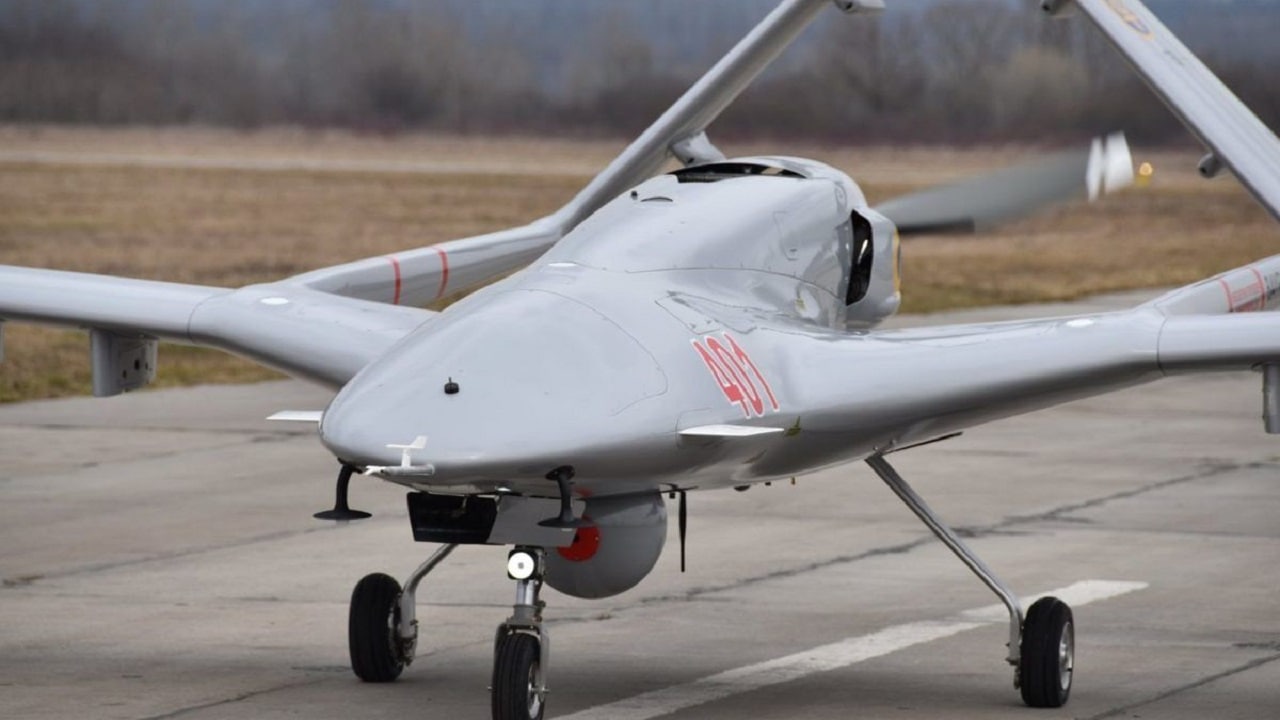
The Turkish Minister of Defense, Yaşar Güler, has already described the summit as a critical turning point where the Alliance must demonstrate its adaptability. His message is clear: Turkey does not want to be seen only as a geostrategic space between the Black Sea, the Caucasus, and the Middle East, but as an industrial provider. This includes Bayraktar drones, naval platforms, electronic systems, and a growing ammunition base. In a NATO where American priorities are shifting towards the Indo-Pacific, this is no longer a secondary argument.
Turkey offers NATO something that many European capitals have underestimated for years: available industrial capacity under political risk.
SAFE Solves Financial Problems, but Not the Partner Question
The European Commission describes SAFE as an instrument with up to €150 billion in long-term, low-interest loans. It is intended to enable urgent and large-scale procurement, strengthen the European defense industry, and reduce fragmentation. In theory, this is a reasonable response to the changing times. In practice, however, a tight EU internal market mechanism for a NATO security problem is emerging.
SAFE requires joint procurement with at least one beneficiary member state and another member state, as well as participation opportunities for Ukraine and EEA-EFTA states. This construction explains why Norway is politically easier to integrate than Turkey, even though Ankara is militarily more important for the southeastern flank. The problem is not the quality of Turkish products. It is the institutional architecture: EU law, the Cyprus issue, Greek-Turkish conflicts, and distrust of Turkish foreign policy are carried into a procurement instrument that is supposed to increase delivery capability.
Here lies the typical European confusion of sovereignty and exclusivity. Strategic autonomy does not mean excluding all non-EU producers. It means consciously managing political dependencies. If Europe wants to reduce American dependency but cannot utilize Turkish capacity for internal EU political reasons, it does not replace one dependency with autonomy, but rather with scarcity.
NATO Needs Effectiveness, the EU Prefers Control
The Ankara Summit takes place at a time when the Alliance must achieve three things simultaneously: credibly uphold Article 5, continue to supply Ukraine, and compensate for the American reduction of European availabilities. Reuters reported NATO statements indicating that European allies had already filled many gaps from American cuts in just a few weeks. However, this statement concerns planning allocations, not automatically industrial depth. A squadron can be assigned on paper; spare parts, ammunition, and trained crews do not come from tables.
Turkey is therefore interesting because it approaches the problem from the other direction. In recent years, Ankara has not first harmonized European programs but built national production chains. This creates political friction but also real capacity. To put it in Weber's terms: Turkey has more capacity than many EU states have capability governance. That is precisely why it seems paradoxical when NATO celebrates industrial cooperation in Ankara while SAFE structurally complicates this partner's access.
Of course, Turkish involvement is not a technocratic self-starter. Ankara has blocked NATO processes in the past, uses arms cooperation as a foreign policy lever, and pursues interests in the Eastern Mediterranean that collide with those of Greece and Cyprus. A naive opening of European defense funds would not be politically viable. But the alternative cannot be to rhetorically praise Turkish capacity in NATO forums while practically excluding it from EU procurement chains.
The Real Lesson for Europe
The case of Turkey shows why Europe's rearmament is progressing more slowly than its financial figures suggest. €150 billion SAFE, more national defense budgets, and new NATO target marks do not yet create a coherent industrial order. As long as the EU and NATO have different memberships, veto points, and procurement logics, every euro will go through institutional friction.
Germany should take this contradiction particularly seriously. Berlin likes to talk about European action capability but relies on American Patriot and Israeli Arrow systems for air defense, on Ukrainian experiences for drones, and on NATO structures for strategic mobility. A serious European policy must therefore distinguish: Where is EU exclusivity necessary for security policy, and where is it merely industrial protectionism with a geopolitical price?
The Ankara Summit will likely conclude with statements about collective defense, support for Ukraine, and industrial cooperation. However, the crucial points lie between the lines. NATO recognizes that Turkey is becoming more useful for the European security order. The EU has yet to find a procedure to politically control this usefulness. More money does not make Europe autonomous if the institutions exclude partners that could provide capabilities. But involvement without rules would also divide the EU. This is precisely the dilemma facing Europe's defense policy in 2026: It needs Turkey more than it wants to admit and distrusts it more than NATO can afford.
NATO's Ankara Summit on July 7-8, 2026, will emphasize Turkey's role as a key military partner, focusing on industrial cooperation. Turkey, with the second largest army in NATO, is positioned as a crucial producer of military equipment, including drones and armored vehicles. However, the EU's €150 billion SAFE initiative politically excludes Turkey, reflecting ongoing tensions within NATO and the EU regarding defense procurement and collaboration.
- NATO's Ankara Summit is scheduled for July 7-8, 2026.
- Turkey is a key military partner for NATO, possessing significant industrial capacity.
- The EU's SAFE initiative excludes Turkey due to political objections from Greece and Cyprus.
- Turkey's defense minister emphasized the summit as a critical turning point for NATO's adaptability.
- The report highlights the tension between NATO's needs and EU's procurement policies.