
NATO's Baltic Warning Makes Ukraine's 2026 Air War Europe's Problem
 Alexandra Reeves
NATO's Baltic Warning Makes Ukraine's 2026 Air War Europe's Problem
Admiral Giuseppe Cavo Dragone said the quiet part out loud: a Russian move against Poland or the Baltic states is no longer a fantasy scenario NATO keeps in a planning annex. It is realistic enough that the alliance's top military officer is now publicly talking about making Moscow pay more than it could possibly gain.
That matters because it landed in the same news cycle as another heavy Russian strike on Ukrainian cities. The New York Times described the July 19 attack on Kyiv as one of the largest missile assaults of the war. BBC reporting said eight people were killed and dozens injured as several Ukrainian cities were hit by missiles and drones. CNBC framed the moment more bluntly: Russia was pounding Kyiv while NATO's military chief warned Moscow it would "lose a lot" by attacking the Baltics.
This is not just two stories sitting next to each other. It is one strategic problem. Russia's air war against Ukraine is also a live-fire test of Europe's future air defence burden, drone resilience, industrial speed, and political nerve.
Dragone's Warning Was Not Empty Theatre
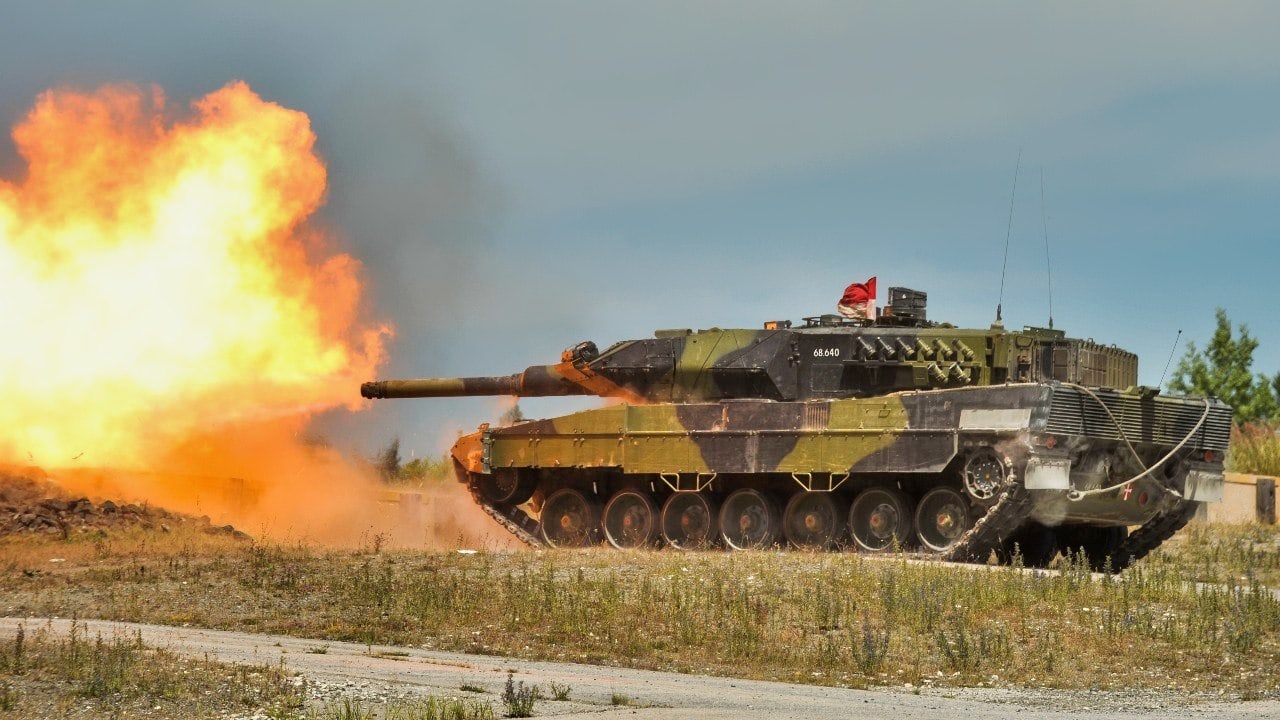
In a July interview with the Kyiv Independent, Dragone was asked about repeated Western intelligence warnings that Russia could prepare hostile operations against Baltic states or Poland. His answer was unusually direct for a NATO official.
"It is realistic to the point where we define Russia as a threat," Dragone said. "Today they would lose a lot, much more than what they could gain just by touching Poland or the Baltic states. And we are ready."
That is deterrence language, but it is also an admission. NATO is no longer trying to convince itself that Russia would need to finish the Ukraine war cleanly before testing the alliance. The more uncomfortable possibility is that Moscow could use limited probes, sabotage, airspace violations, missile scares, or deniable operations precisely because it is stuck in Ukraine and needs a cheaper political victory.
Lithuanian officials made the same point from the exposed end of the map. According to the Kyiv Independent and other regional reporting on July 20, Lithuania's defense minister warned that Vladimir Putin may look for new targets in the Baltics and Poland after failing to secure a decisive result in Ukraine. That is not panic. It is the basic geography of Russian prestige politics. If Moscow cannot demonstrate success at the front, it may try to demonstrate pressure at NATO's edge.
The Kyiv Barrage Is the Baltic Lesson
The temptation in Washington and parts of Western Europe is to treat Russia's latest strikes on Kyiv as a Ukraine-specific tragedy: another grim night, another air defence request, another argument over Patriot interceptors. That misses the operational lesson.
Russia is building a method for saturating air defence with mixed packages of ballistic missiles, cruise missiles, and drones. Ukraine is the target today. The Baltic states would be the laboratory tomorrow if Moscow ever wanted to test NATO's reaction time without starting a classic tank invasion.
The military balance in the Baltic region is not just about brigades and tanks. It is about whether air bases, ports, rail nodes, command posts, power grids, and ammunition depots can keep functioning under repeated missile and drone pressure. Estonia, Latvia, and Lithuania have strategic depth measured in hours, not weeks. Poland has more depth, but also more logistical responsibility. If reinforcement routes are jammed, struck, or politically slowed, NATO's Article 5 promise starts to depend on pre-positioned sensors, interceptors, engineers, and command networks rather than speeches from Brussels.
That is why Ukraine's air war is so relevant. Every Russian strike package teaches NATO something about interception rates, stockpile burn, electronic warfare, decoys, and civilian resilience. Every Ukrainian adaptation teaches something else: cheap drones can force expensive decisions, but cheap drones do not remove the need for high-end air defence.
Ukraine Is Now a Security Provider
Dragone also made a point that still sounds strange in some European capitals. Ukraine is not only a recipient of aid. It is becoming a provider of battlefield knowledge and defence technology.
He cited NATO's Joint Analysis, Training, and Education Center in Poland as a channel for learning from Ukraine's battlefield experience. The most valuable lessons are not abstract. They involve drone mass, electronic warfare, speed of adaptation, and the ability to field "good-enough" systems quickly instead of waiting years for exquisite procurement cycles.
Defense News reported on July 16 that CIA Director John Ratcliffe estimated Russian recruits arriving at the Ukrainian front survive just 20 to 30 minutes before being killed or wounded, attributing that partly to AI-powered drones becoming specialized, low-cost killing machines. The same report cited CSIS research saying the Russia-to-Ukraine casualty ratio reached nearly 8-to-1 in the first half of 2026, compared with roughly 2-to-1 or 3-to-1 for much of the war. CSIS estimated more than 2 million total casualties on both sides since 2022, including 1.4 million Russian casualties and as many as 450,000 Russian dead.
Those numbers should be handled carefully, because casualty estimates vary and wartime data is messy. But the direction is clear. Ukraine has turned drone density, battlefield software, and target recognition into a lethal system. Russia is learning too. NATO cannot assume that the Russian army which emerges from Ukraine will be elegant, but it will be experienced, brutal, and deeply familiar with cheap precision at scale.
The Capability Gaps Are Not Theoretical
Dragone named the European gaps that matter if the United States reduces its military presence in Europe: strategic airlift, deep precision strike, electronic warfare, and ISR. That list should bother European leaders because it describes the exact functions needed in a Baltic crisis before the first armoured brigade even matters.
- Strategic airlift decides whether reinforcements arrive fast enough to matter.
- Deep precision strike decides whether Russian launchers, air bases, and logistics nodes can be held at risk.
- Electronic warfare decides whether drones, missiles, and communications networks survive first contact.
- ISR decides whether NATO sees the move early or spends the first 48 hours arguing about attribution.
NATO's new spending target helps, but money is not the same as capability. Dragone noted that the 5 percent pledge gives allies 10 years to reach 3.5 percent for core defence requirements and 1.5 percent for broader security spending. The problem is that Russia does not need 10 years to run a provocation. It needs a foggy week, a political distraction, and confidence that NATO's response will be slower than its press releases.
What To Watch Next
The key indicator is not whether Russian tanks are massing at the Narva River. That is the old mental model. Watch instead for three quieter signs: more Russian electronic warfare and drone activity near NATO borders, more pressure on Baltic air policing and maritime surveillance, and more European investment in layered air defence rather than another round of summit communiques.
Ukraine has already shown what the next European war looks like: missiles over cities, drones over logistics hubs, electronic warfare in the air, and politics under constant pressure. Dragone's warning was useful because it did not pretend otherwise.
The uncomfortable conclusion is simple. NATO can probably make a Russian attack on the Baltics too costly. But only if it treats Kyiv's night sky as a preview, not a distant Ukrainian problem.
NATO warns of realistic Russian threats to Poland and the Baltic states as Russia conducts missile strikes on Kyiv. The situation highlights the operational lessons for NATO regarding air defense and military readiness. Ukraine is evolving into a provider of military knowledge and technology, impacting NATO's strategic assessments.
- NATO's military chief warns of Russian threats to the Baltics and Poland.
- Russia conducted significant missile strikes on Kyiv, resulting in casualties.
- Ukraine is becoming a provider of battlefield knowledge and defense technology to NATO.