
NATO's Blocked 0.25 Percent Plan for Ukraine Aid 2026 Shows Europe's Leadership Problem
 Dr. Klaus Weber
NATO's Blocked 0.25 Percent Plan for Ukraine Aid 2026 Shows Europe's Leadership Problem
0.25 percent of gross domestic product is not a strategic burden. For Germany, it would roughly amount to just over ten billion euros a year; for France about seven billion, for Italy just over five, and for Spain less than four. And yet, this seemingly technical figure failed last week due to the NATO rule that is often touted as a strength in Brussels but regularly leads to blockages in crises: consensus.
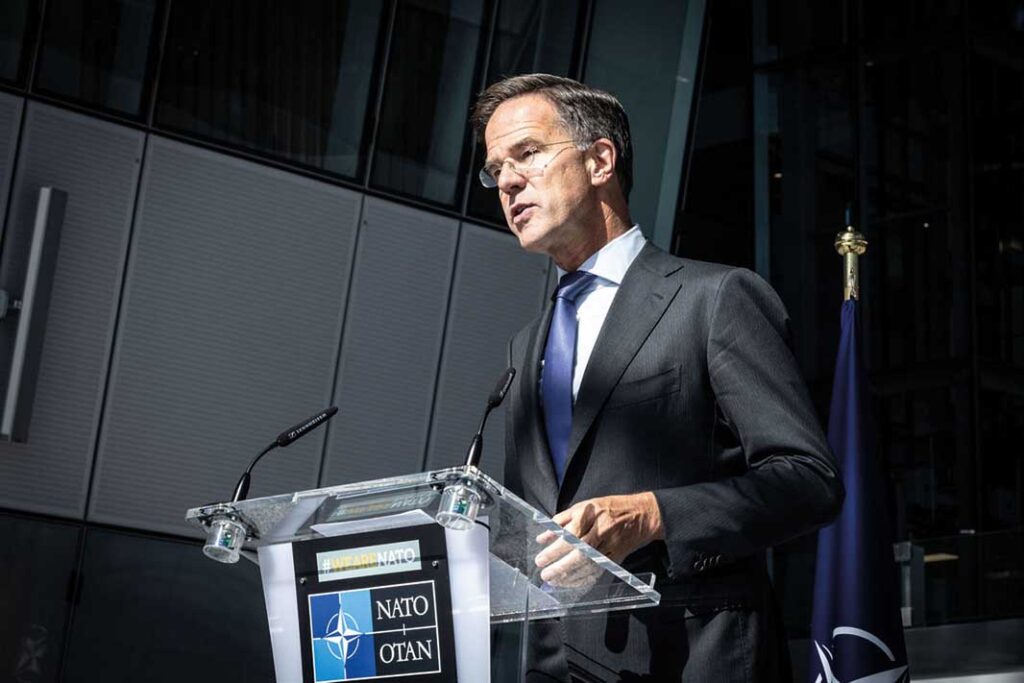
According to reports from The Telegraph, as relayed by Ukrainska Pravda and several Ukrainian agencies, the proposal by NATO Secretary General Mark Rutte that all alliance states should allocate 0.25 percent of their GDP annually for military support to Ukraine was blocked by the UK, France, Spain, Italy, and Canada. Rutte apparently wanted to get the initiative on track before the NATO summit in Ankara in July 2026. It will now not come as an alliance commitment. This is not a footnote. It is a rather precise test of whether European security rhetoric can still be translated into budgetary commitments.
The Number is Small, the Institutional Resistance is Large
The proposal was not revolutionary. It built on a demand that had already been articulated in the Ukraine Defence Contact Group in December 2025. The Baltic states had committed to this magnitude at that time. According to publicly available data from the Kiel Institute, the Netherlands, Poland, as well as Nordic and Baltic states are also among those that are already providing or exceeding military aid at this level. This is the first uncomfortable finding: the smaller and more exposed NATO states treat Ukraine aid as a security expenditure. Several larger states continue to treat it as a politically negotiable act of solidarity.
Rutte articulated the problem more cautiously in Helsingborg. At the NATO Foreign Ministers' meeting on May 22, he spoke of a stronger and fairer NATO, of credible paths to the 5 percent target, and of sustainable support for Ukraine. The official NATO statement lists defense spending, industrial production, and Ukraine aid as central topics. It naturally omits the Secretary General's defeat. But therein lies the analysis: NATO can name common priorities as long as they remain abstract. Once priorities become national budget lines, the alliance reverts to its slowest member.
Why Exactly the Big Europeans Block
That the UK is in this group is initially puzzling. London remains one of Kyiv's most important military supporters, having delivered training, long-range capabilities, and air defense packages, and intends to continue annual support. The British rejection is therefore less directed against Ukraine than against a new NATO internal quota that additionally binds national budget planning. This is fiscally understandable. Strategically, it remains weak because London undermines exactly the reliability it claims in foreign policy.
For France, Italy, and Spain, the problem is more structural. Paris has been demanding European strategic sovereignty for years but deliberately keeps many specific Ukraine deliveries opaque and lags behind smaller partners in the Kiel dataset. Rome and Madrid have large economies, yet their Ukraine aid has been significantly lower in relation to their economic power compared to the contributions of Poland, the Netherlands, or the Nordic states. This reluctance can be explained politically: high debt ratios, coalition constraints, weak public patience for additional war costs. However, it should not be disguised as strategic wisdom.
Canada is not part of the European debate but is important for alliance arithmetic. Ukraine aid is politically linked for Ottawa with diaspora politics, ammunition stocks, and the general underfunding of the Canadian Armed Forces. Here, too, an old NATO pattern emerges: states support Ukraine politically as long as the costs remain discretionary. They resist as soon as a formula forces comparisons.
The EU Has Money, NATO Has No Distribution Power
The contrast with the European Union is revealing. The Council finalized a support loan of 90 billion euros for Ukraine on April 23. For 2026, 45 billion euros are to be made available, of which 28.3 billion are aimed at strengthening Ukrainian defense industrial capacities. This is not a perfect instrument: it is a loan, not a grant; it utilizes enhanced cooperation from 24 member states; and it shifts risks into the future. But it shows that the EU can build majority and special formats in certain financial matters when unanimity becomes politically too costly.
NATO does not have this evasive architecture. It can plan, standardize, coordinate, and exert political pressure. However, it cannot force a national parliament to reserve 0.25 percent of GDP for Ukraine. That is precisely why Rutte failed. Not because the number was too high, but because NATO as an institution lacks a fiscal enforcement logic. This is a difference between alliance and union that is often blurred in Sunday speeches about "NATO-EU cooperation."
The Military Problem Behind the Budget Question
For Ukraine, the distribution is not academic. Air defense, artillery ammunition, drones, electronic warfare, and spare parts require not only individual large packages but also planable orders over several years. The NATO Military Committee stated on May 19 that the speed of delivery and deployment of all necessary capabilities must increase dramatically. At the same time, the chiefs of staff discussed closer cooperation with General Oleksandr Syrskyi in the NATO-Ukraine Council and with the EU Military Committee. This is the right agenda. But an agenda does not fire Iskanders.
The 0.25 percent plan would have served three functions. First, it would have made the burden distribution more transparent. Second, it would have provided a more reliable demand base for Ukrainian procurement. Third, it would have partially compensated for the American withdrawal institutionally. None of these functions have disappeared due to the rejection; they now remain unorganized. This is typical for Europe: the problem is acknowledged, the mechanism is rejected.
Germany is in a Better Position, but Not Outside the Problem
Berlin can lean back in this debate in the short term. Germany is one of the largest supporters of Ukraine after the USA, financing air defense, artillery, and industrial cooperation. However, Germany also benefits when the burden distribution remains imprecise. A binding NATO key would not only embarrass laggards but also raise the question of whether German aid remains permanently additional or is cut from other defense investments. The special fund has not transformed the Bundeswehr into a fully equipped armed force. Every additional euro for Ukraine competes politically with ammunition, infrastructure, and personnel for its own troops.
Here lies the institutional core: Europe needs Ukraine aid and rearmament simultaneously. The temptation is to rhetorically merge both. A Leopard for Kyiv is European security; a Patriot interceptor missile for Ukraine is alliance defense; a drone factory in Ukraine is European industrial policy. Much of this is true. But from a budgetary perspective, they are still different commitments with different supply chains, time horizons, and political owners.
The Lesson Before Ankara
The blocked 0.25 percent plan is therefore more than a diplomatic mishap. It shows that Europe's Ukraine strategy continues to depend on the voluntary over-fulfillment of smaller states and episodic generosity from larger states. This is not a stable system. It rewards states that deliver early with exhaustion and states that hesitate with negotiating power.
Before the Ankara summit, Rutte will likely smooth the language: more industrial production, credible paths to the 5 percent target, sustainable support. All correct. But the uncomfortable question remains: If 0.25 percent for the war that determines Europe's security order is not consensus-capable, what exactly does the 5 percent promise mean? More money cannot replace missing institutions. However, without money, institutions only have protocol value.
Sources: Ukrainska Pravda citing The Telegraph, NATO statement on the Foreign Ministers' meeting in Helsingborg on May 22, 2026, NATO Military Committee from May 19, 2026, EU Council on the 90 billion euro support loan for Ukraine, Kiel Ukraine Support Tracker.
NATO member states, including the UK, France, and Canada, blocked a proposal by Secretary General Mark Rutte for a 0.25% GDP military aid plan for Ukraine during a meeting in May 2026. This failure reflects ongoing political and logistical challenges within NATO regarding defense spending commitments. In contrast, the EU has moved forward with a €90 billion support loan for Ukraine, emphasizing the differences in financial support mechanisms between the two organizations.
- NATO Secretary General Mark Rutte proposed a 0.25% GDP military aid plan for Ukraine.
- The proposal was blocked by several NATO member states including the UK, France, and Canada.
- The EU finalized a €90 billion support loan for Ukraine, contrasting with NATO's inability to enforce budget commitments.
- The report highlights the disparity in military support between smaller and larger NATO states.
- Germany remains a significant supporter of Ukraine but benefits from the lack of binding commitments.