
NATO's Mark Rutte Just Admitted Ukraine's War Has No Clean Winner
 Alexandra Reeves
NATO's Mark Rutte Just Admitted Ukraine's War Has No Clean Winner
Wars do not need a battlefield collapse to become unwinnable. Sometimes they simply run out of plausible endings. NATO Secretary General Mark Rutte's assessment this week that neither Ukraine nor Russia is likely to achieve an outright victory is more than a sober comment on the front. It is a warning that the alliance is preparing for a negotiated end to a war it still cannot afford to let Moscow win.
That distinction matters. Rutte was not announcing a ceasefire, conceding Ukrainian defeat, or endorsing Russia's territorial claims. He was describing the strategic arithmetic now facing both armies: Ukraine can deny Russia a decisive breakthrough, while Russia can continue imposing costs without demonstrating the ability to conquer the country. The result is not peace. It is a contest in which the path to victory has become harder to see than the path to exhaustion.
Rutte's blunt message is about endurance
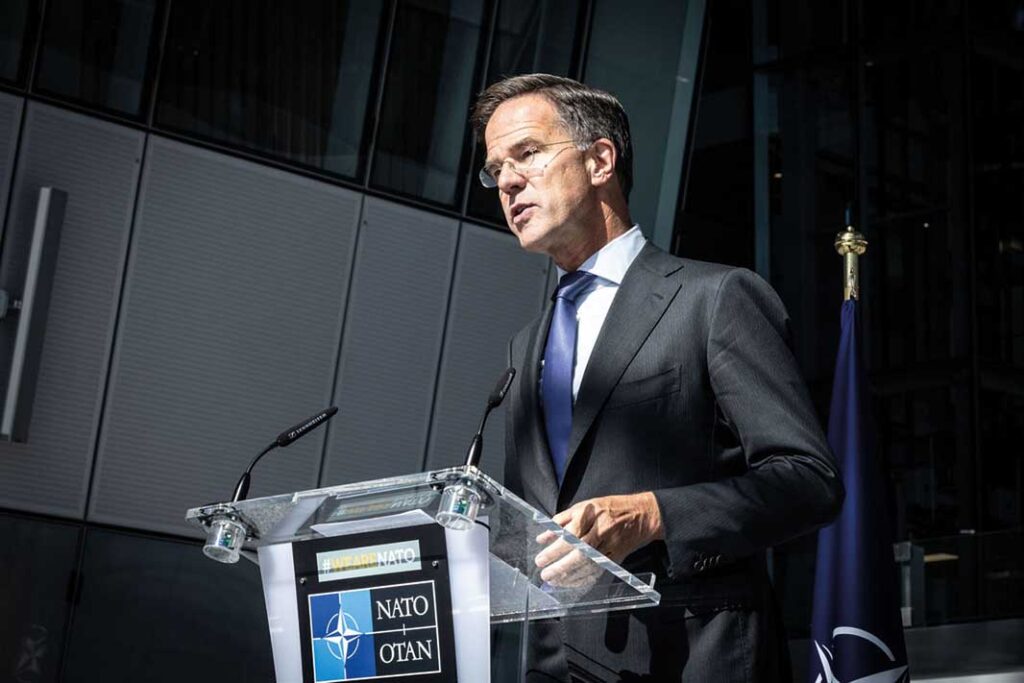
According to reporting by Ukrinform and Ukrainska Pravda on November 6, Rutte said the war was unlikely to end with either side winning outright. Other Ukrainian outlets reported the same conclusion, and the remarks were quickly amplified because they came from NATO's political leader rather than a retired officer or anonymous diplomat. The message was deliberately uncomfortable: Ukraine may not restore its 1991 borders through military force alone, but Russia is also unlikely to secure the kind of victory that would justify its invasion.
That is the logic of a long war. The side with the larger population and industrial base can sustain pressure, but it still has to convert pressure into operational success. Russia's campaign has repeatedly shown the difference between generating firepower and creating a decisive rupture. Ukraine, meanwhile, has demonstrated that drones, precision strikes, and layered defence can impose a price on a stronger opponent. Neither fact produces a settlement by itself.
The danger is that political audiences will hear only the first half of the sentence. In Moscow, “no outright Ukrainian victory” may be presented as proof that time is on Russia's side. In some Western capitals, it may be translated into a reason to push Kyiv toward concessions before its bargaining position worsens. Both interpretations would be strategically lazy.
The front line still decides the diplomatic room
The latest assessment from the Institute for the Study of War's Critical Threats Project, published November 6, is useful precisely because it keeps the military picture in view. Russian forces continue offensive operations and seek incremental gains, but an offensive that advances slowly is not the same thing as a war-winning offensive. Ukraine's ability to disrupt logistics, strike command nodes, and force Russia to trade personnel for ground remains central to the diplomatic balance.
Equipment matters here, but not in the simplistic way that arms announcements are often reported. Air defence protects cities and industrial capacity. Long-range fires complicate Russian logistics. Electronic warfare and reconnaissance drones decide whether artillery can find a target before the target moves. The relevant question is not whether one new weapon changes the war. It is whether Ukraine can maintain a system that makes Russian progress too expensive to sustain.
That system depends on Western political patience. Ammunition contracts, air-defence interceptors, training pipelines, and intelligence support are less visible than a dramatic counterattack, but they shape the ceiling of Ukrainian resistance. If European governments treat Rutte's statement as an excuse to reduce support, they may create the very battlefield deterioration that makes an unequal settlement more likely.
Europe's uncomfortable role
Rutte's comments also expose NATO's political problem. The alliance can promise support for as long as it takes, but it cannot promise that time alone will produce a clean Ukrainian victory. Nor can it openly define a settlement that Kyiv has not accepted. This leaves Europe holding the most consequential part of the argument: how to turn continued military aid into leverage for a durable ceasefire, rather than simply funding an indefinite stalemate.
That is harder than it sounds. A ceasefire along an unstable front would require monitoring, rearmament safeguards, and a credible answer to the question of what happens after Russia tests the arrangement. Security guarantees are therefore not decorative language. They are the mechanism that determines whether a pause is a bridge to negotiations or a procurement holiday before the next invasion.
Europe also has to stop treating American attention as a permanent insurance policy. Washington remains indispensable to NATO's military backbone, but political signals from the United States have become harder for European governments to read. The alliance's eastern members are already planning around the possibility that support will be conditional, delayed, or tied to a broader bargain. That is not panic. It is basic risk management.
The settlement will be ugly because the war is real
The mainstream assumption that a war ends with a winner and a loser is comforting, but it is often wrong. Many modern wars end when both sides conclude that further fighting will not improve their position enough to justify the cost. That kind of ending can preserve sovereignty without restoring every lost kilometre. It can also leave the aggressor armed, angry, and convinced that the next round may go better.
For Ukraine, the objective should therefore be stronger than “hold until diplomacy arrives.” Kyiv needs to improve its negotiating position by preserving the state, denying Russia operational success, and making any renewed attack visibly expensive. For NATO, the task is equally clear: support a settlement that stops the shooting without rewarding the assumption that force is a reliable route to territorial revision.
Rutte's warning is not a reason to abandon Ukraine. It is a reason to define success more honestly. The immediate goal may be neither a parade in Kyiv nor a Russian collapse, but a settlement in which Ukraine remains sovereign, militarily viable, and politically free to choose its future. That is a narrower victory than many speeches promised. It may also be the only one available.
The next test will not be another headline about negotiations. It will be whether Russia can turn its current pressure into a breakthrough, and whether Europe keeps supplying Ukraine before that question is settled. The war has no clean winner in sight. The uncomfortable truth is that NATO's credibility may now depend on making an ugly peace safer than a temporary victory.
Sources
- Ukrinform, reporting on Mark Rutte's November 6 assessment of the war's likely outcome.
- Ukrainska Pravda, reporting on Rutte's remarks.
- Institute for the Study of War's Critical Threats Project, Russian Offensive Campaign Assessment, November 6, 2026.
- NATO News, official alliance context.
NATO Secretary General Mark Rutte stated that neither Ukraine nor Russia is likely to achieve an outright victory in the ongoing war, emphasizing the need for a negotiated settlement. His remarks highlight the strategic challenges both sides face, with Ukraine unable to restore its 1991 borders through military force alone, while Russia struggles to secure a decisive victory. The situation underscores the importance of continued military aid and political support from NATO to maintain Ukraine's resistance and negotiate a durable ceasefire.
- NATO Secretary General Mark Rutte stated that neither Ukraine nor Russia is likely to achieve an outright victory.
- Rutte's comments suggest a shift towards a negotiated end to the conflict.
- The war is characterized by a contest of endurance rather than clear military success.
- Political audiences may misinterpret the lack of outright victory as a sign of Russian advantage.
- NATO's credibility may depend on facilitating a durable ceasefire.