

Summary and Key Points: Sean Spoonts profiles USS Jimmy Carter (SSN-23), the third Seawolf-class submarine, contracted in June 1996 to bridge the three-year gap between the last Los Angeles-class boat, USS Cheyenne, and the first Virginia-class keel in 1999. Built to replace the spy sub USS Parche, she received a 100-foot Multi-Mission Platform with a moon pool and station-keeping thrusters, earned a Presidential Unit Citation for secret “Mission-7” in 2013, and will be succeeded by USS Baltimore in 2036.
USS Jimmy Carter Is A Real Spy Submarine with Some Serious Naval History
USS Jimmy Carter Seawolf-Class. Image Credit: Creative Commons.
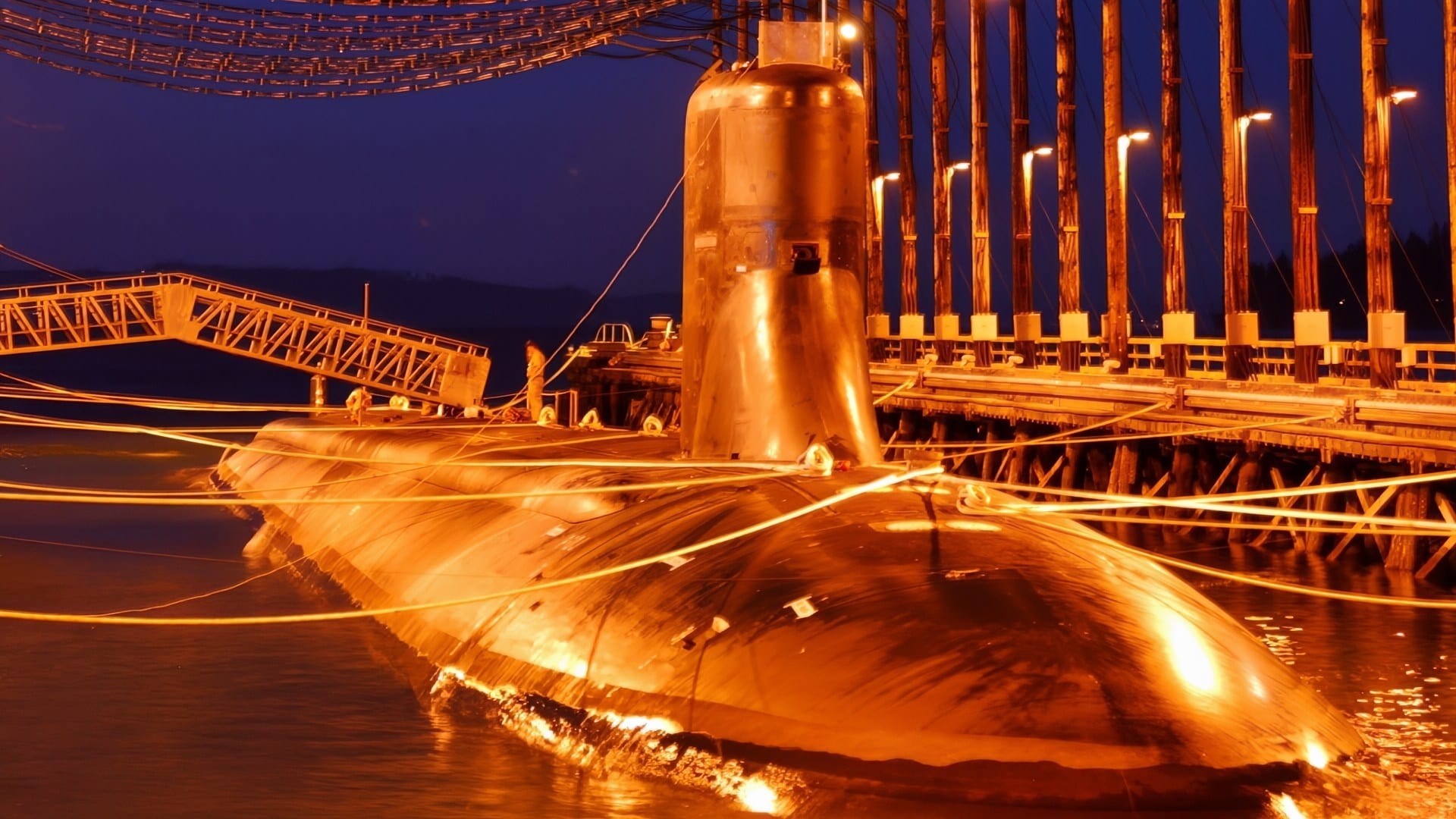
(August 16, 2006) – USS Jimmy Carter (SSN 23) sits moored in the Magnetic Silencing Facility at Naval Base Kitsap Bangor Aug 16 for her first ìdepermingî treatment. The deperming process reduces a ships electromagnetic signature as she travels through the water. U.S. Navy Photograph by MCCM(AW) Jerry McLain (Released)
The USS Jimmy Carter (SSN-23) is the last of three Seawolf-class nuclear attack submarines the US Navy commissioned between 1997 and 2005.
As originally designed, the Seawolf represented the pinnacle of stealth and lethality in attack submarines, and the Navy planned to build 29.
The collapse of the Soviet Union in the early 1990s also ended its navy.
It no longer sent hundreds of submarines to sea for the US Navy to monitor.
This, combined with shrinking US defense budgets, led to the cancellation of the Seawolf Program, with only the USS Seawolf and USS Connecticut built and permission to build one more, the USS Jimmy Carter.
The Navy Had To Build The Jimmy Carter, Or It Might Not Have Been Able To Build The New Virginia-class
The Navy built this third and final Seawolf for a very special reason.
The last Los Angeles-class submarine, the USS Cheyenne (SSN-773), was scheduled for completion by September 1996.
The first keel of the new Virginia-class SSNs wouldn’t be laid until September 1999.
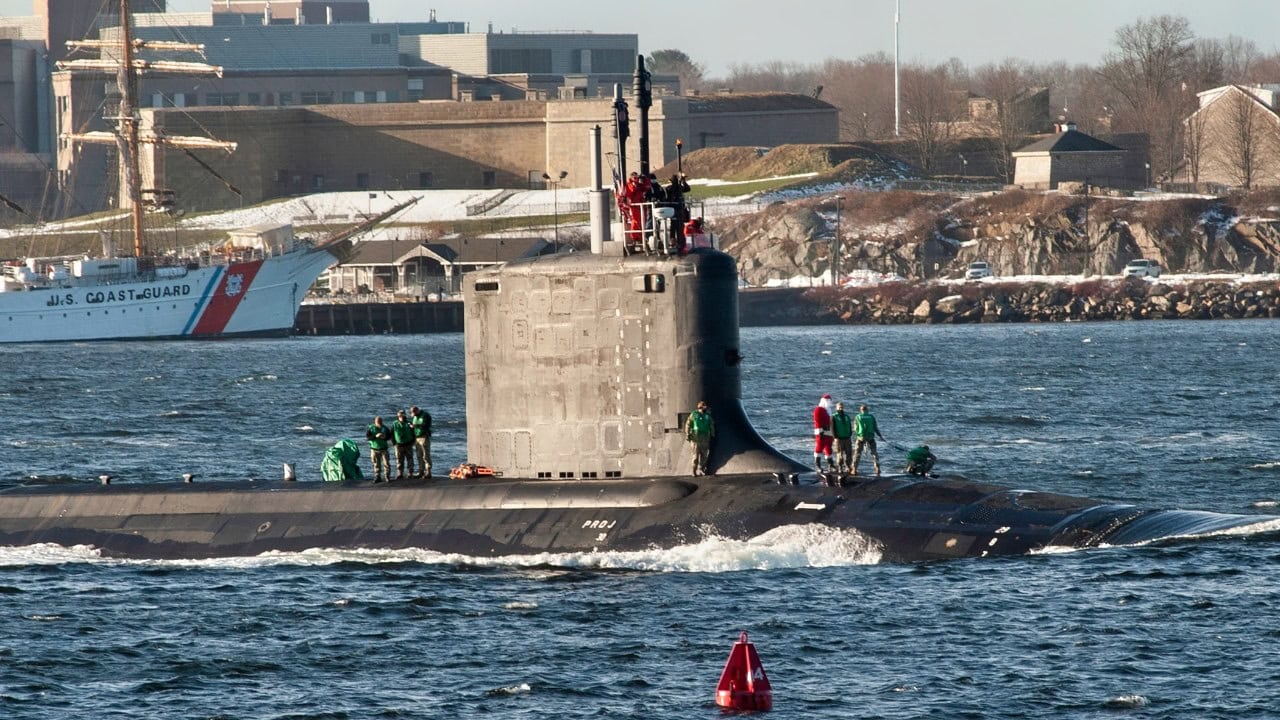
The Virginia-class submarine USS Vermont (SSN 792) makes her way up the Thames River and past Fort Trumble and the Coast Guard Cutter Borque Eagle as she returns home to Submarine Base New London on Thursday, December 24, 2020. The nineteenth and newest Virginia-class submarine she is the third U.S. Navy ship to be named for the Green Mountain State. (U.S. Navy Photo by John Narewski/Released)
Building submarines is a highly specialized process, and it’s hard to reacquire the skills of the workers who build them, especially the welders, if you lose them.
Laying all these workers off for three years and then asking them to return and build Virginia-class subs in 1999 would be nearly impossible.
So, this last Seawolf, the USS Jimmy Carter, would bridge this three-year gap in sub construction and preserve the strategically important skills of the shipyard workers who build submarines.
The Navy signed the contract to build the USS Jimmy Carter in June 1996, and the submarine launched in June 2004. During construction, the Navy ordered a major change.
USS Jimmy Carter, Only One And One Of A Kind
The submarine USS Parche (SSN-683) had been in service for thirty years, mostly working for the National Underwater Reconnaissance Office as a spy sub that tapped underwater communication cables.
The Navy wanted a replacement for this one-of-a-kind spy sub.
The Navy reasonably decided the Seawolf-class stealth capabilities would be ideal.
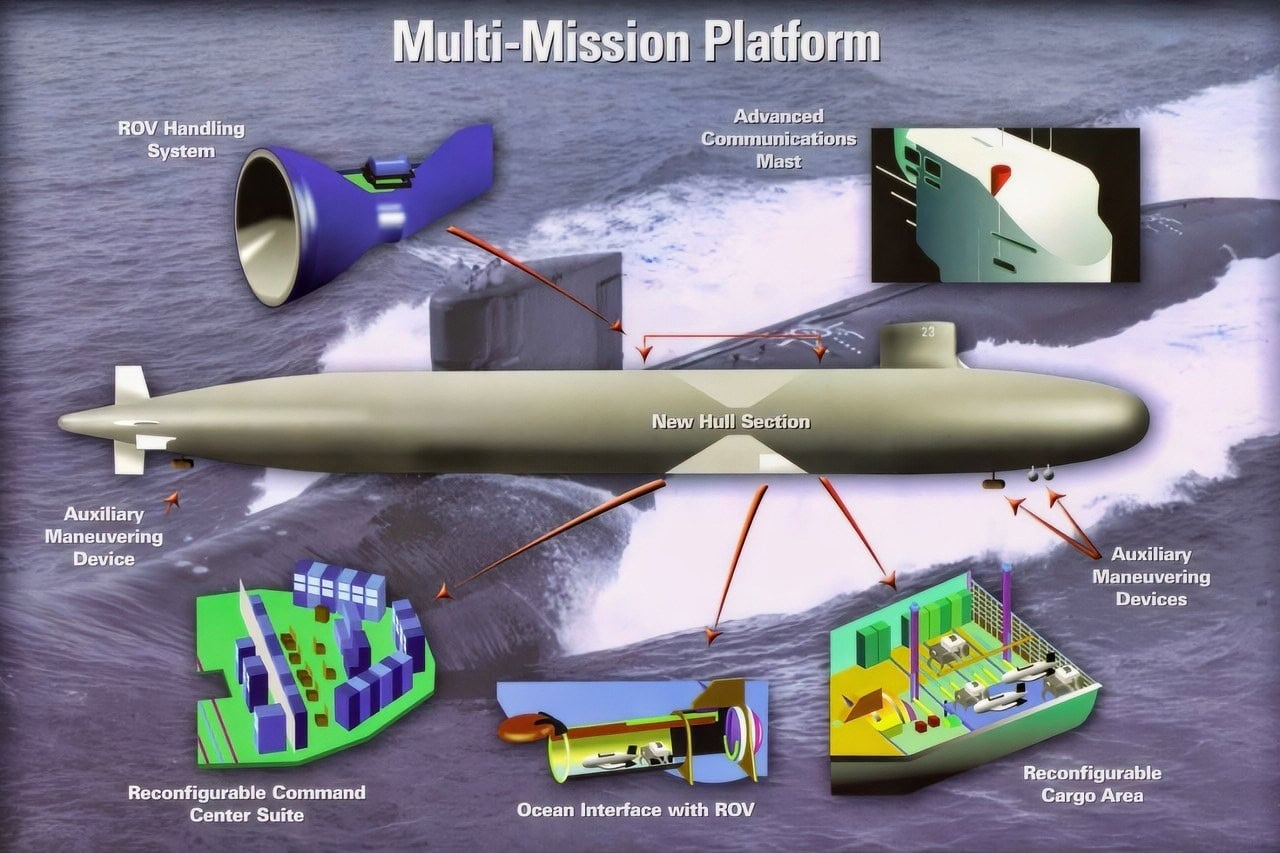
The modification to the USS Jimmy Carter’s design would include bow and stern thrusters that would allow the sub to hold station precisely while submerged, enabling it to safely deploy divers, Navy SEALs, and their Swimmer Delivery Vehicles or drones.
It would also let the submarine pivot on its axis, avoiding long circular turns on missions.
Its turning radius would be its own hull length, a truly unique capability in an attack submarine.
A one-hundred-foot section would be added between the conning tower-sail and the aft reactor compartment.
This section was configured like an “hourglass.” A four-foot-wide pressurized circular passageway flared at each end, allowing the crew to move freely forward or aft.
Outside the pressurized tube, but within the submarine’s outer hull, a void filled with seawater at sea pressure existed.
Within this seawater-filled hangar, the crew could stow and deploy submersibles, delivery vehicles, and other equipment through hatches in the outer hull.
Divers could access the hangar through a Moon Pool in the tube, under air pressure to prevent flooding.
With the Wasp-Waist-shaped extension, the USS Jimmy Carter could silently approach its objective very closely and deploy and recover divers and equipment within yards rather than miles.
The USS Jimmy Carter may have the longest submerged running endurance of any submarine.
This four-foot-wide, one-hundred-foot-long pressurized tube could have another use.
It could give the USS Jimmy Carter the longest submerged endurance of any submarine in history.
A modern nuclear submarine can produce its own oxygen and freshwater, but its hard limit for how long it can remain submerged is its crew’s food supply.
The internal passageway on the USS Jimmy Carter’s hull adds about 3,200 square feet of internal volume for additional crew food storage.
This could extend her ability to stay submerged for several months beyond other submarines’ limits.
This compartment, known as the Multi-Mission Platform, can be configured to carry a variety of new sensors and communications gear for evaluation and testing for its Intelligence, Surveillance, and Reconnaissance (ISR) missions.
The USS Jimmy Carter Goes To Sea, Earns Awards, But The Details Remain Classified
Very little is known about the ISR missions of the USS Jimmy Carter as the Navy’s most secret attack submarine.
Its success can only be guessed at by the awards and decorations it has received over its 20 years of service.
At least those the Navy has publicly disclosed.
These awards to the USS Jimmy Carter and its crews include the National Defense Medal in 2005, two Battle Efficiency “E” awards in 2007 and 2012, and one rarely awarded honor: The Presidential Unit Citation.
Since the end of World War II, subs have earned this award for missions like being the first to sail under the North Pole or the first to circumnavigate the globe while running submerged.
The Mysterious “Mission-7” Earned The USS Jimmy Carter The Presidential Unit Citation
In the case of the USS Jimmy Carter, very few details are known about what is being called “Mission-7.” What is known is that in January 2013, she left her home port in Bangor, Washington, sailing into the Atlantic Ocean, only to surface off Pearl Harbor in the Pacific Ocean needing repairs.
Less than two months had passed. Whatever happened in that time period earned the USS Jimmy Carter the award.
The narrative of the citation gives little information about what occurred, saying that the spy sub “successfully completed extremely demanding and arduous independent submarine operations of vital importance to the national security of the United States,” while offering praise that the USS Jimmy Carter “overcame numerous obstacles to safely execute these demanding and complex tasks without incident.”
The Replacement For The Jimmy Carter Is No Secret
The USS Jimmy Carter remains in fleet service today, performing missions we may not know about for the next fifty years, but here is one secret the Navy isn’t keeping about this elusive submarine: She’ll be replaced. In 2025, the Navy announced plans to convert the future Virginia-class Block V submarine, the USS Baltimore (SSGN-812), into the next Multi-Mission Platform.
With an anticipated launch date of June 2036, the USS Jimmy Carter will still cruise the silent deep for another decade.
About the Author: Sean Spoonts
Sean Spoonts is the former Editor-In-Chief of SOFREP.com. He is a military analyst, writer, and commentator whose work has appeared in Newsweek, CNS News, Ukrinform, and various military/veteran media networks and professional publications, including the Military Intelligence Professional Bulletin. He is a U.S. Navy veteran, having served as an Aviation Anti-Submarine Warfare Operator and Search and Rescue Helicopter Aircrewman.