
New US security entities hint at more Latin American operations
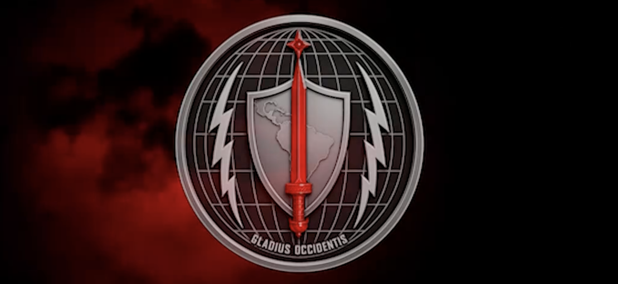
The recent establishment of a organized-crime task force by U.S. Southern Command is the latest expression of the Donroe Doctrine, the administration's interventionist—some say imperialist—approach to Latin America. But it may also signal a increased desire to work with regional partners—or just to operate inside their countries.
Last year's launch of Operation Southern Spear marked a return to a more hands-on U.S foreign policy in Latin America. Beginning with U.S Navy strikes against alleged drug-trafficking vessels, it has expanded to encompass the U.S. abduction of Venezuelan President Nicolas Maduro earlier this year and the subsequent re-intensification of U.S economic and military pressure on Cuba.
But SOUTHCOM has also worked to integrate U.S. forces into local security operations and to bring partner states’ security forces under its operational umbrella. In March, the Americas Counter Cartel Coalition was created as a U.S-led body to coordinate regional actions against transnational organized crime. That same month, SOUTHCOM dispatched forces to help Ecuadorian security forces to take action against an alleged criminal hub inside Ecuador. Now the Joint Task Force Western Hemisphere, stood up on Aug. 4, is meant to facilitate and coordinate action against organized criminal threats by the U.S. military and regional partner states.
The JTF-WHEM and the A3C suggest SOUTHCOM senses a need for multilateral cooperation. Though several Latin American governments are adopting tougher policies towards organized crime and were broadly sympathetic to Maduro's removal, Southern Spear’s controversial boat strikes and the Maduro operation provoked unease in a region with a long history of U.S. interventionism.
The task force and the coalition are forums through which U.S. and SOUTHCOM leaders can build and enforce strategic consensus, guide operational planning, mediate disputes among members, and influence non-members. U.S. officials have sought to attract participation through political and material incentives. Diplomats and senior SOUTHCOM personnel have sought to attain regional buy-in, or at least acquiescence, for the United States' larger role in the region—including, perhaps, formal deployments of U.S. troops inside regional partner states. And officials are is increasingly tying security and economic assistance to commitments of cooperation in areas of U.S. interest.
The JTF-WHEM, at least, appears likely to be put to imminent use. On Aug. 12, Defense Secretary Pete Hegseth announced that Colombia, Honduras, and Guatemala had approved U.S. participation in combined operations against criminal entities.
U.S. Southern Command established an organized-crime task force to coordinate operations against transnational organized crime in Latin America. On August 4, 2023, the Joint Task Force Western Hemisphere was created to facilitate military cooperation with regional partners. U.S. forces were dispatched to assist Ecuadorian security forces, and Colombia, Honduras, and Guatemala approved U.S. participation in combined operations against criminal entities.
- U.S. Southern Command established an organized-crime task force.
- Joint Task Force Western Hemisphere was created to coordinate actions against organized crime.
- U.S. forces were dispatched to assist Ecuadorian security forces.
- Colombia, Honduras, and Guatemala approved U.S. participation in operations against criminal entities.
- The Americas Counter Cartel Coalition was formed to coordinate regional actions.