
Niger receives 53 Algerian tanker trucks — Algiers and Niamey open a new logistical front in the Sahel
 Marie Dubois
Niger Receives 53 Algerian Tankers — Algiers and Niamey Open a New Logistical Front in the Sahel
In Agadez, in northern Niger, a first convoy of 53 Algerian tankers arrived under military escort. The information, reported on November 2 by Business Insider Africa, Bloomberg, and TRT Afrika, is not merely a commercial operation. The trans-Saharan route connecting southern Algeria to Agadez is becoming a security axis. For Niamey, strangled by supply disruptions and regional sanctions stemming from the 2023 coup, fuel is a military resource as much as it is an economic one.
The details remain partial. Open sources do not allow for determining the exact quantity of fuel, the duration of the agreement, or the number of Algerian military personnel present in the operation. Africanews, however, reported that Algerian personnel arrived in Agadez, while several media outlets described the convoy as the first shipment of its kind since the beginning of the crisis. Therefore, it is necessary to distinguish what is confirmed — the convoy and its escort — from what remains to be established — the operational depth of the cooperation.
Fuel Becomes a Defense Issue
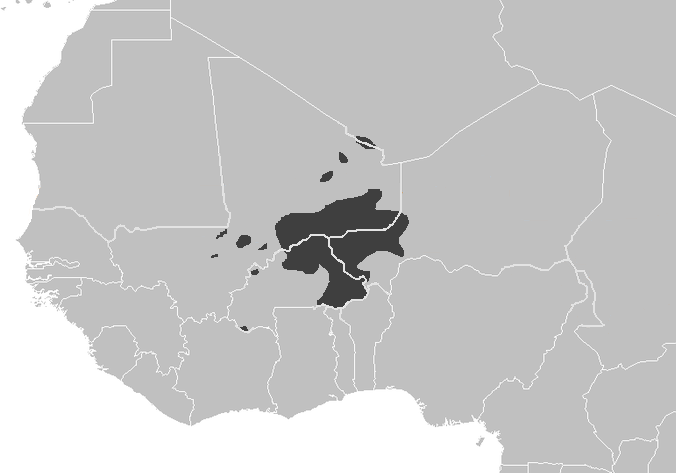
Agadez is not just a point on a map. It is the lock between the Algerian corridor, the bases in northern Niger, and the roads leading down to Tahoua, Tillabéri, and the Lake Chad basin. A tanker convoy must travel hundreds of kilometers in a theater where stations, depots, and workshops are scarce. Its protection therefore mobilizes vehicles, communications, and intelligence. The movement itself constitutes a test of territorial control.
For the Nigerien Armed Forces, the most immediate effect is mobility. A unit can hold a position for several days with ammunition; it cannot maneuver for long without fuel. Jihadist groups have understood this for a long time. JNIM and the Islamic State in the Sahel do not only seek to attack a base: they strike the roads, trucks, relays, and markets that allow the state to maintain its presence. The Algerian escort signals that logistical vulnerability is now treated as a matter of sovereignty.
Algiers Steps Out of Its Usual Caution
For decades, Algeria has officially refused foreign military deployments in its immediate neighborhood and prefers mediation to expeditionary coalitions. The arrival of Algerian personnel in Niger, if confirmed over time, marks a change in posture. This is not yet a combat intervention. It is rather a protective presence along an axis that directly touches the nearly 1,000-kilometer-long Algerian border with Niger.
Algiers' calculation is clear. A Niger short on fuel, isolated from its western neighbors, and dependent on Russian partners creates a risk of spillover into southern Algeria. Smuggling, refugees, and jihadist cells exploit the same spaces as commercial convoys. By securing access to Agadez, Algeria protects its Saharan depth and reminds that it remains an indispensable military actor in the Maghreb, even after the French withdrawal and the marginalization of ECOWAS in the Nigerien issue.
Niamey Diversifies Its Support
The junta led by General Abdourahamane Tiani seeks to reduce its dependence on a single partner. Russian instructors and the equipment associated with the Africa Corps can bolster power retention and certain tactical capabilities, but they do not replace a regional supply network. Algeria offers something else: a border, roads, refineries, and an ancient knowledge of the Sahara.
This rapprochement comes as Niamey multiplies openings towards non-Western actors. The same information cycle reported a Nigerien military delegation in Benghazi and a strategic cooperation agreement with Khalifa Haftar's forces. Taken separately, these contacts may seem opportunistic. Together, they outline a circumvention strategy: obtaining fuel from the north, relays from the east, and political cover from partners who do not condition their assistance on the immediate return to constitutional order.
The Operational Risk Remains on the Road
A protected convoy does not restore control over a territory. It creates a lifeline, and any lifeline becomes a target. Armed groups can observe schedules, slow traffic with explosive devices, or strike rear vehicles with light weapons. The distance between Agadez and the operational areas in western Niger also imposes several relays: each relay is an opportunity for information leaks and an additional burden for the army.
The real indicator will not be the arrival of the first convoy, but the ability to repeat the movement without turning each delivery into an exceptional operation.
For France, this sequence is an uncomfortable reminder. After Barkhane, Paris lost access to the major Sahelian routes, but geography has not disappeared. Algeria is resuming a function that France can no longer exercise since the withdrawal of its forces: securing the junction between the Maghreb and the Sahel. Moscow, for its part, remains present with the junta but does not control either the Algerian border or the energy flows crossing it.
The next question will be simple and brutal: was the convoy a one-time delivery or the first link in a permanent logistical bridge? If the tankers return, Agadez will become the hub of an Algerian-Nigerien security architecture. If they do not return, Niamey will have obtained temporary relief without solving its mobility problem. On the ground, the difference will be measured by the number of patrols capable of leaving their base — and by the number of roads that JNIM or the Islamic State in the Sahel can still close.
On November 2, 2023, 53 Algerian fuel trucks arrived in Agadez, Niger, under military escort. This operation signifies a new logistical front between Algeria and Niger, addressing fuel shortages amid regional sanctions. The presence of Algerian military personnel indicates a shift in Algeria's policy regarding military deployments in its neighboring countries.
- 53 Algerian fuel trucks arrived in Agadez under military escort.
- The convoy marks a significant logistical operation amid regional sanctions.
- Algeria's military presence in Niger indicates a shift in its usual policy against foreign military deployments.
- The fuel is critical for military and economic resources in Niger.
- The operation highlights the strategic importance of Agadez in regional security.