
Nigeria and AFRICOM in 2026 — 34 fighters killed at Lake Chad test the new American pivot
 Marie Dubois
Nigeria and AFRICOM in 2026 — 34 fighters killed at Lake Chad test the new American pivot
In Dumba, on the Nigerian shore of Lake Chad, the Marines of the Nigerian Navy struck a Boko Haram enclave on October 30. The headquarters reports about six fighters neutralized in this action, following a separate operation that reportedly killed 28 members of ISWAP or Boko Haram on October 28. The toll of 34 dead remains provisional, but the method is revealing: intelligence, surveillance, reconnaissance, then amphibious strike. This is exactly the chain that Washington seeks to strengthen around Nigeria.
The lake rather than the border
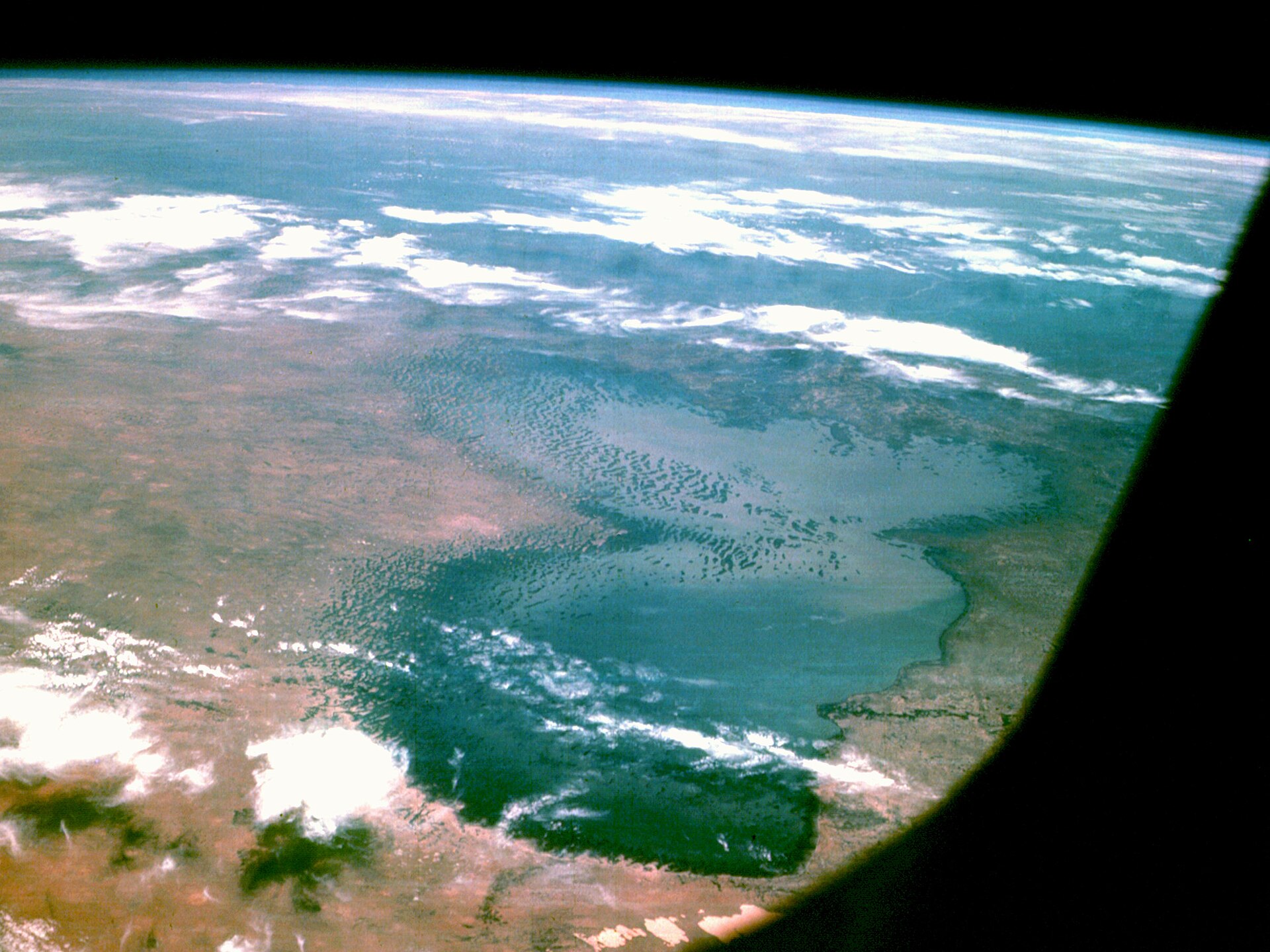
Lake Chad is not a line on a map. It is an archipelago of channels, islets, and marshes that changes with the season. Armed groups move men, fuel, and weapons by light boats, taking advantage of the difficulty for a ground army to hold every track and every landing point. From the naval base at Lake Chad, the Nigerian amphibious force provides a capability that isolated garrisons do not possess: reaching sanctuaries by water, with information gathered before departure.
The statement cited by Vanguard emphasizes the "intelligence-driven" nature of the operation. However, it is important to distinguish the announcement from independent confirmation. The casualty figures are still subject to verification, and Nigerian military statements alone do not allow for measuring the lasting effect on the networks. A destroyed enclave does not mean a controlled area.
Washington chooses Abuja after Agadez
On October 27, in Lagos, the head of the United States Africa Command, General Dagvin Anderson, described Nigeria as a "central pillar" of regional security. His intervention at the Africa International Defence Exhibition (AFRIDEX) was not just a diplomatic formula. It confirms the shift of the American center of gravity from base 201 in Niger, evacuated in 2024, to a more discreet partnership with Abuja.
Since February, about 200 American military personnel and several MQ-9 Reaper drones have been deployed in Nigeria for intelligence and training, according to Military Africa. The mission is officially non-combatant. An intelligence fusion center is set to accelerate the passage from sensor to ground commander, while training on unmanned systems aims to make Nigerian forces less dependent on a permanent foreign presence.
The difference with Agadez is essential. In Niger, Washington had a regional infrastructure designed to monitor the Sahel. In Nigeria, it provides an intelligence architecture backed by a sovereign partner, with more limited operational access. It is less spectacular, but probably more politically sustainable. Abuja retains control of operations; Washington retains access to data, networks, and technical standards.
The bet on Nigerian depth
Nigeria offers what the countries of the Sahel Alliance can no longer offer the United States: a military mass, a maritime façade, institutions still connected to Western partners, and a position that covers both the Lake Chad basin, the northwest, and the corridors to the Gulf of Guinea. This depth has become urgent. ACLED analysis indicates that the activity of the Islamic State in Africa accounted for 86% of its global activity in the first quarter of 2026, while clashes between jihadist groups and state forces increased by 42% between 2024 and 2025.
These figures describe a trend, not an automatic victory for Abuja. ISWAP retains networks in the Lake basin; Boko Haram maintains a capacity for disruption and mobility; in the northwest, criminal and jihadist groups feed off the same smuggling routes. A precision strike can disrupt a cell. It does not restore a route, protect a market, or replace an administration capable of remaining after the soldiers leave.
A useful but exposed partnership
The danger for the United States is to confuse technical presence with control of the theater of operations. An MQ-9 sees far, but it does not hold a village. An intelligence cell can shorten the reaction time, but only if Nigerian units have fuel, reliable communications, and a command chain that exploits the information. On the ground, the weak link is often not the sensor: it is the last ten kilometers to contact.
The political risk is equally concrete. The American discourse on the global fight against jihadism and cocaine trafficking may broaden the mission beyond Nigerian priorities. Abuja will seek drones, training, and local industry; Washington will want a regional vision and access to data. AFRIDEX, with its American, Chinese, Turkish, European, and Middle Eastern pavilions, already shows that Nigeria is negotiating with multiple suppliers at once. It will not return to a relationship of unique dependence.
The next measure of success will therefore not be the number announced in Dumba. It will be the ability of the Navy and the army to maintain a presence after the operation, to prevent the return of fighters, and to connect Lake Chad to the surrounding communities. If this continuity fails, ISWAP will simply abandon one islet to take another. The war will move a few kilometers, and Washington will have only improved the precision of the wrong diagnosis.
Sources
On October 30, 2026, the Nigerian Navy Marines struck a Boko Haram enclave at Lake Chad, resulting in the deaths of approximately 34 combatants. This operation follows a previous action on October 28 that reportedly killed 28 members of ISWAP or Boko Haram. The U.S. has increased its military presence in Nigeria, deploying drones and personnel for intelligence and training purposes, marking a strategic shift in American military focus in the region.
- 34 combatants killed in operations against Boko Haram and ISWAP
- Nigerian Navy conducted amphibious strikes on October 30, 2026
- U.S. military presence in Nigeria includes 200 personnel and MQ-9 drones
- AFRICOM's focus has shifted from Niger to Nigeria
- ISWAP and Boko Haram remain active in the Lake Chad region.