
Nigeria and the AES reposition the MNJTF in 2026 — the return of Niger becomes the issue of Lake Chad
 Marie Dubois
Nigeria and the AES Reposition the MNJTF in 2026 — the Return of Niger Becomes the Stakes of Lake Chad
Abuja, November 5, 2026. At the headquarters of the National Counter-Terrorism Centre, the spokesperson for the Nigerian Defense, Major General Samaila Uba, announced that Nigeria was working with the states of the Alliance of Sahel States (AES) on a repositioning of the Multinational Joint Task Force, the MNJTF. The formula is diplomatic. On the ground, it addresses a very concrete problem: since the withdrawal of Niger, the northern shore of Lake Chad presents a gap in the regional framework.
A Force Amputated of Its Nigerien Sector
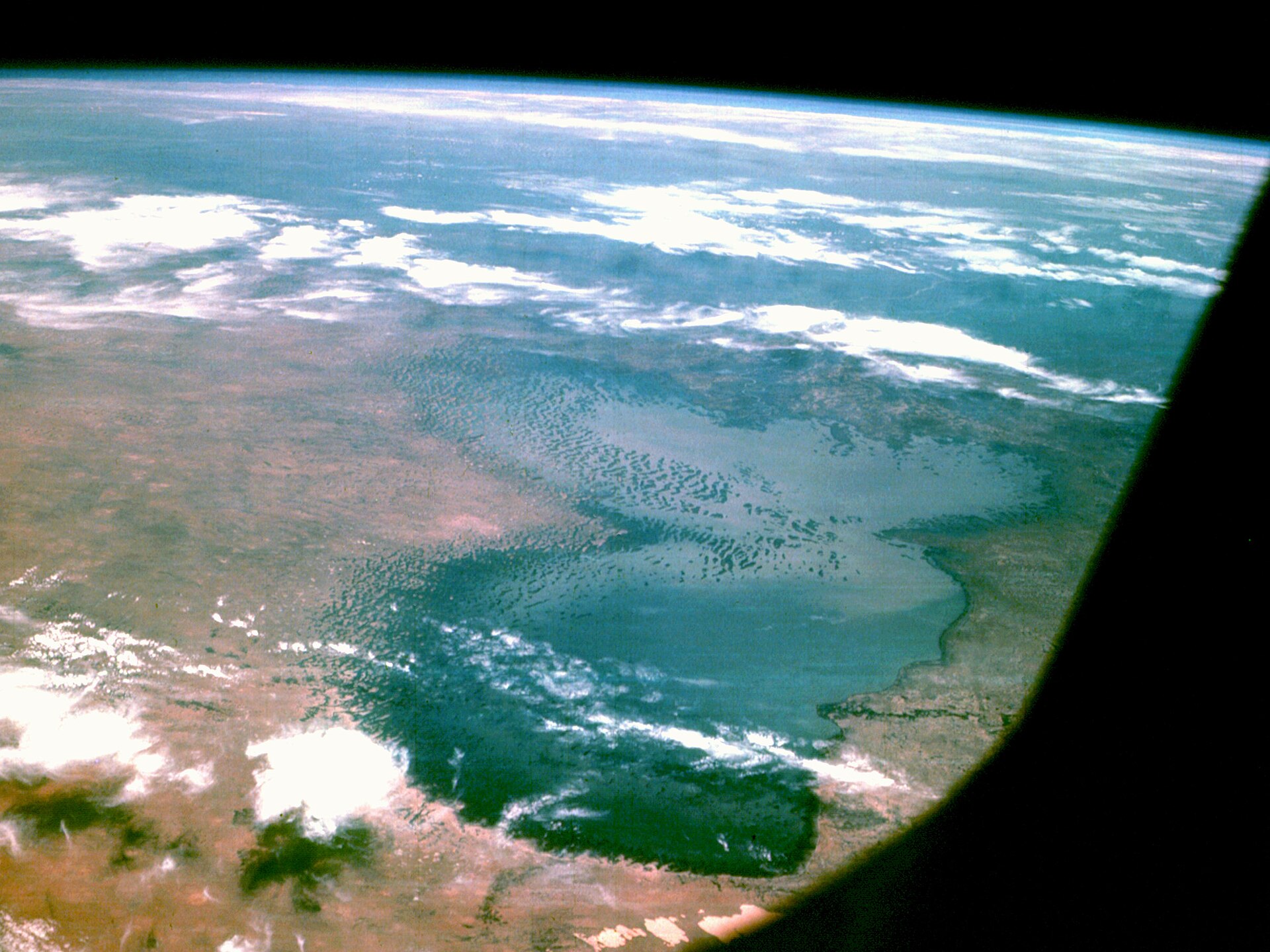
The MNJTF is not a recent creation. Born out of Nigerian cooperation in 1994, expanded to Chad and Niger in 1998, it received a counter-terrorism mandate in 2012 before its reconstitution in 2015. Its headquarters is located in N'Djamena, and its sectors have long covered Monguno in Nigeria, Mora in Cameroon, Baga Sola in Chad, and Diffa in Niger.
Niger ceased participation in operations after its rapprochement with the AES and formally withdrew from the MNJTF on March 30, 2025. The closure of the Diffa sector is not a simple administrative change. It leaves armed groups with maneuvering depth along the northern shore of the lake, an area of swamps, islands, and paths where cartographic control does not equate to real control.
In this region, the Islamic State in West Africa (ISWAP) and factions of Boko Haram do not respect any borders. A patrol that stops at the limit of a sector immediately offers refuge to the adversary. This is the old weakness of African coalitions: the staffs coordinate, but the units remain prisoners of the political decisions of their capitals.
The Cautious Language of Abuja
Uba mentioned a forum bringing together former and current commanders of the MNJTF, academics, and experts. He spoke of "dividends" expected soon, without specifying the timeline, the forces involved, or the command mechanism. Military Africa, which reported his statements on November 6, also emphasizes that Nigeria did not indicate what it was proposing to Niamey.
This caution is logical. Nigeria cannot simply ask Niger to reintegrate into a structure associated with the former regional order. Niamey, Bamako, and Ouagadougou have left the Economic Community of West African States (ECOWAS), created their own unified force in December 2025, and have so far refused offers to return. For the AES, cooperation with Abuja must therefore be presented as a security arrangement between sovereign states, not as a reintegration under tutelage.
Reports from Premium Times and The Nation place the announcement in the context of the revision of the MNJTF and the diplomatic consequences of the AES's departure. The Nigerian spokesperson also denied the existence of a secret ceasefire with Boko Haram. This denial matters: Abuja wants to negotiate a regional architecture while showing that military pressure against the insurgents continues.
The Return of Niger Would Be Useful, but Not Sufficient
The most realistic scenario is probably not a complete and immediate reintegration. It could involve a liaison mechanism, intelligence exchanges, or coordinated operations around Diffa, without a formal return to the MNJTF command chain. For Nigerien forces, this would allow them to defend their interests around the lake without giving the impression of conceding on the break with ECOWAS. For Abuja, this would already be better than an open operational border.
But a reorganized map will not replace resources. The MNJTF has long depended on external funding, protected vehicles, communications, and aerial intelligence. Chad has already estimated that it bears a disproportionate share of the fighting and has threatened to limit its operations to its own territory. If Nigeria and the AES announce a new structure without addressing this issue, they will be shifting acronyms, not the balance of power.
The decisive point will be the ability to maintain units during the dry season, when the paths become passable and armed groups can move men, fuel, and ammunition between the shores. It will also be necessary to prevent cooperation from being reduced to meetings of generals in Abuja. A force that does not share its alerts within hours of an attack is not a multinational force: it is a series of neighboring garrisons.
A Strategic Opening in the Regional Fracture
This initiative, however, reveals an important evolution. Nigeria, the leading military and demographic power in West Africa, is no longer just seeking to defend the MNJTF as an inherited institution. It is trying to adapt it to a region where the AES now operates as an autonomous bloc. This is an implicit recognition of the political reality created by the coups, even if Abuja carefully avoids formulating it that way.
For the AES, the calculation is the opposite. Cooperation with Nigeria can offer intelligence and operational access to the Lake Chad basin, but it carries a risk of dependency. For Moscow, which supports the Sahelian regimes, the issue will be closely monitored: a functioning African security coordination would reduce the space left for foreign advisors, whatever their origin.
The details remain incomplete, and no Nigerian authority has yet confirmed the terms of the agreement. This is the key point to remember. On the ground, between Diffa, the lake, and Monguno, ISWAP will not wait for the signing of a communiqué. If Abuja does not quickly transform this diplomatic opening into intelligence exchanges and coordinated patrols, the next lost sector will not be a line on a map, but a road that civilians will no longer be able to use.
Sources
- Military Africa, “Nigeria to partner with AES countries to reposition MNJTF,” November 6, 2026.
- Premium Times Nigeria, report on the forum regarding the revision of the MNJTF, November 5, 2026.
- The Nation Newspaper and Vanguard News, statements from the Nigerian Defense headquarters, November 5, 2026.
Nigeria is collaborating with the Sahel States Alliance (AES) to reposition the Multinational Joint Task Force (MNJTF) due to security gaps following Niger's withdrawal. The MNJTF, operational since 1994, faces challenges from ISWAP and Boko Haram in the Lake Chad region. The Nigerian Defense spokesperson emphasized the need for a diplomatic approach to reintegrate Niger while maintaining its sovereignty. The situation remains critical as armed groups exploit the security vacuum.
- Nigeria is working with the Sahel States Alliance (AES) to reposition the MNJTF in response to security gaps after Niger's withdrawal.
- The MNJTF has been operational since 1994 and was reconstituted in 2015 with a mandate against terrorism.
- Niger formally withdrew from the MNJTF on March 30, 2025, creating a security vacuum in the region.
- The Nigerian Defense spokesperson mentioned the need for a diplomatic approach to reintegrate Niger without undermining its sovereignty.
- The report highlights the ongoing threat from ISWAP and Boko Haram in the region.