
Nigeria launches its wargaming center 2026 — Abuja wants to think faster than Boko Haram
 Marie Dubois
Nigeria Launches Its Wargaming Center 2026 — Abuja Aims to Think Faster than Boko Haram
On June 26, in Abuja, the Nigerian army inaugurated a wargaming center within the Army War College. This is not a spectacular announcement like the purchase of an aircraft or the takeover of a camp. It is more discreet. But in a war where Boko Haram, the Islamic State in West Africa (ISWAP), Northwest bandit groups, and criminal networks change their pace faster than the staff can produce their orders, this simulation room deserves attention.
The college commander, Major General Umar Alkali, presents the tool as a practical and computerized preparation device. Two wargaming halls, four exercise rooms, three theater laboratories, ten workrooms, a library, and a server room are intended to test campaign plans, deployment options, and alternative responses before crises harden. On paper, this is exactly what is often lacking in northern Nigeria.
An Intellectual Investment in a Too Mobile War
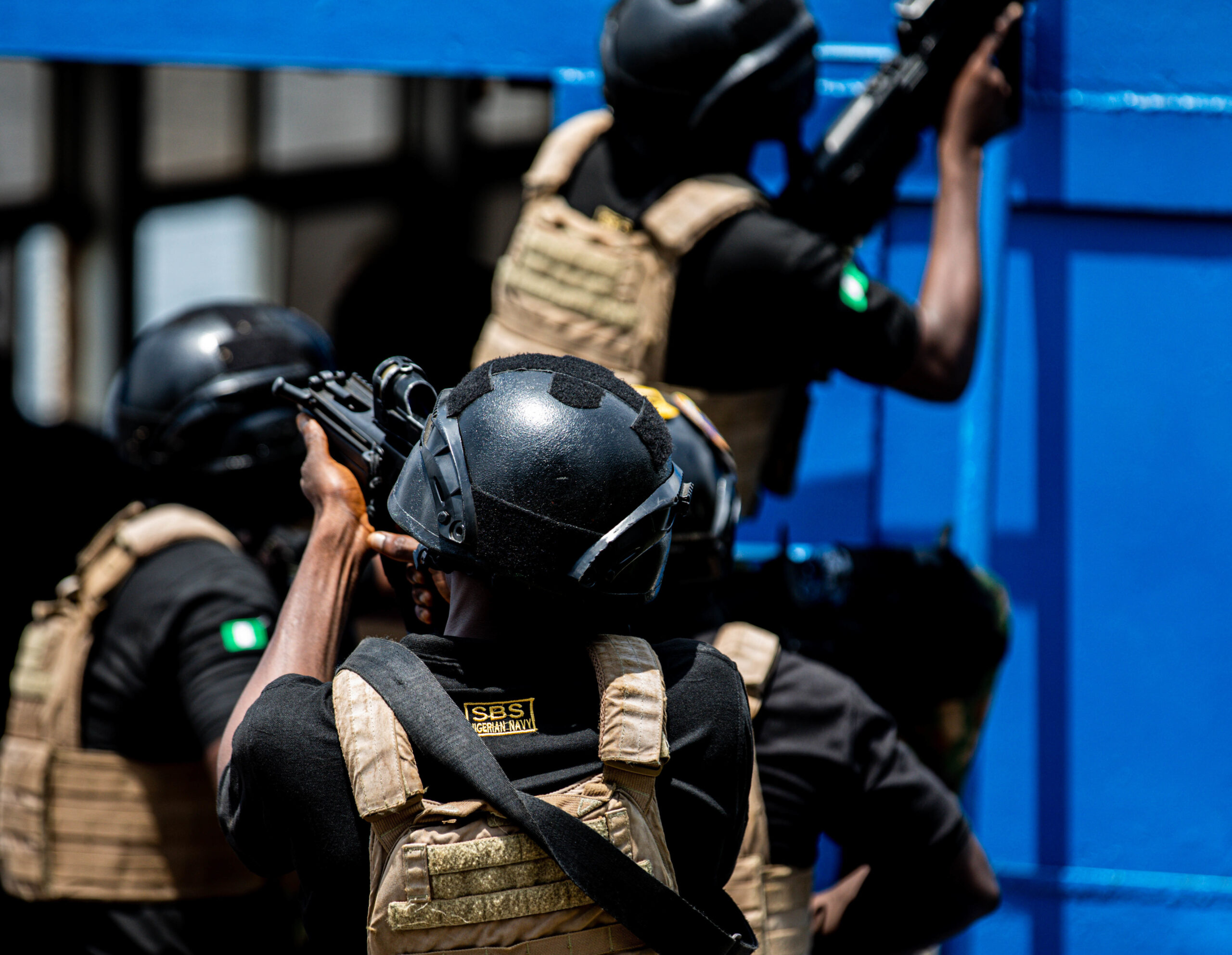
From Maiduguri to the shores of Lake Chad, distances can be deceptive. A route that seems short on a map becomes a logistical problem as soon as bridges are blown, the rainy season cuts off secondary routes, or an armed group imposes invisible tolls on villages. From experience, a convoy that leaves a base with a good map but without anticipating water points, radio relays, and fallback routes enters the theater with a tactical debt.
The new center in Abuja is therefore useful if it forces officers to think in sequences, not slogans. Boko Haram and ISWAP are not just looking to win battles. They seek to waste the army's time, disperse battalions, and impose their own timelines on fishermen, loggers, farmers, and transporters.
The Defense Post reports that the device must integrate land, maritime, air, cyber, and informational dimensions. This point matters. In the Lake Chad basin, a ground operation without riverine coordination leaves escape corridors. An air operation without reliable human intelligence often strikes too late. A local victory without information management becomes, the next day, a rumor exploited by the adversary.
Official Figures Still Mask the Control Problem
President Bola Tinubu stated on June 12 that more than 13,000 "terrorists" had been neutralized in a year and that over 124,000 fighters and dependents had laid down their arms since 2023 as part of Operation Safe Corridor. These figures are significant, but they do not tell the whole story. Neutralizing a fighter does not equate to controlling a road. Receiving a surrender does not equate to restoring state authority in a village that still pays a tax to an armed group.
This is the old difference between attrition and control. The army can reduce losses, multiply operations, and announce impressive tolls while allowing rural areas to operate under constraint. The wargaming center will not magically solve this. However, it can help to ask the right questions before the columns depart.
- Where can the enemy regroup after a strike?
- Which market or landing point becomes vulnerable if a unit leaves its sector?
- Which agricultural route must be held during the rainy season, even if it is not in the main plan?
- Which local actors can report an infiltration without being abandoned afterward?
These questions are less flashy than an animated map on a screen. Yet they are decisive.
Borno and Zamfara Highlight the Limit of Statements
In May, Boko Haram killed 33 fishermen and loggers in Borno State, according to local sources cited by AFP. Twenty-seven fishermen were intercepted two kilometers from Mafa, about 52 kilometers from Maiduguri. Six loggers were killed near Dikwa, 90 kilometers from the state capital. These distances are not huge. They precisely show that the war is played out in the interstices, on the margins of garrisons.
On June 13, another attack struck Goron Namaye, in the Maradun district, Zamfara State. Seventeen farmers were killed and five injured. The assailants, according to reported testimonies, presented themselves as mere visitors before opening fire. Again, this is not just "banditry." It is a strategy of social control through fear, especially at the beginning of the agricultural season.
Abuja is therefore facing several overlapping wars. In the Northeast, the jihadist insurgency retains sanctuaries and lake networks. In the Northwest, armed gangs impose their own rules on farming communities. In the center, land and pastoral conflicts provide a constant fuel for violence. A simulation room must be able to represent this simultaneity; otherwise, it will become a nice tool for replaying already outdated battles.
What Wargaming Can Change, and What It Will Not Change
The Chief of Army Staff, Lieutenant General Waidi Shaibu, spoke of leaders capable of anticipating risks and deciding under pressure. The formula is correct. But the real test will be institutional. African armies do not always fail due to a lack of courage. They often fail because information does not flow well, neighboring units do not share their data, or politics demands a quick victory where geography imposes a slow campaign.
An effective wargaming center must therefore accept unpleasant scenarios. A successful ambush against a convoy. An infiltrated surrender by a sleeper network. An operation that frees a route but shifts violence to the next village. If the exercises only serve to confirm decisions already made, they will produce good briefings and bad reflexes.
In northern Nigeria, the question is not just how many enemies the army can kill. The question is how long it can hold an area after the cameras leave.
There is also a serious uncertainty about the quality of the data that will feed these simulations. Official tolls are rarely verifiable in real-time. Local sources are brave but fragmented. Armed groups also lie. Marie would not claim otherwise. A wargame fueled by political numbers will yield a political war, not a real war.
The Next Test Will Be Outside Abuja
The Abuja center signals a necessary professionalization. It can improve officer training, force commanders to think jointly, and reduce improvisation. This is good news for an army that must cover a vast country, from Lake Chad to the forests of the Northwest.
But the enemy will not play in an air-conditioned room. It will play on the tracks of Mafa, in the fields of Zamfara, on the islands of Lake Chad, and in the villages that sometimes negotiate their survival with those who threaten them. If wargaming allows Abuja to send fewer units to the wrong place and to hold truly vital routes longer, then the investment will make sense.
The next indicator to watch is not the inauguration of the center. It will be the Nigerian army's ability to protect farmers during the rainy season, to reduce attacks on fishermen, and to prevent ISWAP and Boko Haram from synchronizing their raids around the lake. It is there, far from the screens, that we will know if Abuja has truly learned to think faster.
The Nigerian Army inaugurated a wargaming center in Abuja on June 26, 2023, to enhance military planning against Boko Haram and ISWAP. This center aims to improve coordination across land, maritime, air, cyber, and informational dimensions. Despite claims of neutralizing over 13,000 terrorists, challenges remain in controlling rural areas and ensuring effective military responses. The center is expected to facilitate better strategic assessments and logistical planning for future operations.
- The Nigerian Army inaugurated a wargaming center in Abuja on June 26, 2023.
- The center aims to improve military planning and response to threats from Boko Haram and ISWAP.
- Official claims state that over 13,000 terrorists have been neutralized in the past year.
- The center includes various facilities for testing campaign plans and deployment options.
- The report highlights the ongoing challenges faced by the Nigerian Army in controlling rural areas.